


Shipping Has a Net-Zero Target — but Still Lacks the Rules to Deliver It

The IMO has set a clear decarbonisation trajectory for international shipping, but its proposed Net-Zero Framework remains unresolved. Without a predictable global fuel standard, emissions-pricing mechanism and certification regime, shipowners and fuel suppliers face growing risks when making long-term investment decisions.
International shipping knows where it is expected to go: towards net-zero greenhouse gas emissions by around 2050. What remains uncertain is how the industry will get there — and who will bear the cost.
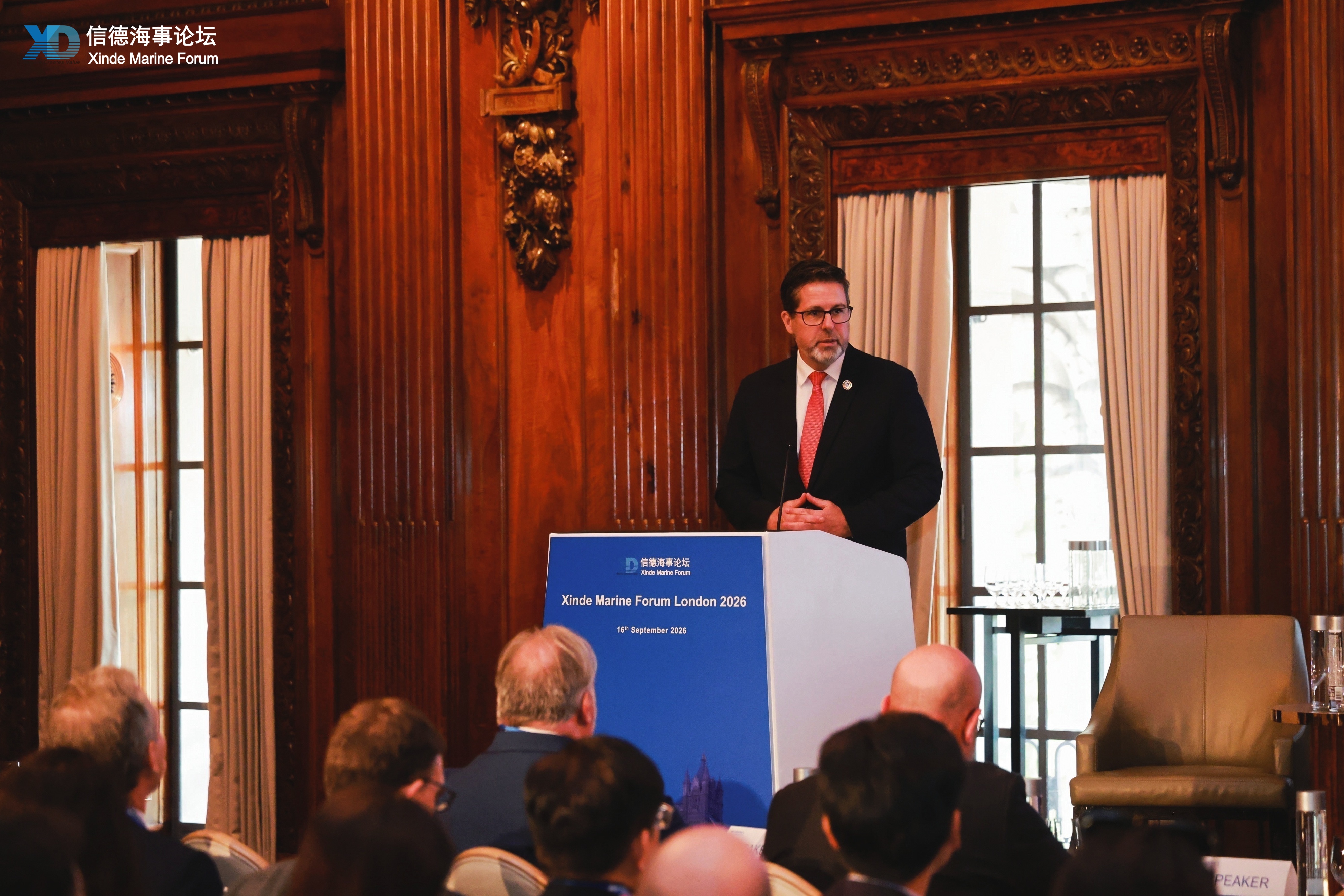
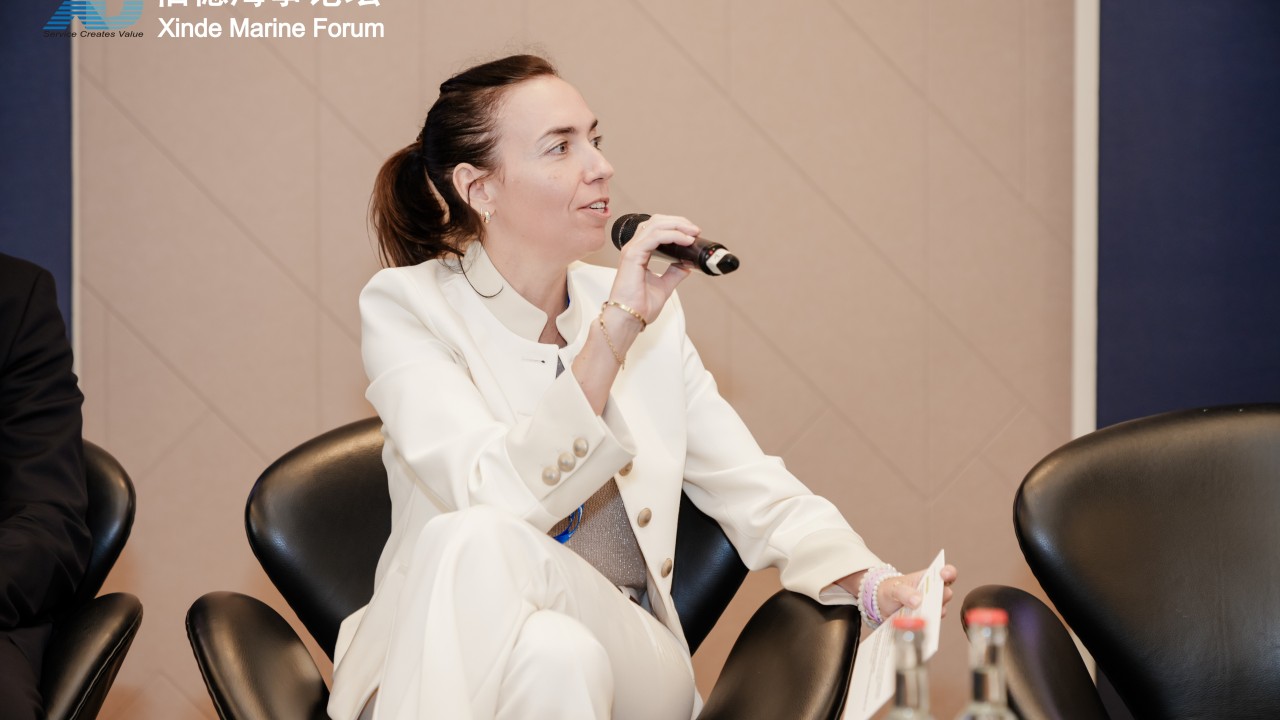
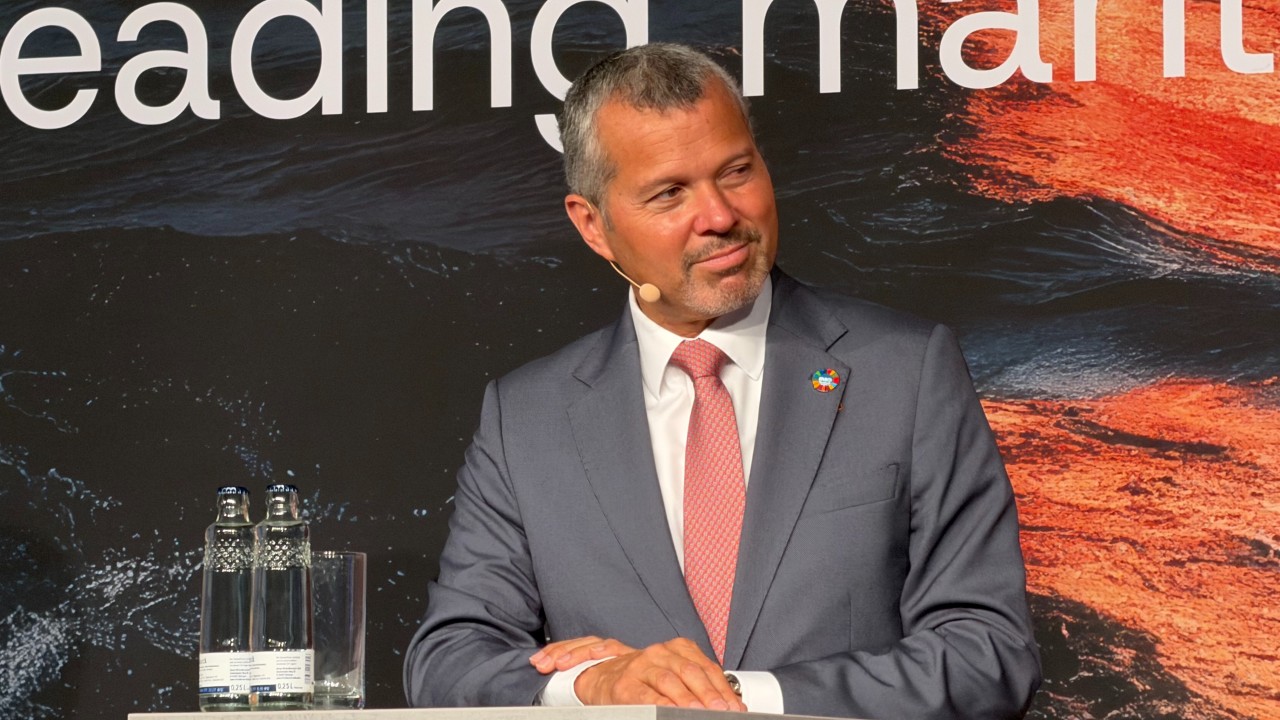
Speaking at the Xinde Marine Forum London 2026 on 16 September, David Osborn, Director of the Marine Environment Division at the International Maritime Organization, said shipping’s transition should not be viewed as a single event, but as a process that has been developing over several decades.
Energy-efficiency measures have already helped reduce ships’ fuel consumption and emissions intensity. Efficiency alone, however, cannot complete the transition. The industry will also require alternative fuels, new technologies and a resilient global regulatory system capable of translating climate targets into investable commercial signals.
That regulatory architecture remains unfinished.
Ambition is agreed, but implementation is not
The IMO adopted its revised greenhouse gas strategy in July 2023, setting a pathway for international shipping to reach net-zero GHG emissions “by or around, i.e. close to, 2050”.
Click here to read the full report: 2023 IMO STRATEGY ON REDUCTION OF GHG EMISSIONS FROM SHIPS.pdf
The strategy includes indicative checkpoints to reduce total annual GHG emissions from international shipping by at least 20% by 2030, while striving for 30%, compared with 2008 levels. By 2040, the reduction should reach at least 70%, with an ambition of 80%.
It also calls for zero- or near-zero-emission technologies, fuels and energy sources to account for at least 5% — and preferably 10% — of the energy used by international shipping by 2030. Carbon intensity, measured as CO₂ emissions per unit of transport work, should fall by at least 40% by the same year.
These targets define the direction of travel, but the 2023 strategy is not, by itself, a complete compliance regime. The unresolved issue is how to convert those goals into binding requirements that can influence fuel selection, vessel design and investment decisions.
In April 2025, the IMO’s Marine Environment Protection Committee approved a draft Net-Zero Framework combining two principal elements: a global marine fuel standard and an economic mechanism for pricing GHG emissions.
The proposed regulations would apply to oceangoing ships above 5,000 gross tonnes, which the IMO estimates are responsible for about 85% of CO₂ emissions from international shipping.
Under the draft, ships would be required to progressively reduce the annual GHG intensity of the energy they use. That calculation would be conducted on a well-to-wake basis, covering emissions across the fuel’s lifecycle — from production and transport to final consumption onboard.
Ships performing better than the required threshold could generate surplus units, while vessels exceeding it would need to address their compliance deficit. The system would also create an IMO Net-Zero Fund intended to reward the use of zero- and near-zero-emission fuels and support innovation, infrastructure, seafarer training and a just transition in developing economies.
Adoption remains uncertain
The distinction between approval and adoption is critical.
IMO member states approved the draft framework at MEPC 83 in April 2025, but negotiations on its formal adoption were adjourned in October that year. Consequently, the framework has not yet entered the mandatory IMO regulatory system.

MEPC 84, held in London from 27 April to 1 May 2026, ended without formal agreement on either the framework or its implementation guidelines. A majority of participating countries continued to support the existing text as the basis for negotiations, but significant differences remained.
Discussions at the IMO’s intersessional working group in September 2026 revisited several politically and commercially sensitive issues, including the GHG fuel-intensity trajectory, compliance mechanisms, rewards for cleaner fuels and governance of the proposed fund.
Formal consideration is due to continue at MEPC 85, scheduled for 30 November to 3 December 2026.
The delay has already changed the expected regulatory timetable. Current scenarios suggest that, if the framework is adopted later in 2026, it could enter into force in 2028 and become operational in 2029. Further political deadlock could push regulatory certainty back by several more years.
For an industry whose assets commonly operate for 20 to 30 years, even a relatively short policy delay can affect billions of dollars in fleet, fuel and infrastructure investment.
Why a global framework matters to investment
Shipping’s energy transition is not simply a matter of installing different engines.
Shipowners must decide which propulsion systems and fuel capabilities to specify. Shipyards need to determine which designs can remain commercially viable throughout a vessel’s operating life. Ports must consider storage, handling, safety and bunkering infrastructure, while energy producers need sufficient demand before committing capital to new fuel projects.
Banks, leasing companies and other maritime financiers must assess whether a vessel ordered today could face higher compliance costs, restricted market access or premature obsolescence in the 2030s and 2040s.
These decisions are mutually dependent. Shipowners are reluctant to commit to alternative-fuel vessels without reliable fuel availability and competitive pricing. Producers, in turn, are unlikely to finance large-scale green-fuel capacity without long-term offtake commitments or credible regulatory demand.
A global fuel standard and emissions-pricing mechanism could help break that deadlock by making future compliance costs more visible. It could also narrow the price gap between conventional bunker fuels and lower-emission alternatives, improving the commercial case for early investment.
Without an international agreement, regional rules are likely to play a larger role. That could accelerate action in some markets, but it also increases the risk of regulatory fragmentation, with ships facing different emissions methodologies, fuel standards and carbon costs across major trading regions.
For operators serving multiple jurisdictions, fragmentation would add administrative cost and complicate fleet deployment, chartering and asset valuation.
The challenge extends beyond carbon pricing
A credible framework will require more than an agreed emissions charge.
One unresolved issue is fuel certification. Because the proposed IMO methodology is based on lifecycle emissions, fuels with the same chemical composition may receive very different GHG values depending on their feedstock, production process and energy source.
That distinction is particularly important for methanol, ammonia, hydrogen and biofuels. A fuel cannot automatically be considered low-carbon solely because of its name. Its emissions performance must be measured, independently verified and traced through the supply chain.
The regulations will therefore need credible default emission factors, sustainability criteria and certification procedures that can be applied consistently across jurisdictions.
Technology neutrality is another challenge. Electrification, biofuels, methanol, ammonia, hydrogen, wind-assisted propulsion and potentially nuclear technologies all present different advantages and limitations. Their commercial viability varies according to vessel type, route, fuel availability, safety requirements and operating profile.
The IMO must provide a clear long-term trajectory without prematurely locking the industry into a single technological pathway.
The distributional impact will be equally important. Higher transport and fuel costs could disproportionately affect small island developing states and least developed countries, many of which depend heavily on maritime trade but have limited access to capital and alternative-fuel infrastructure.
The governance of the proposed Net-Zero Fund — including how revenues would be collected, distributed and used — will therefore be central to securing broad political support.
What it means for China’s maritime sector
The outcome will have significant implications for China, which sits at the centre of global shipbuilding and operates some of the world’s largest ports, shipping fleets and maritime supply chains.
Chinese shipowners making newbuilding and long-term chartering decisions will need to assess energy efficiency, fuel flexibility, retrofit potential and future emissions exposure together. Ordering a vessel solely around the cheapest fuel available today could create substantial compliance and residual-value risks later in its life.
For Chinese shipyards and marine equipment suppliers, competition is also moving beyond the ability to construct individual dual-fuel vessel types. Owners increasingly require integrated designs that combine fuel flexibility, energy efficiency, safety and a credible route to future conversion.
Ports, bunker suppliers and energy companies will need to prepare not only for the physical delivery of alternative fuels, but also for carbon-accounting and certification requirements. In a lifecycle-based system, the verified emissions profile of a fuel may become nearly as commercially important as its price and availability.
Chinese banks and leasing houses, which play an important role in global ship finance, will likewise need to incorporate fuel pathways, regulatory exposure and potential stranded-asset risk into credit and residual-value assessments.
The missing link between ambition and action
International shipping does not lack decarbonisation targets. It lacks a fully agreed mechanism capable of converting those targets into predictable fuel demand, compliance costs and investment returns.
The central test for the IMO is therefore not simply whether member states can reach a political compromise. It is whether they can produce a framework that is sufficiently ambitious to change investment behaviour, sufficiently flexible to accommodate technological development, and sufficiently equitable to secure global participation.
Until that framework is settled, shipowners and the wider maritime value chain cannot afford to stand still. Efficiency improvements, fuel-flexible designs, reliable emissions data and closer coordination between shipping, ports and energy producers remain necessary regardless of the eventual regulatory outcome.

READ MORE
 Sustainability
324 days ahead of schedule — another milestone for China’s shipbuilding industry
 Sustainability
The Next Shipping Race Will Be About Who Can Burn Less Fuel
 Sustainability
World’s First Wind-Assisted LNG Carrier Named, Featuring Two 49-Metre Hard Sails
 Sustainability
Chimbusco completes first ammonia bunkering operation
 Sustainability
World’s 1st Operational Ammonia Bunkering Vessel Enters Service,Backed by CMB.TECH
 Sustainability
At SMM Hamburg I Saw Seven Changes Reshaping Global Shipping
 Sustainability
World’s First Operational Ammonia Bunkering Vessel Emerges
 Sustainability
Ships Built Today May Still Be Sailing in 2050 — So How Should We Design Them?
 Sustainability
Hapag-Lloyd Completes First Biomethanol Bunkering
 Sustainability