


At SMM Hamburg I Saw Seven Changes Reshaping Global Shipping
SMM HAMBURG 2026 SHIPPING OBSERVATION
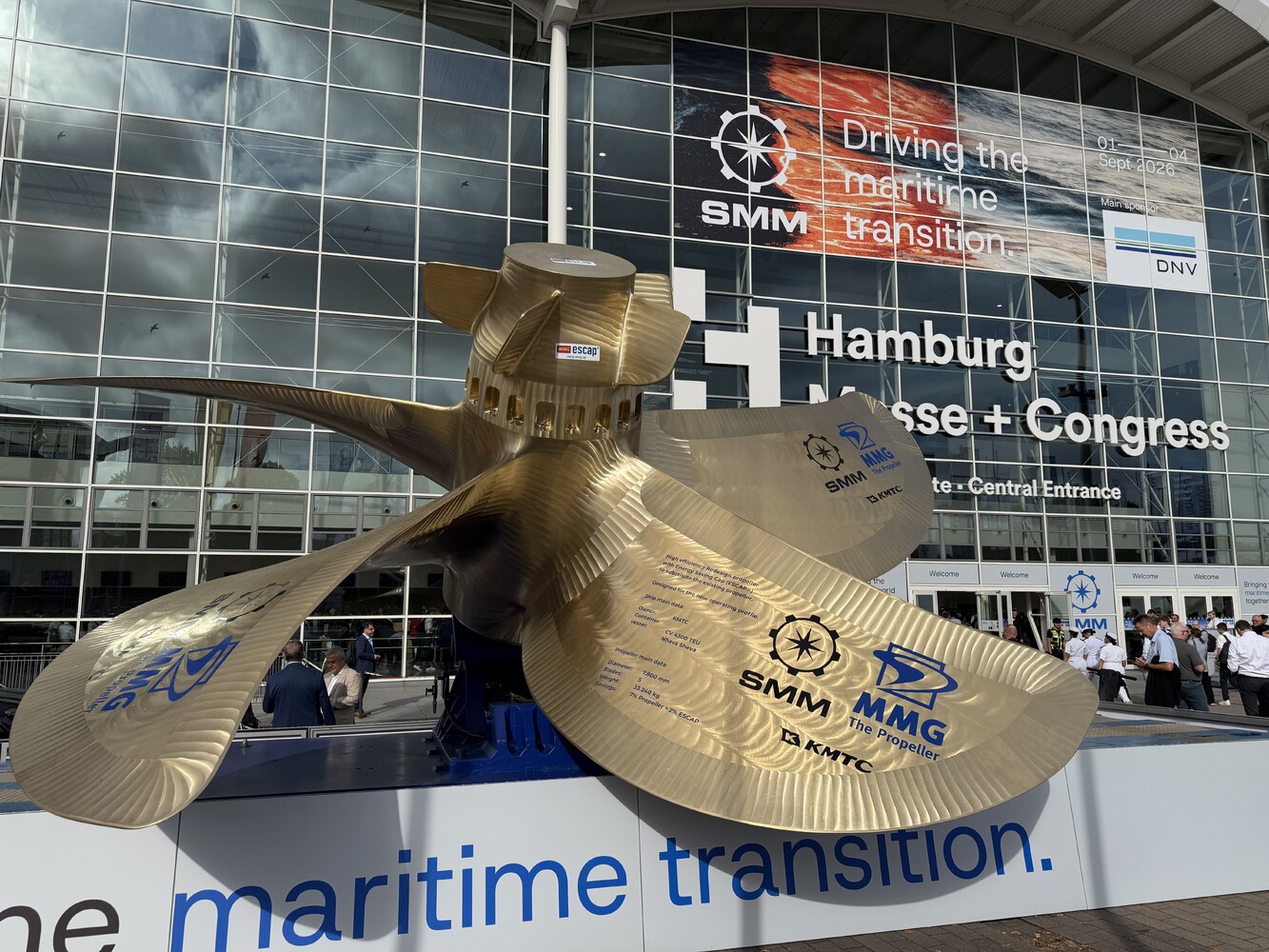
Four days, more than 50,000 participants from 134 countries and regions, around 2,300 exhibitors and over 90,000 square metres of exhibition space: SMM Hamburg 2026 once again brought together the global shipping, shipbuilding, marine equipment, ports, energy, classification, finance and regulatory communities from September 1 to 4.
The industry arrived in Hamburg against the backdrop of an extraordinary investment cycle. At the opening of the fair, the global shipbuilding orderbook stood at approximately 405.5 million gross tonnes, 32.6% higher than at the time of the previous SMM two years earlier, with an estimated contract value of $666.4 billion. Roughly 60% of that value is expected to flow through to marine equipment suppliers, while the average shipyard backlog has moved close to four years.
Those numbers suggest a supercycle still in full motion. Shipowners have cash, newbuilding prices remain elevated, Chinese yards continue to widen their product range, and European equipment makers retain control of many high-value segments. Yet the vocabulary heard repeatedly in Hamburg had expanded beyond orders, fuels and growth. Security, resilience, deployability and capital discipline had moved onto the same strategic level. SMM itself closed the event with an unusually direct conclusion: security has become the dominant issue for the maritime industry.
Bringing together the SMM opening conference, the Xinde Marine Forum, Mare Forum Germany, the China Europe Maritime Summit, DNV's Maritime Forecast to 2050 and the agreements announced during the week reveals a broader change in the industry's decision-making. Companies still have to decarbonise. They will continue to invest in artificial intelligence, alternative fuels and new vessels. What they increasingly resist is optimising a 20- or 30-year maritime asset around one assumed version of the future.
The new objective is to keep ships, networks and balance sheets usable, financeable, adaptable and profitable across several possible futures. Security is changing the objective function. Energy efficiency reduces costs in almost every scenario. Optionality is entering asset values. Industrial systems and risk allocation determine whether transition plans can move from ambition to deployment.
1 Security Moves Into the Commercial Model
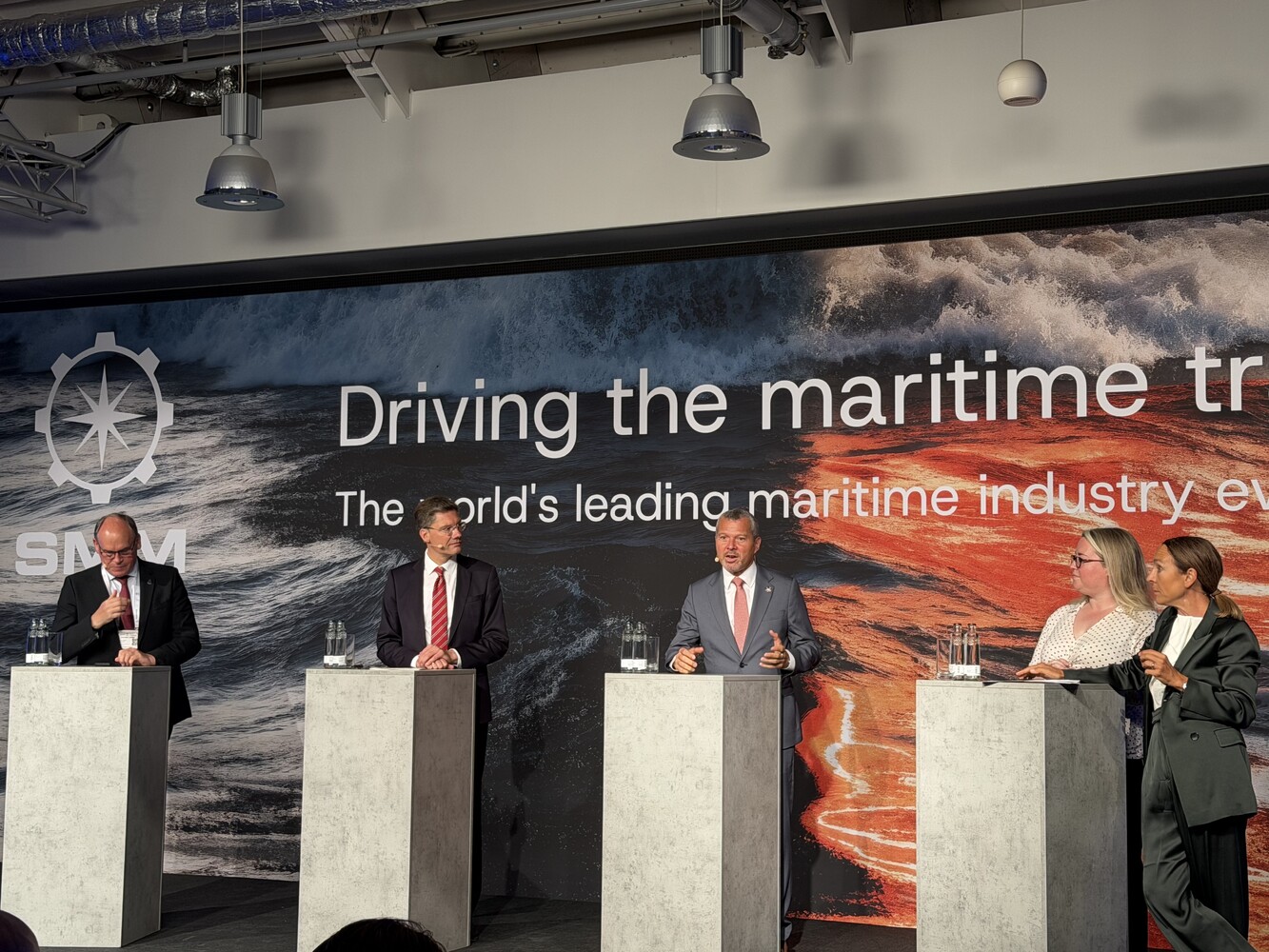
SMM 2026 introduced a dedicated Naval Hall B8, bringing unmanned systems, sensors, cyber security and the protection of critical maritime infrastructure into one exhibition hall. This did not signal the militarisation of commercial shipping. It reflected the growing difficulty of treating security as an external condition that can be separated from ordinary operations.
Red Sea diversions change voyage distances and effective vessel supply. Black Sea risk changes insurance conditions. Tension around strategic straits feeds directly into tanker rates and bunker prices. Vulnerabilities at ports, energy terminals and subsea infrastructure move through global supply chains. As ships and shore systems become more digital, cyber security also moves closer to the core meaning of vessel safety.
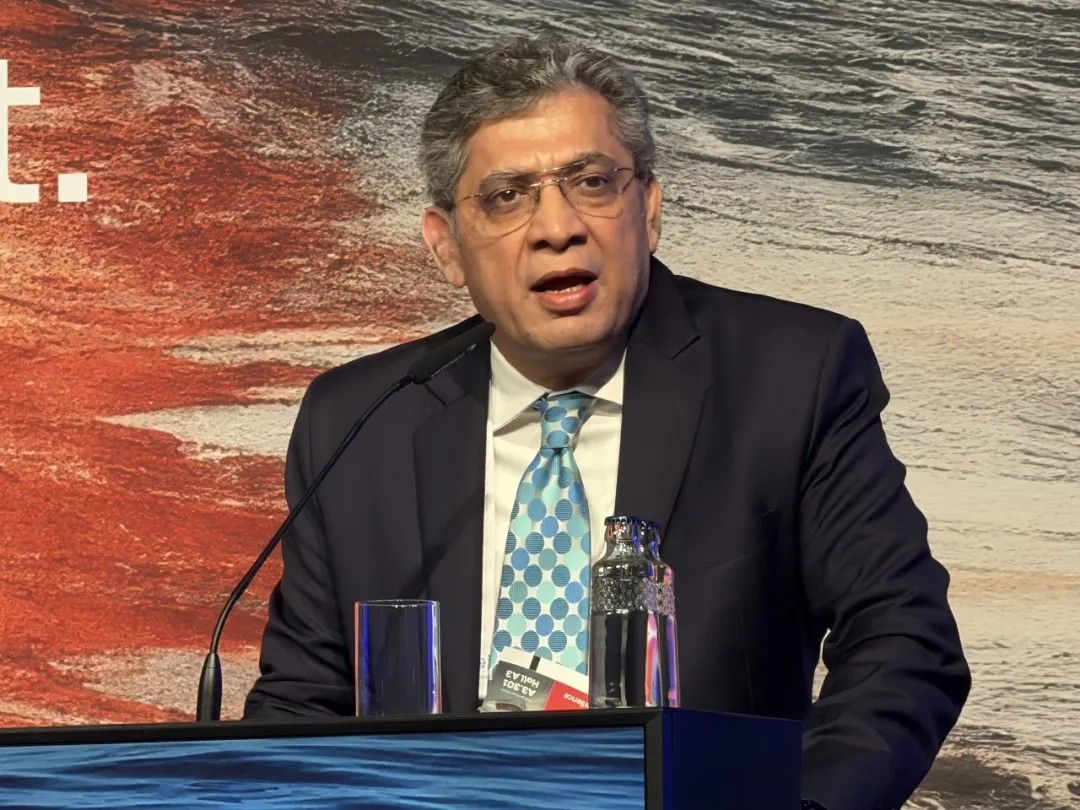
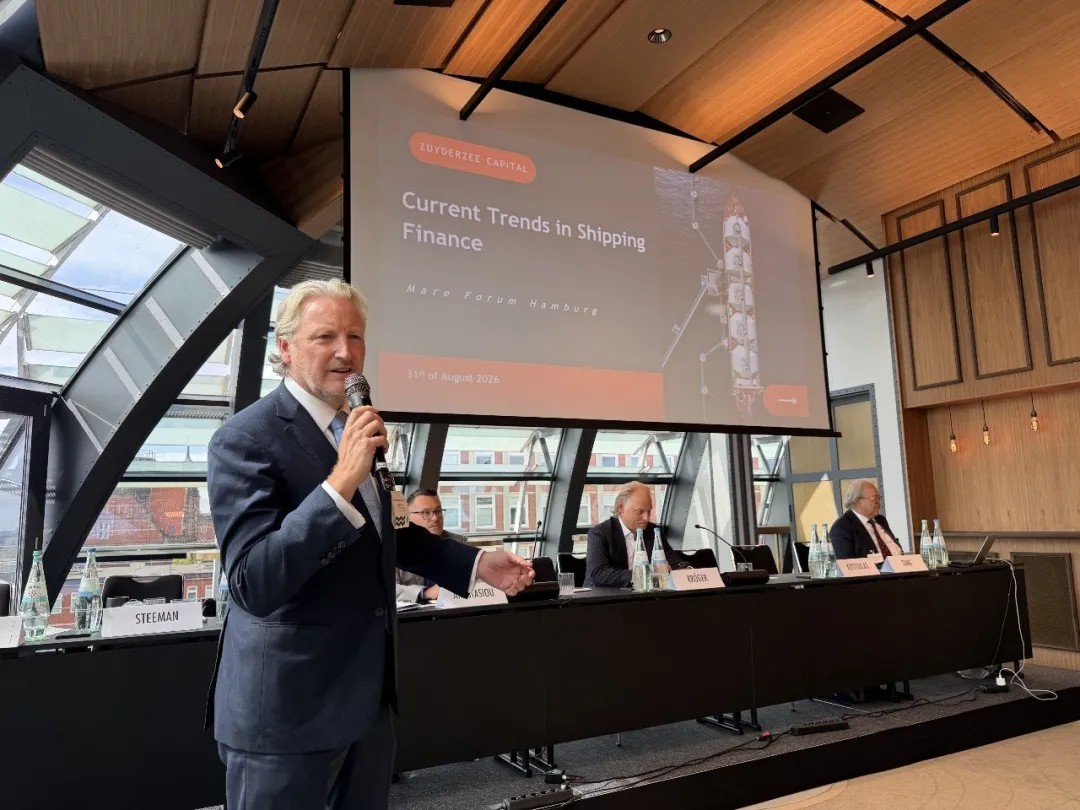
At the Xinde Marine Forum in Hamburg, Rajiv Ghose , Managing Director Network Operations at Hapag-Lloyd AG , described resilience through one word: adaptability. Liner networks were built around scale, utilisation and unit cost, but a disruption on one route can quickly force changes to capacity, port calls and schedules across the entire network. Cristina Sáenz de Santa María, CEO of DNV Maritime, chose predictability. Moritz Fuhrmann, Co-CEO and CFO of MPC Container Ships, chose discipline. Helge Bartels, Chief Operating Officer of Bernhard Schulte Shipmanagement, and Alexander Prokopakis of the International Bunker Industry Association repeatedly returned to cooperation.
Together, those answers form a different risk framework. No company can know with confidence where the next interruption will occur, whether in a waterway, a port, a supplier or a digital system. Investment therefore shifts from forecasting every crisis to absorbing shocks when they arrive. Alternative ports, route flexibility, a broader vessel mix, fuel flexibility, network-switching capability and liquidity all carry a cost in stable markets. During disruption, they shorten recovery time and protect revenue and customer relationships.
Efficiency and resilience have often been placed at opposite ends of the same trade-off. The more useful approach now is to price resilience. How many tonne-miles does a diversion add? How much cargo and customer trust is lost when schedules fail? How much downtime could a cyber incident create? What spare capacity is needed to cover a single supplier failure? Once security becomes a commercial variable, the lowest cost is no longer the lowest visible operating expense. It is the lowest risk-adjusted total cost.
2 Green Shipping Becomes a Portfolio Strategy
One of the most revealing sets of numbers in Hamburg came from Everllence . Chief Executive Uwe Lauber told the SMM opening conference that around 60% of the engines delivered by the company in 2025 were dual-fuel units. In its current orderbook, the share has fallen to roughly 30%.
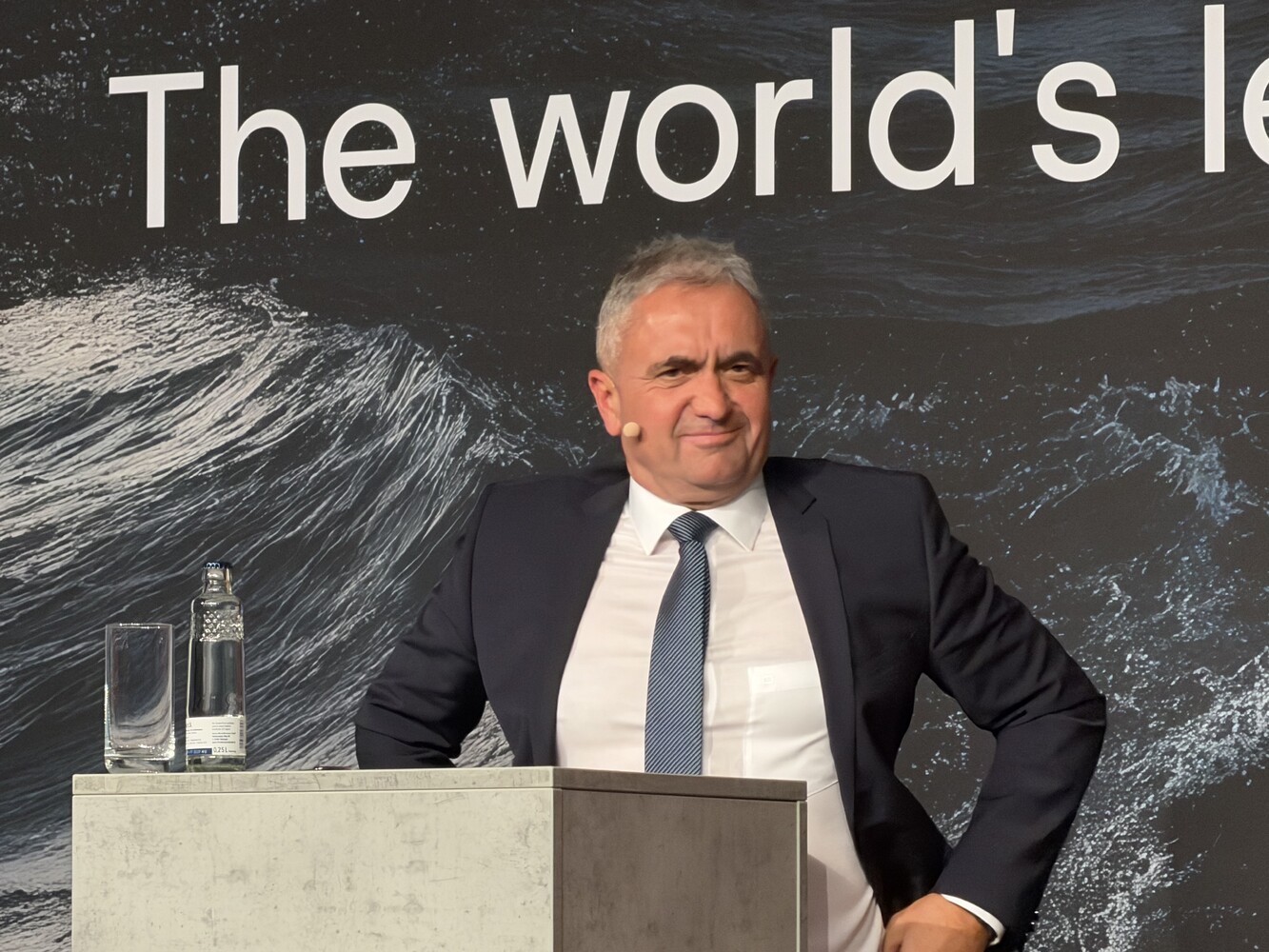
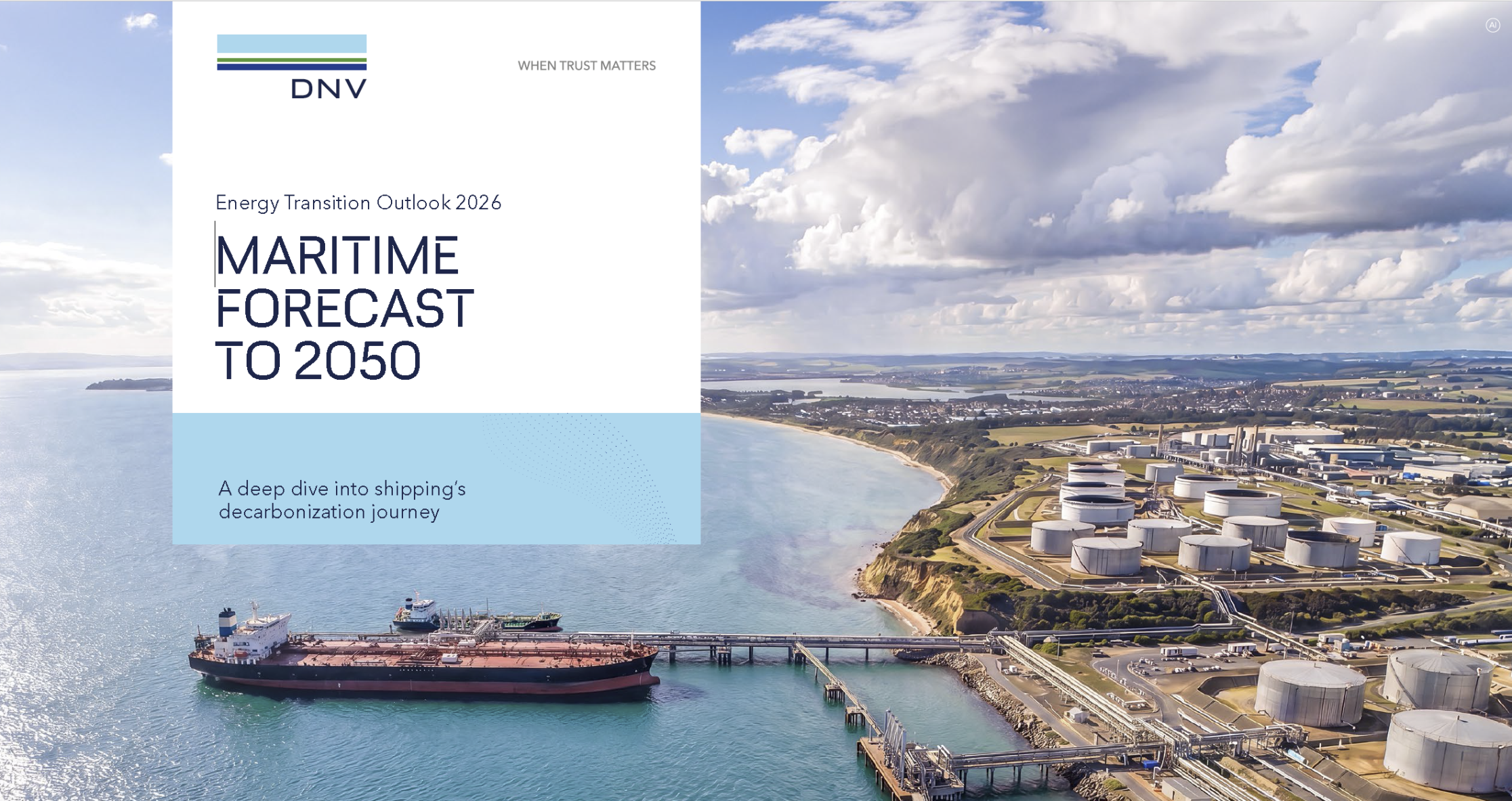
At the same time, DNV's tenth edition of Maritime Forecast to 2050 kept decarbonisation firmly at the centre of shipping's long-term agenda, while the formal advance of the IMO Net-Zero Framework has been delayed and the global regulatory signal remains incomplete.
The decline in dual-fuel ordering should not be read as a retreat from decarbonisation. It exposes the distance between technical feasibility and commercial viability. MPC Container Ships has already invested in methanol dual-fuel tonnage. Fuhrmann put the additional capital expenditure at around 10% to 15%, and in extreme cases as high as 20%. To cover that risk, all three vessels have at least seven years of contract visibility, with some arrangements extending to 15 years.
Yet methanol capability does not mean continuous methanol operation. Two of the vessels used biomethanol under unusual bunker-price conditions, but shipowners have little reason to absorb the entire premium when customers and the wider value chain are unwilling to pay for the more expensive fuel. A ship can be technically green and commercially unable to operate on its intended green fuel at the same time.
Four chains must close for an alternative-fuel investment to work. The onboard technology must operate safely. The fuel must reach the ship in sufficient volume and at an acceptable price. Regulations must recognise the emissions benefit with reasonable stability. Charterers or cargo owners must offer contracts that cover the additional capital and operating costs. A break in any one of these chains can leave dual-fuel capability as an expensive option that cannot yet be exercised.
DNV's use of four regulatory scenarios shows how wide the forecasting error has become. Under stronger global regulation, total fleet energy demand in 2050 could be up to 25% lower than under a regionally driven pathway. Demand for low-greenhouse-gas fuels ranges from about 4 million to 22 million tonnes of oil equivalent in 2030 and from 33 million to 185 million tonnes in 2050. A range that wide requires owners to manage fuel, regulation, charter coverage, retrofit pathways and residual value together. A fuel label alone cannot substitute for strategy.

Green transition is therefore becoming a portfolio exercise. A limited number of forward-looking fuel projects can build experience. Mature efficiency technologies can deliver immediate returns. Long-term charters can share additional capital expenditure. Hulls and machinery spaces can preserve future conversion routes, while balance sheets retain room for changes in regulation and fuel prices. Multiple pathways can coexist, provided each option has a defined trigger, a credible conversion cost and a clear exit mechanism.
3 Energy Efficiency Becomes the Common Currency
With major uncertainty still surrounding future fuels and global regulation, energy efficiency emerged as one of the few areas of broad agreement at SMM. The exhibition introduced an Energy Efficiency Hub where 24 companies presented wind-assisted propulsion, alternative propulsion and fleet-optimisation solutions across roughly 300 square metres. Conversations were increasingly about payback periods, installation windows, operational validation and fleetwide replication rather than conceptual potential.
The economics are straightforward. A ship running on green methanol needs to buy less expensive green methanol when it consumes less energy. The same logic applies to ammonia, LNG and conventional fuel. A higher carbon price strengthens the return from efficiency. If global regulation advances more slowly, the bunker bill still exists. Every tonne of energy avoided also reduces exposure to fuel prices, green premiums, carbon prices and compliance intensity.
DNV identifies more than 50 operational and technical efficiency measures, including hull-form optimisation, propellers and rudders, coatings, waste-heat recovery, shaft generators, wind-assisted propulsion, air lubrication, speed optimisation, weather routing, just-in-time arrival, digital tools and higher fleet utilisation. In one case involving a 5,000-TEU containership, hydrodynamic retrofits produced a theoretical annual fuel saving of 16%, with an estimated payback period of one to four years depending on future fuel prices.
Operational evidence gives the argument greater weight. Julian Zhu, Chief Regional Officer for Asia at Silverstream Technologies, told the Xinde Marine Forum that the company's air-lubrication system had delivered net efficiency gains of around 5.5% on a 7,800-lane-metre ro-ro vessel, 5.6% on a large cruise ship and 5.3% on a liquid CO2 carrier. His conclusion was simple: first save the energy the vessel does not need to consume.
Efficiency also increases the value of fuel optionality. A vessel with a lower baseline energy requirement needs less scarce green fuel, faces less pressure on tank capacity and bunkering availability, and is less sensitive to future carbon prices. Owners can reduce total system demand first and then decide how to supply the remaining energy. That sequence protects cash flow more effectively than waiting for one fuel to emerge as the final winner, and it can be applied across the existing fleet at scale.
4 Future Ships Sell Executable Options
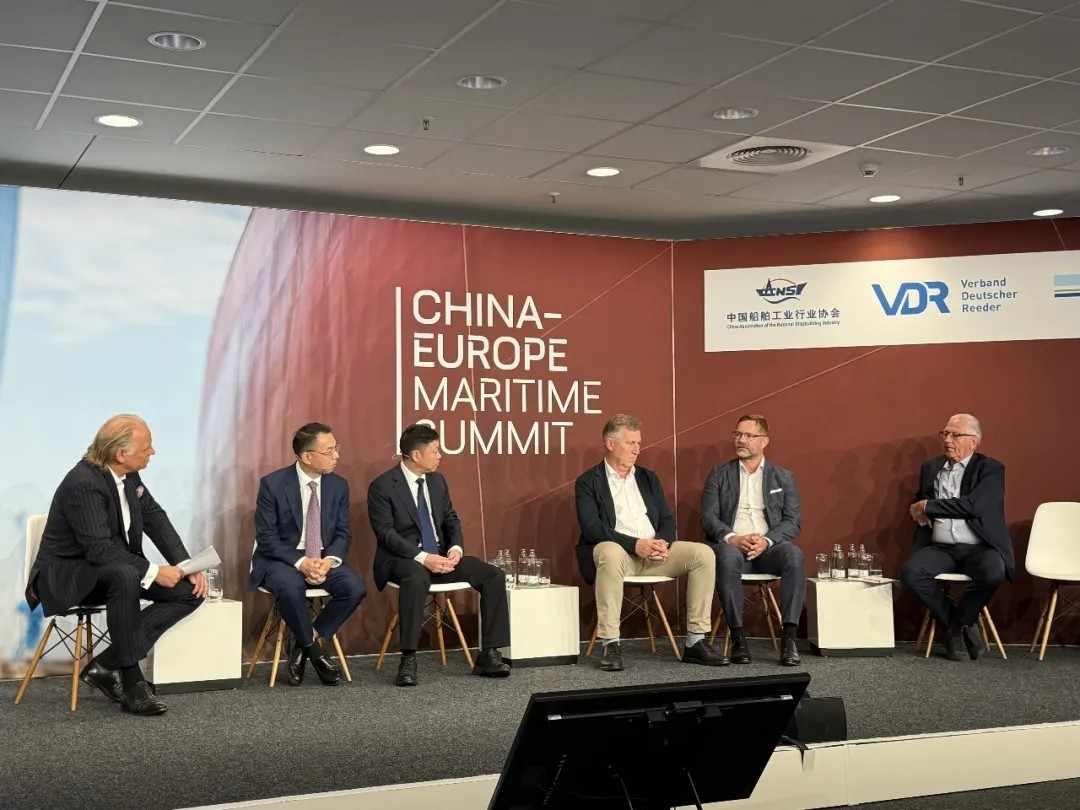
Ships ordered today will probably still be trading in 2040, and some will operate beyond 2050. At the China-Europe Maritime Summit, Dr. Martin Kröger , Chief Executive of the German Shipowners' Association, asked the central question directly: when fuel, regulation and trade flows cannot be predicted with confidence, how should a shipyard design an asset with a service life of two or three decades? The common ground among Chinese shipyards, design institutes and European owners included low baseline energy demand, configurable platforms, defined fuel-conversion pathways, continuous software upgrades and global service after delivery.
The term fuel-ready creates asset value only when it is translated into engineering detail. Does the machinery space reserve sufficient room? Can fuel tanks, structures and piping be reconfigured? Have hazardous zones and fire-safety arrangements been considered? Can the electrical architecture accept batteries or additional equipment? How much capital and drydock time would conversion require? If a future retrofit still demands extensive structural disruption, a complete system redesign or a fuel network that does not exist, a ready notation will offer limited support to residual value.
Banks have begun to examine these differences. During the ship-finance session at the Xinde Marine Forum, Chris Chatterton , Maritime Director at the Global Centre for Maritime Decarbonisation, argued against concentrating all asset risk in one fuel pathway. Aimee Shen of Berenberg Bank said that fuel flexibility and stronger residual-value resilience can support higher leverage, although green or multi-fuel capability does not automatically produce a lower loan margin. The financial value of optionality ultimately depends on engineering evidence, conversion cost and contractual execution.
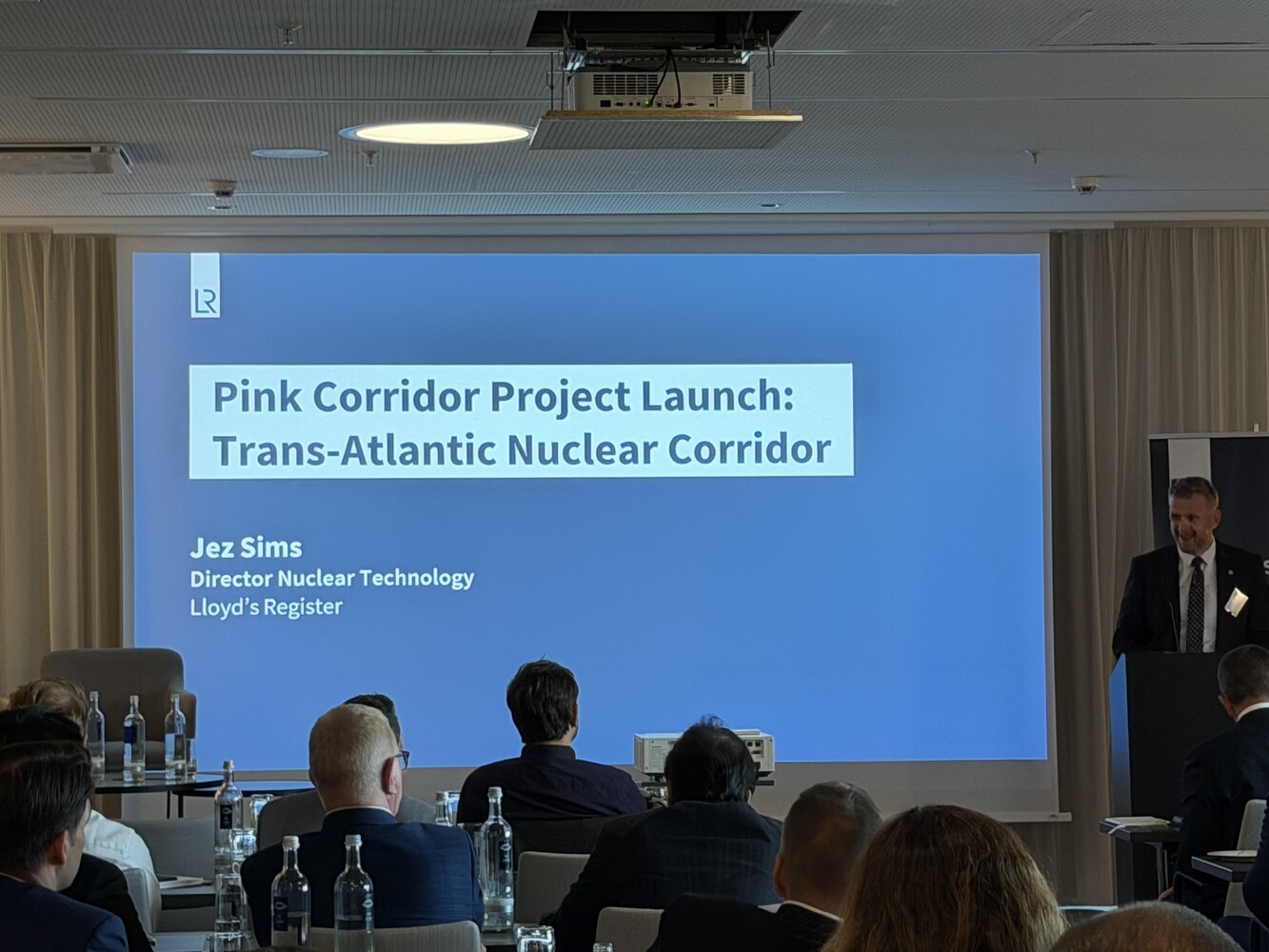
During SMM, Lloyd's Register, A.P. Moller - Maersk, the Port of Felixstowe and the Port of Charleston launched the Pink Corridor study. It will examine the theoretical deployment of a nuclear-powered containership on a transatlantic route, including port access, security, cyber resilience, emergency response, insurance, safeguards and alignment between maritime and nuclear regulation. The project is far removed from a commercial newbuilding order and should not be reported as an indication that Maersk is preparing to order a nuclear-powered vessel. It does show that the industry's technology set is still widening, and that ship design and regulation need space to examine pathways that remain immature.
Vessel valuation may gradually move away from one fixed design point and towards a range of operating conditions that the asset can accommodate. Efficiency establishes the cost floor. Retrofitability determines whether the range can expand. Digital architecture decides whether capabilities can continue to improve. A global service network determines whether options can actually be exercised. A future-ready vessel does not require an accurate prediction of the fuel used in 2050. It requires the ability to make another viable choice when 2050 arrives.
5 AI Moves Into Maritime Workflows
Artificial intelligence remained prominent in Hamburg, but the discussion had become more disciplined. SMM's closing assessment noted that customers were asking less about theoretical potential and more about deployable collision-avoidance solutions. Forum discussions moved towards fleet optimisation, predictive maintenance, autonomous systems, situational awareness, and the certification, liability and traceability of decisions in safety-critical settings. The industry has moved beyond asking whether shipping can use AI. The deployment questions are now where it produces a verifiable result and who remains accountable when it fails.
Claus Reimers, Chief Product and Technology Officer at OneOcean, described AI at the Xinde Marine Forum as a force multiplier. The other half of that description matters just as much. When data, systems, processes and people are weak, AI can multiply disorder as effectively as it multiplies capability. Shipping companies need to understand their digital maturity before adding automation, analytics, connected sensors and AI, while ensuring that seafarers and shore teams understand the boundaries of the tools they use.
Safety-critical applications operate under conditions very different from consumer technology. A speed recommendation should identify the weather, vessel-condition and market data on which it relies. A maintenance warning needs to lead back to sensor readings, thresholds and equipment history. A collision-avoidance recommendation must fit with COLREGs, the master's responsibility and defined system-failure modes. Model accuracy is only the entry point. Data quality, version control, cyber security, independent assurance and the human responsibility chain determine whether the system can safely go to sea.
The longer-term value lies in closing the data loop. Sensors send fuel-consumption, vibration, speed and failure data ashore. Operational outcomes then feed back into the next vessel design and equipment iteration. China already possesses a vast series-production orderbook and a large engineering base. If operational data can return to the design system within clear owner-consent, intellectual-property and cyber-security boundaries, scale can be converted into faster learning. A shipyard will then provide more than hardware completed on the delivery date. It will support an energy, equipment and software platform that can continue to evolve over 20 years of operation.
6 Shipbuilding Competition Expands Into Industrial Systems
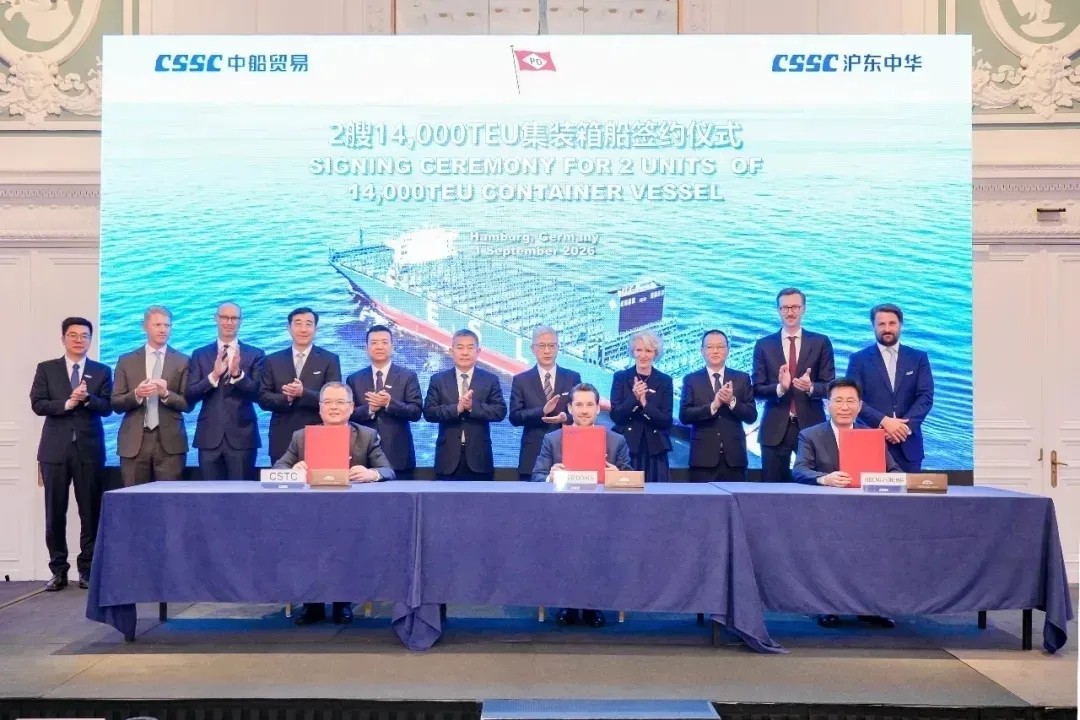
SMM remains an important window into global shipbuilding competition, although the legal status of the agreements announced during the fair must be distinguished carefully. Guangzhou Shipyard International signed firm contracts for ten 8,200-CEU LNG dual-fuel pure car and truck carriers with a total value of more than $1 billion and deliveries scheduled from 2029 to 2031. German owner Peter Döhle added two 14,000-TEU containerships at Hudong-Zhonghua, expanding the series from four ships to six after the first vessel in the original series was delivered about five months ahead of schedule.
Two other projects remained memoranda of understanding. SAL Heavy Lift signed an MOU with Wuhu Shipyard for five additional 14,600-dwt Orca-class multipurpose heavy-lift vessels. If converted into firm contracts, the programme between the two companies could grow to ten ships. Shanghai Waigaoqiao Shipbuilding and NOR Cruises signed an MOU covering two plus three mid-sized cruise ships. A firm conversion would take a Chinese commercial shipyard further into an international segment still dominated by European builders. Counting these MOUs as orders would overstate the immediate result, while ignoring them would miss changes in product boundaries and customer intent.
Together, the projects cover PCTCs, large containerships, multipurpose heavy-lift vessels and cruise ships. They reveal more than contracting volume. Repeat business is increasing and the technical frontier is moving. A first order can be influenced by price, berth availability and the market cycle. A follow-on order usually reflects experience with design coordination, procurement, construction quality, sea trials, delivery performance and early operations.
Measured in compensated gross tonnes, Chinese yards captured around 76% of global new contracting in the first eight months of 2026 and held approximately 67.2% of the global orderbook at the end of August. Behind that scale is a continuous learning system. At the China-Europe Maritime Summit, Zhou Xuhui, President of Guangzhou Shipyard International, said that China State Shipbuilding Corporation had more than 80,000 engineering and technical personnel, with around 2,000 at GSI alone. He noted that the yard's MR product tanker design had reached its seventeenth generation, only one generation behind the iPhone. Dense ordering allows design, procurement, production and delivery data to move into the next ship, while long-term planning, finance, engineering talent and supplier concentration shorten each iteration cycle.
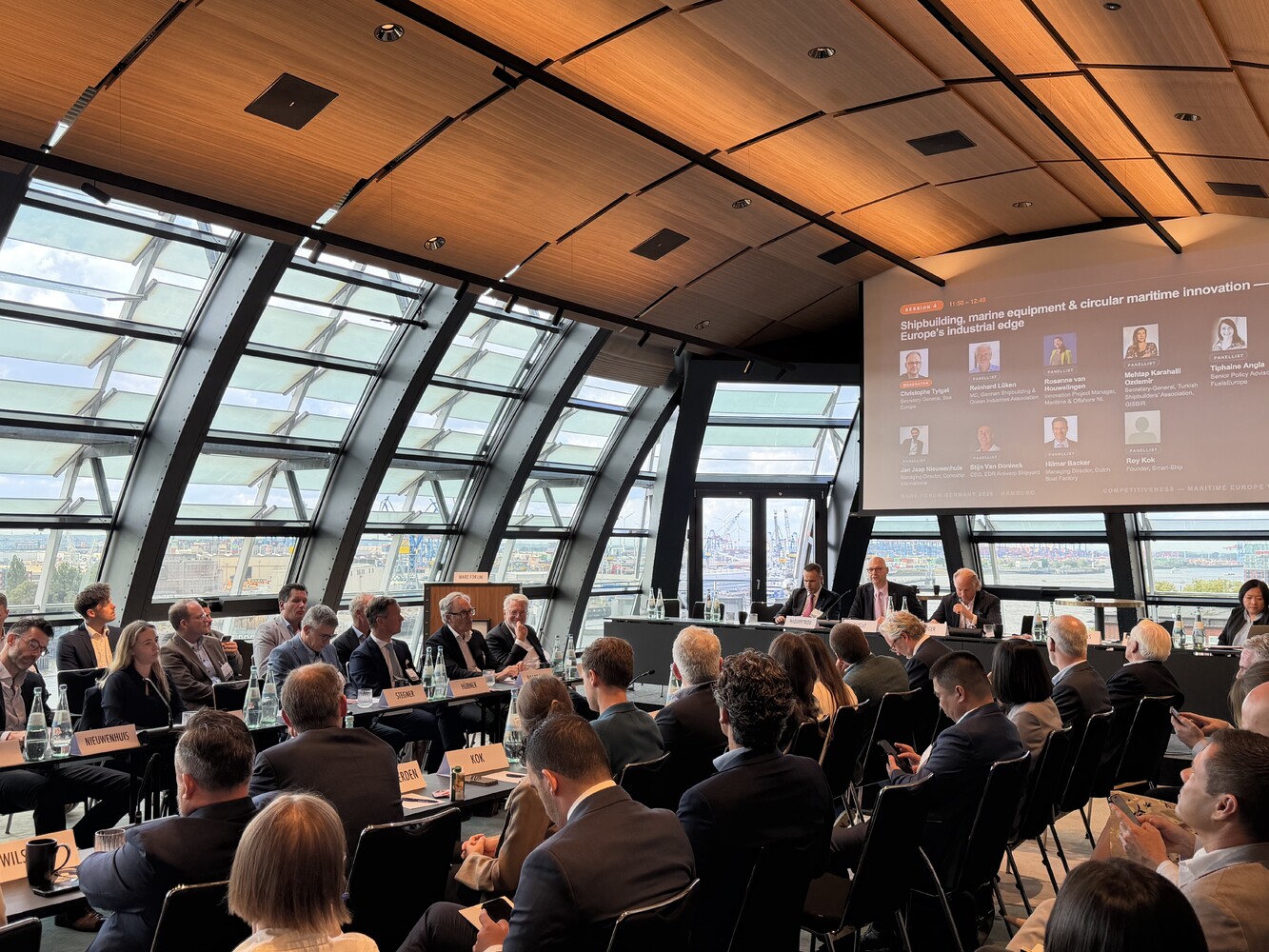
China's lead does not mean that other maritime industrial systems are disappearing. Europe retains major strengths in ship design, high-end equipment, classification rules, engine technology, cruise ships and specialised vessels. By contract value, European yards still account for 96% of the global cruise orderbook, worth around $72 billion. Mare Forum Germany framed its entire competitiveness debate around Maritime Europe versus the World. The weaknesses identified were concentrated in the path from technology to first orders, construction finance, refund guarantees and scaled production. Europe's problem is less a disappearance of capability than a break between technological strength and industrial execution.
India also deserves long-term attention after participating in SMM with a national pavilion for the first time. The Indian government has approved a support package worth INR 697.25 billion, including shipbuilding financial assistance, a maritime development fund and a shipbuilding development programme. It aims to expand annual domestic capacity to approximately 4.5 million gross tonnes, enter the global top ten by 2030 and the top five by 2047. Policy funding does not automatically become shipyard productivity. Engineers, suppliers, quality systems and repeat delivery must still be built over many years. The policy direction nevertheless shows that more governments now view shipbuilding as a common foundation for trade security, energy security, defence, employment and industrial capability.
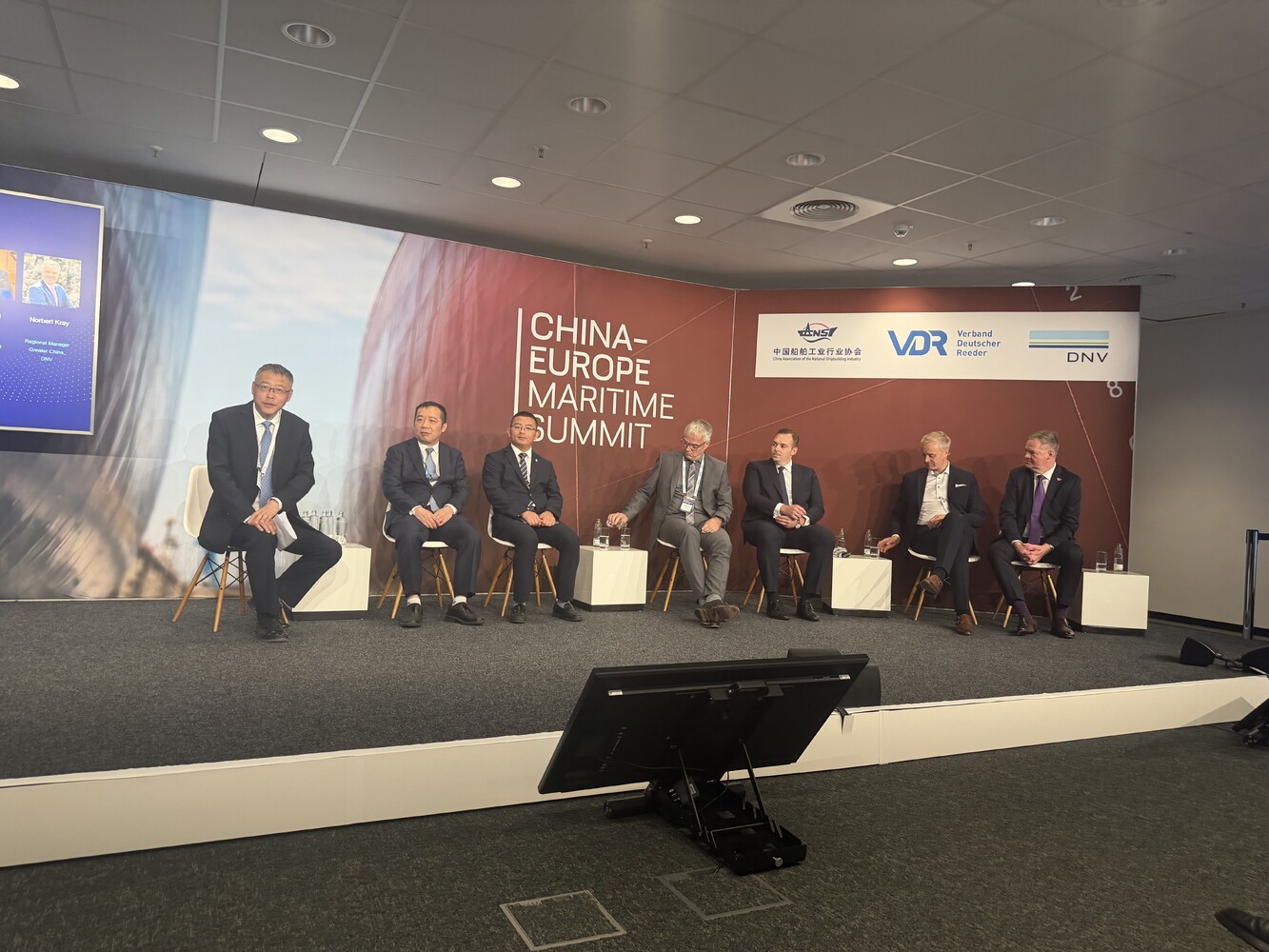
The unit of competition is expanding from the individual yard to the industrial ecosystem. That also changes China's next challenge. Many ships built in China may not return to the country for 20 years after delivery. European owners at the China-Europe Maritime Summit raised questions about after-sales support, spare parts, software updates, cyber security, local response and green retrofits. These capabilities will increasingly enter lifecycle-cost calculations and decisions on the next order. Capacity and delivery performance underpin China's position today. A global service network will determine whether that position can be sustained into the 2030s.
The current boom also contains a timing mismatch. The same orderbook that creates berth scarcity and equipment inflation today will become vessel supply three or four years from now. If Red Sea diversions ease around the delivery peak, the effective capacity released by shorter voyages could arrive at the same time as a wave of new ships. Yards will need to move from filling berths to selecting customers, vessel types and prices more carefully. Owners need to model the supply and demand of the delivery year rather than using today's freight market to value an asset entering service in 2030.
7 Capital Is Abundant but Risk Allocation Sets the Pace
A global orderbook worth around $666.4 billion shows that shipping is not suffering from a general shortage of capital. Many owners have strengthened their balance sheets over the past several years, while banks, leasing companies, private-credit funds and capital markets compete for high-quality transactions. The recurring problem in Hamburg's finance discussions was that capital and risk were not always placed in the same contract.
An owner may pay 10% to 20% more for an alternative-fuel vessel. A fuel producer must invest in production facilities. A port has to build bunkering infrastructure. Charterers and cargo owners decide whether to pay the green premium. Banks focus on compliance and residual value. Each participant wants another party to move first. Fuhrmann's use of seven to 15 years of contract visibility to cover part of the risk on methanol dual-fuel ships shows how contract design can turn technical capability into a bankable asset. A long-term charter protects revenue and also functions as part of the infrastructure for transition.
Risk allocation can be made more precise. Technical risk can be shared among yards, equipment suppliers, class societies and warranty structures. Fuel-price and supply risk can be managed through long-term procurement, index-linked clauses and alternative-fuel capability. Market risk can be divided through charter duration, freight mechanisms and cargo-owner commitments. Policy risk requires global rules, transition arrangements and public capital to create a more stable boundary. Without these structures, money will continue to flow towards conventional, mature projects with fast and visible returns, while green technologies struggle to move from principle to replication.
Capital discipline therefore matters more than the simple availability of debt. At the Xinde Marine Forum, Pontus Sergelius, Chief Investment Officer at Seacon Shipping Germany, urged investors to identify the risks they can manage, decline investments they do not understand and remain aware of the cycle. Aimee Shen also stressed that loan pricing is only one part of an investment decision. Long-term earnings, residual value, flexibility and regulatory adaptability matter more. A supercycle makes capital easier to obtain and expensive assets easier to justify. Long-term returns depend on whether a company knows who should carry each risk and when to stop adding exposure.
Keeping Options Open Across Multiple Futures
SMM 2026 did not signal that green shipping is losing momentum, and it did not identify one fuel that will dominate in 2050. Hamburg revealed a more mature and more difficult industrial transition. Security and resilience have entered top-level strategy. Efficiency has become a cross-scenario investment. Alternative fuels are moving from a race between pathways to portfolio management. AI is moving from demonstrations into controlled industrial deployment. Shipbuilding competition is extending from individual berths to national industrial systems. Finance is asking whether each risk has been allocated to a party capable of carrying it.
For shipowners, a credible vessel for 2050 needs low energy consumption, defined retrofit routes, an upgradeable digital architecture, and charter coverage and a balance sheet able to withstand market cycles. For shipyards, orderbook scale needs to become global after-sales support, software updates, cyber security, spare-parts availability and retrofit capability. For equipment suppliers and class societies, operational evidence, verifiable savings and clear accountability will carry more commercial value than technology labels. For policymakers, stable and compatible rules, together with mechanisms that share the risk of first projects, will determine whether technical ambition becomes investment at scale.
Shipping is accustomed to cycles, but it now faces a problem more complex than the cycle alone. Geopolitics, trade routes, energy systems, carbon rules and digital technologies are changing at the same time. A vessel ordered today will pass through several market peaks and downturns. It may change fuel, add batteries and efficiency systems, run software that did not exist on the delivery date, and enter trades that have not yet formed.
Long-term competitiveness is therefore unlikely to come from one successful bet. It will come from the ability to keep adjusting: consume less energy, preserve more technical routes, avoid risks the company cannot control, use contracts to allocate risk to the party best able to manage it, maintain capital discipline in strong markets and leave upgrade interfaces open as technology accelerates.
The maritime industry has long excelled at making ships larger, faster and cheaper. After Hamburg, the next test is to give vessels, networks, balance sheets and industrial systems more room to manoeuvre. The future will not wait until it becomes clear. The ability to adapt across multiple futures may be the most investable certainty the industry has.

READ MORE
 Sustainability
IMO Chief Defends Net Zero Ambition in Shanghai as Shipping Awaits Clearer Rules
 Sustainability
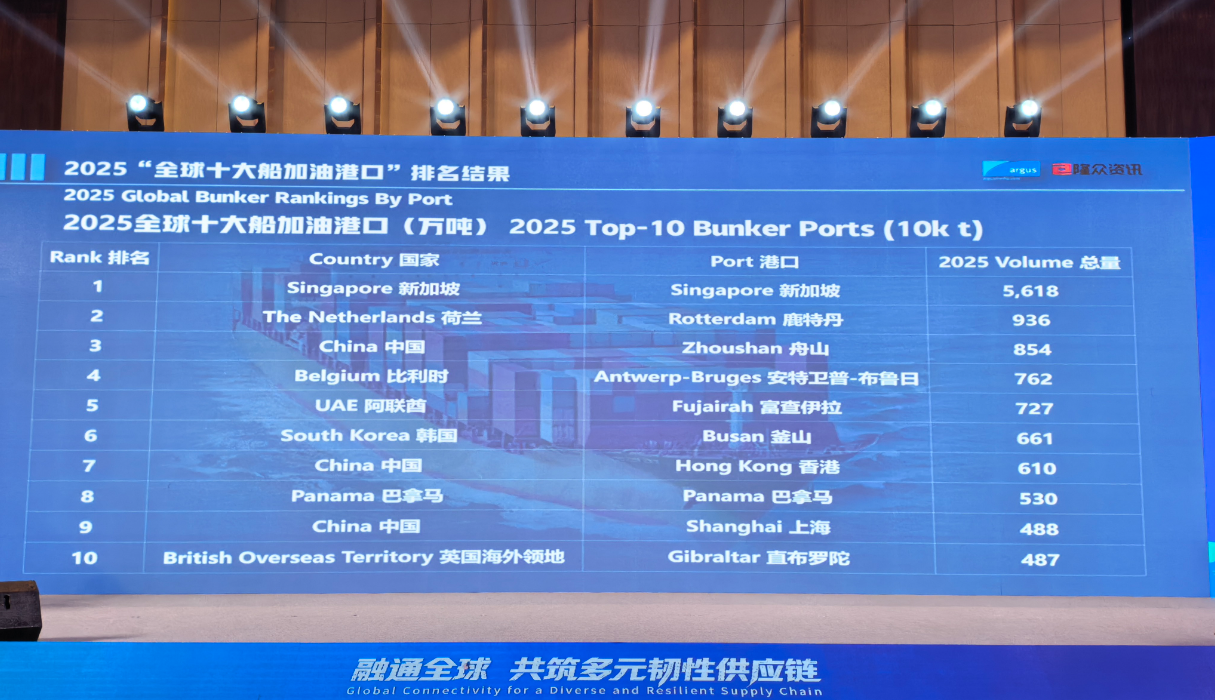
Zhoushan Overtakes Fujairah to Become World's Third-Largest Bunkering Port
 Sustainability
Shiptec China 2026.10.28-10.30 |Invitation of Green Energy for a Smart Future – Forum on New Energy Ship Technology and Ecosystem
 Sustainability
MI and Green Marine Partner to Strengthen Methanol Safety and Crew Training
 Sustainability
EPS Secures First FEET Financing for Two Wind-Assisted Vessels
 Sustainability
Car Carriers Face Fuel Supply and Emissions Accounting Challenges
 Sustainability
5,000 Tonnes: Maersk Completes World’s Largest Ethanol Bunkering in Singapore
 Sustainability
PetroChina Expands Multi-Fuel Bunkering in Singapore
 Sustainability
MPA, CMA CGM and SLNG Join Forces on Bio-LNG Bunkering
 Sustainability