


The Next Shipping Race Will Be About Who Can Burn Less Fuel
From SMM Hamburg 2026 to the latest DNV and American Bureau of Shipping (ABS) outlooks, energy efficiency is moving beyond the engine room and becoming a decisive factor in ship design, operating costs, financing and asset value



For years, shipping’s decarbonisation debate has revolved around one overriding question: what will ships burn in the future? LNG, methanol, ammonia, hydrogen, biofuels and even nuclear propulsion have all entered the discussion, while shipowners have been asked to make investment decisions on vessels that may remain in service until 2050 without knowing which fuels will be available at scale, where they will be supplied or how they will ultimately be regulated and priced.
A different question came into much sharper focus at SMM Hamburg 2026: how much energy will a ship actually need?
This question cuts through much of the uncertainty surrounding future fuels. Whether a vessel ultimately runs on conventional fuel, LNG, methanol, ammonia or another low-carbon energy source, reducing the energy required to move cargo will continue to create value. A ship that consumes less fuel is cheaper to operate, less exposed to carbon costs, easier to keep compliant and less dependent on the availability of expensive alternative fuels. As those advantages begin to influence chartering, financing and second-hand values, energy efficiency is moving from a technical consideration into the centre of shipping strategy.
Energy efficiency is becoming shipping’s common ground
The prominence of energy efficiency at SMM Hamburg 2026 reflected a wider change in the industry’s priorities. The exhibition introduced an Energy Efficiency Hub for the first time, bringing together 24 companies across approximately 300 square metres to present wind-assisted propulsion, alternative propulsion concepts and fleet optimisation solutions. The significance of the hub was not simply the number of technologies displayed, but the fact that classification societies, engine manufacturers, propulsion specialists, electrical system providers, air lubrication companies, digital platforms and shipowners were increasingly speaking the same language.
The discussion has become more commercially demanding. A supplier’s headline fuel-saving percentage is no longer sufficient on its own. Shipowners increasingly want to know how a technology performs at different speeds and draughts, whether its benefits can be verified during normal trading, how it interacts with other onboard systems, whether installation can be combined with a scheduled drydocking and how quickly the investment can be recovered. They also want to know whether the performance demonstrated on one vessel can be reproduced across dozens of ships without creating excessive technical complexity or operational disruption.
That change is important because energy efficiency is no longer being treated as an optional addition to a future-fuel strategy. It is becoming the element that makes every fuel strategy more manageable. Alternative fuels are generally expected to be more expensive, less energy-dense or more difficult to store and handle than conventional marine fuels. Reducing a ship’s energy requirement therefore lowers not only its immediate fuel bill but also the volume of costly low-carbon fuel that must eventually be produced, bunkered and carried onboard. Efficiency does not resolve the fuel transition, but it reduces the scale and cost of the problem that the fuel transition must solve.
DNV and ABS reach a similar conclusion in their latest outlooks, although they approach it from different directions. DNV’s Maritime Forecast to 2050 identifies energy efficiency as one of the most practical measures available to shipowners today. At the Xinde Marine Hamburg Forum 2026, @DNV Maritime CEO Cristina Sáenz de Santa María was asked what shipping companies could do while regulatory and fuel pathways remained uncertain. Her answer was direct: “Energy efficiency.” IBIA Executive Director Alexander Prokopakis responded that she had effectively taken his answer, reinforcing the degree to which efficiency has become common ground across different parts of the maritime value chain.
ABS presents the issue as a capital-allocation challenge. Its 2026 Sustainability Outlook: Decision Point – Practical Pathways to 2035 describes the coming decade as one of “execution, not prediction”. The companies best positioned for the transition may not be those that correctly identify a single winning fuel years in advance, but those that invest in capabilities that retain their value across several possible regulatory and fuel scenarios. ABS calls such investments “scenario-proof”. Energy efficiency fits that description closely because lower consumption remains commercially beneficial whether carbon prices rise quickly or slowly, whether alternative fuels scale as expected or remain scarce, and whether global regulation converges or continues to develop unevenly.
A 16% reduction is an industrial-scale opportunity
The economic scale of energy efficiency explains why it is moving from technical departments into boardrooms. DNV estimates that, with sufficient regulatory incentives and greenhouse-gas pricing signals, energy-efficiency measures combined with operational changes such as speed optimisation could reduce the global fleet’s energy consumption by as much as 16% by 2030 compared with a business-as-usual scenario. That would equate to approximately 40 million tonnes of fuel saved annually, around 120 million tonnes of CO₂-equivalent emissions avoided and about USD 23 billion in yearly fuel savings based on a fuel price of USD 580 per tonne.
These figures place energy efficiency in a different category from the marginal improvements with which it is sometimes associated. The opportunity does not depend on a single breakthrough device. DNV identifies more than 50 measures covering hull design, propellers, rudders, coatings, wind-assisted propulsion, air lubrication, waste heat recovery, engine optimisation, shaft generators, speed management, trim optimisation, weather routing and digital performance monitoring. Some require major capital expenditure and extensive engineering, while others depend more heavily on operational discipline and better use of data. Their combined significance lies in addressing energy losses throughout the vessel rather than focusing on one piece of machinery.
The longer-term implications may be greater still. DNV’s scenarios indicate that the difference in fleet energy demand between high and low adoption of efficiency measures could reach approximately 25–28% by 2050. Such a gap would affect far more than bunker expenditure. It would determine how much green fuel the maritime industry needs to secure, how much production and bunkering infrastructure must be built and how exposed individual shipping companies remain to fuel scarcity and price volatility. A fleet that requires materially less energy would have greater flexibility in sourcing fuel and a lower cost base under almost any plausible transition pathway.
Efficiency is therefore becoming a form of strategic optionality. A dual-fuel engine may preserve a shipowner’s ability to use more than one fuel, but a low-energy vessel preserves flexibility across every fuel. If the eventual green fuel is expensive, lower consumption limits the cost penalty. If supply is constrained, the vessel requires less of it. If regulations tighten faster than expected, the ship begins from a more competitive emissions baseline. That combination gives energy efficiency a value that extends well beyond the direct price of the fuel saved.
From Silverstream to Everllence: the shift toward whole-ship efficiency
The evolution of air lubrication illustrates how the industry is moving from optimising individual pieces of equipment to managing the vessel as an integrated energy system. At the Xinde Marine Hamburg Forum, Silverstream Technologies ’ Asia Chief Regional Officer Julian Zhu argued that the green transition cannot revolve entirely around future fuels because hull, propulsion and efficiency technologies address the more fundamental task of reducing the energy needed to move a ship. Their benefits are fuel-agnostic: savings remain available regardless of whether the vessel uses conventional fuel, LNG, methanol or another energy source.
Silverstream reported net energy savings of approximately 5.5% on a 7,800 lane-metre Ro-Ro vessel, 5.6% on a large cruise ship and 5.3% on a liquid CO₂ carrier. At the time of the forum, the company had more than 160 systems in operation across approximately 250 projects. Zhu summarised the underlying logic in a single sentence: “Clean energy is the energy you don’t need.” From a shipowner’s perspective, the lowest-risk portion of the future energy supply may be the fuel that never has to be purchased, stored or consumed.
The Engine Supported Air Lubrication system jointly introduced by Everllence and Silverstream takes this logic further. Conventional air lubrication systems generally use independent electrically driven compressors to supply air beneath the hull. ESAL instead seeks to use pressurised air from the two-stroke main engine’s existing scavenge-air system, linking the engine, turbocharger, scavenge-air supply, engine controls and hull hydrodynamics. Everllence has indicated a potential net efficiency gain of up to approximately 6%.
The engineering significance lies in how that net gain is calculated. Supplying air beneath the hull requires energy, while reducing frictional resistance saves propulsion power. Using the main engine’s air system changes the electrical load that would otherwise be required by compressors, but it may also affect engine and turbocharger operation. The final result therefore cannot be understood by looking at the air lubrication equipment or the engine in isolation. It must be measured through the vessel’s total energy balance: how much additional energy is required to supply the air, how much electrical demand is avoided, how much hull resistance is removed and how much net fuel consumption falls under actual operating conditions.
The same system-level approach is becoming visible elsewhere. At the Hamburg forum, CSSC Power Conversion Technology General Manager Wuyun Xiang described how shaft generators, batteries and gensets are increasingly being placed within a unified energy-management architecture. EMS, BMS, PMS and power-flow control systems can determine which equipment should operate and how power should be distributed as the vessel’s propulsion and hotel loads change. The company reported that it had installed more than 600 shaft-generator systems, including over 30 hybrid solutions.
Zhenjiang Tongzhou Propeller CEO Chen Fuxin offered another perspective from the propulsion chain. Over the preceding decade, the company had carried out efficiency-related work on more than 1,500 vessels, helping customers save more than 2.3 million tonnes of fuel in aggregate. On some Capesize bulk carriers, the combination of high-efficiency propellers and energy-saving devices had produced overall efficiency improvements of approximately 15% or more, with a typical payback period of around 18 months.
Air lubrication, propeller optimisation, electrification and digital control may appear to belong to separate technology categories, but they are addressing the same energy balance. Once fuel enters a vessel, only part of its energy is converted into useful propulsion and onboard work. The remainder is lost through exhaust heat, machinery inefficiencies, propeller losses, hull friction and poorly matched operating conditions. DNV’s emphasis on an “integrated system approach” reflects this reality: the engine, auxiliary machinery, boilers, electrical system, propulsion train, hull and operating profile must increasingly be analysed as parts of one connected system.
A few percentage points can become tens of millions of dollars
Energy efficiency has acquired greater strategic weight because even modest percentage improvements can generate substantial cash flow when applied across a fleet. Star Bulk provides a useful example. Approximately 88% of its fleet has been equipped with energy-saving devices, and the company has continued investing in pre-swirl ducts, propeller optimisation, advanced hull coatings and robotic hull cleaning. Its fleet consumes about 650,000 tonnes of fuel annually. A 10% reduction would save approximately 65,000 tonnes; at USD 600 per tonne, that would represent around USD 39 million in annual fuel expenditure.
The calculation shows why scalability matters more than a record achieved by one demonstration vessel. A technology that consistently saves 3–5% across 50 or 100 ships may create far more value than one capable of producing a much higher headline number under a narrow set of favourable conditions. Large shipowners are consequently evaluating not only technical potential but also installation complexity, operational reliability, crew requirements, maintenance costs and the consistency of performance across different routes and weather conditions.
Carbon regulation adds further value to each tonne of fuel avoided. The return on an efficiency investment can no longer be reduced to the bunker price alone. It may include lower EU ETS exposure, improved FuelEU Maritime compliance, stronger CII performance, reduced future IMO compliance costs, increased charter competitiveness, more favourable financing and better protection of the vessel’s residual value. ABS describes carbon costs as shipping’s “second fuel bill”, a useful formulation because it captures how the same tonne of fuel may generate both a commodity cost and a regulatory cost.
Under the assumptions used in the ABS outlook, a conventional-fuel 14,000 TEU container ship operating on European routes could face carbon-related operating costs approaching USD 20 million per year by 2035, equivalent to roughly USD 55,000 per day. A medium-sized bulk carrier consuming about 30 tonnes of fuel per day and exposed to the European market could face annual carbon-related costs of close to USD 4 million. These estimates depend on the report’s assumptions regarding regulation, carbon prices and trading patterns and should not be interpreted as a universal cost forecast for every vessel. They nevertheless demonstrate how the value of saving one tonne of fuel may expand well beyond the market price of that fuel.
This changes the investment case for efficiency technologies. A retrofit that appears marginal when assessed solely against today’s bunker price may become substantially more attractive once avoided carbon charges, compliance benefits and charter-market advantages are included. The value will be especially pronounced for vessels with long remaining commercial lives, because a daily saving of three or five tonnes can accumulate into a major cash-flow advantage over ten or fifteen years.
Efficiency is entering charter rates, financing and ship values
The influence of energy efficiency is already extending beyond operating costs. ABS, citing Poseidon Principles data, notes that the initiative’s 36 signatory institutions represent approximately 75% of global ship finance. Some lenders are offering spreads around 10–30 basis points lower for vessels with CII ratings of A or B, or for assets more closely aligned with Poseidon Principles decarbonisation trajectories. Ships rated D or E may face higher margins, shorter tenors and greater covenant risk. CII performance is also beginning to enter asset-valuation discussions alongside age, size and technical specification.

The process remains at an early stage. ABS’s survey of shipowners, charterers and operators suggests that the spot market has yet to develop a universal green premium. Time-charter markets, however, are paying closer attention to consumption and emissions performance because EU ETS and FuelEU Maritime can already turn efficiency differences into identifiable operating costs. ABS describes fuel efficiency as “the bridge” connecting today’s bunker economics and CII performance with the global carbon-regulation regime that is still taking shape.
The implications for vessel valuation could be profound. An eco vessel has traditionally been marketed on the basis that it burns several tonnes less fuel per day. Once carbon costs, financing terms, charter demand and regulatory risk all begin to recognise the same consumption difference, those daily savings can be capitalised into differences in earnings, financing cost and second-hand value. Two ships of the same type, size and age may therefore develop materially different economic lives if one has lower unit transport energy consumption, a stronger CII trajectory and independently verified efficiency improvements.
This may gradually change the industry’s definition of a modern vessel. Calendar age and deadweight capacity will remain important, but they may no longer provide a sufficient picture of asset quality. A technically well-maintained ship with an efficient propulsion package, optimised hull performance and strong operational data may retain charter and financing access for longer than a nominally similar but less efficient vessel. Energy performance is becoming part of the vessel’s commercial identity and may increasingly determine whether an older asset remains competitive or moves towards obsolescence.
The right solution depends on how the ship actually trades
There is no universal efficiency package for every vessel type. DNV data indicates that container ships, car carriers, LNG carriers and cruise ships are leading the adoption of advanced, capital-intensive technologies. Major liner companies have begun carrying out hydrodynamic upgrades across hundreds of existing vessels, including bulbous-bow modifications, propeller improvements and pre-swirl devices. LNG carriers are combining efficient two-stroke engines, shaft generators, low-boil-off containment systems, boil-off gas management, reliquefaction, hydrodynamic devices and air lubrication. Car carriers have become one of the most active markets for air lubrication, while cruise vessels must optimise both propulsion demand and their substantial hotel loads.
Bulk carriers and tankers often require a more selective approach built around lower-cost retrofits and operational improvements. Mewis ducts, propeller boss cap fins, optimised rudders, slow steaming, trim and ballast management, variable-frequency drives and waste heat recovery can all offer value, but the result depends heavily on the ship’s speed profile, draught, route and remaining commercial life. DNV’s analysis of the 2024 operating performance of 132 VLCCs found that newer generations achieved significantly better CII results than older vessels, with accumulated improvements across different building periods and EEDI phases approaching 25%. The result demonstrates that design efficiency has already created a generational divide in tanker asset quality.
ABS identifies the “design-to-operations gap” as another issue requiring closer attention. Ships are often designed and optimised around a nominal design speed and regulatory reference condition, yet their commercial lives may be spent predominantly at lower speeds, different draughts and varying load conditions. The main engine can consequently operate for long periods at inefficient partial loads, while the propeller works outside its optimum range. A vessel that appears highly efficient on paper may therefore fail to deliver the expected performance in service.
For many existing ships, redesigning or adjusting the propulsion system around the vessel’s real operating profile may produce some of the highest available returns. Propeller optimisation, engine-load management, routing and operational parameters should be based on the speeds and conditions the vessel actually encounters rather than the single design point on which its original specifications were built. The same principle should influence newbuilding decisions. Owners specifying ships today need to ask not only about design speed, EEDI performance and dual-fuel engines, but also where and how the vessel will operate for most of its life. If 80% of its operating time is spent far from the design point, even advanced equipment may not achieve its expected efficiency.
The market will move from claimed savings to verified results
As more efficiency technologies compete for investment, the way the industry measures performance will have to become more rigorous. Suppliers commonly present fuel-saving percentages for air lubrication, propeller devices, wind-assisted propulsion and digital optimisation, creating a temptation to add the figures together. A vessel’s energy system does not work through simple arithmetic. Different technologies can act on overlapping sources of loss, and installing one system may change the operating conditions under which another achieves its best result.
The most valuable performance indicator will therefore be the reduction in annual net energy consumption under real commercial conditions. Speed, draught, weather, fouling, cargo load, route and sea state all influence fuel use, making reliable comparison difficult without high-quality data and consistent analytical methods. DNV has identified shipowners’ limited confidence in suppliers’ onboard savings claims as one of the obstacles to wider deployment. Accurate sensors, high-frequency data, standardised analysis and independent verification will consequently become central to the next phase of the efficiency market.
Digitalisation has a particularly practical role in this process. Its value should be measured by whether it can explain why a ship consumed more fuel today than yesterday, how much performance has been lost through hull fouling, what a propeller modification has delivered in service and where the main engine should operate to achieve the lowest total fuel consumption. When wind propulsion, air lubrication, shaft generation and batteries are used together, digital systems must also determine the combined net result rather than presenting the theoretical contribution of each component separately.
Without credible answers, an owner cannot confidently turn a successful pilot into a fleet-wide capital programme. Verification is therefore more than a technical service: it is the mechanism that allows efficiency projects to become financeable, repeatable and scalable. The strongest technology providers may increasingly be those that can demonstrate persistent savings over time and across different operating conditions, rather than those presenting the largest theoretical percentage.
The next bottleneck may be the availability of shipyard capacity
Technology and capital are not the only constraints. ABS warns that, by 2030, the availability of suitable shipyard slots may become a major obstacle to retrofitting the existing fleet. Newbuilding orders are consuming considerable yard capacity, while complex decarbonisation projects require additional engineering, design work and installation time. Some advanced conversions can occupy a dock for roughly three times as long as a conventional efficiency upgrade, increasing both off-hire exposure and competition for suitable facilities.
DNV’s 5,000 TEU containership case shows that additional off-hire can sometimes be avoided when an efficiency retrofit is integrated into a scheduled drydocking. Achieving that result, however, requires early planning. Hydrodynamic calculations, equipment design, manufacturing, class approval and installation preparation cannot be left until shortly before the vessel arrives at the yard. DNV recommends beginning the process at least six months before the planned docking.
For large fleets, this means technical management must move beyond making isolated decisions at each drydock. Owners may need energy-efficiency roadmaps covering two or three docking cycles, identifying which vessels justify deep retrofits, which should receive lower-cost operational improvements and which have too little remaining life to support further major investment. Propeller, hull, electrical and machinery upgrades may need to be grouped into coordinated projects so that the owner can obtain the highest net saving while controlling off-hire and installation risk.
Shipyard access is therefore becoming a capital-planning issue. Companies that wait for regulation to force action may discover that the required technologies are commercially available and financially justified but cannot be installed within the necessary timeframe. Owners that secure engineering capacity and docking windows earlier will have a better chance of converting efficiency plans into fleet-wide results.
Future fuels remain uncertain, but the efficiency race has already begun
SMM Hamburg 2026, the latest DNV and ABS reports and the projects being developed by Silverstream, Everllence, propulsion manufacturers, electrical-system providers and major shipowners all point towards the same industrial logic: shipping still needs to identify and scale the fuels required for deep decarbonisation, but uncertainty over those fuels does not justify delaying action on energy demand.
The industry will continue asking what ships should burn in 2050. There may not be one answer, and different vessel types, routes and regions may follow different pathways. Shipowners can nevertheless address a second question immediately: whatever fuel a vessel uses in 2050, can it consume 20% less energy than its competitors?
That difference could shape the vessel’s entire commercial position. Lower energy demand reduces fuel expenditure and carbon-price exposure, limits dependence on scarce green fuels, improves CII and regulatory performance, strengthens charter competitiveness and may support better financing and residual values. It also creates flexibility, allowing an owner to respond to fuel and policy developments without carrying an unnecessarily high energy requirement into every future scenario.
Energy efficiency is therefore moving beyond the engine room and sustainability department. It is becoming embedded in newbuilding specifications, fleet-renewal strategies, chartering decisions, financing models, drydocking plans and asset valuations. The next competitive divide in shipping may be determined not solely by which companies secure the right future fuel, but by which companies build and operate vessels that require less of it.
The fuel transition still contains many unanswered questions. The commercial advantage of consuming less energy is already clear.


READ MORE
 Sustainability
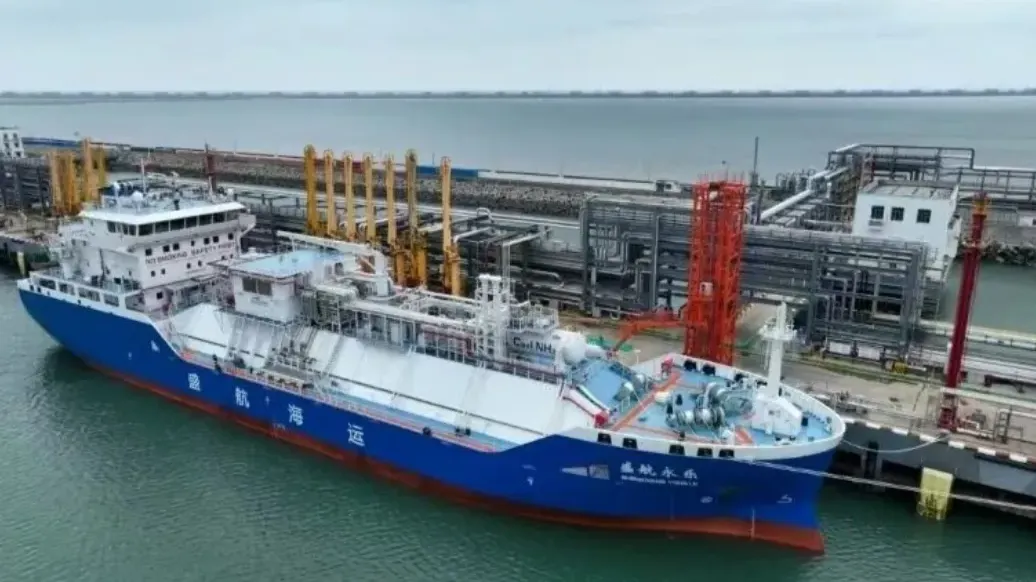
World’s 1st Operational Ammonia Bunkering Vessel Enters Service,Backed by CMB.TECH
 Sustainability
At SMM Hamburg I Saw Seven Changes Reshaping Global Shipping
 Sustainability
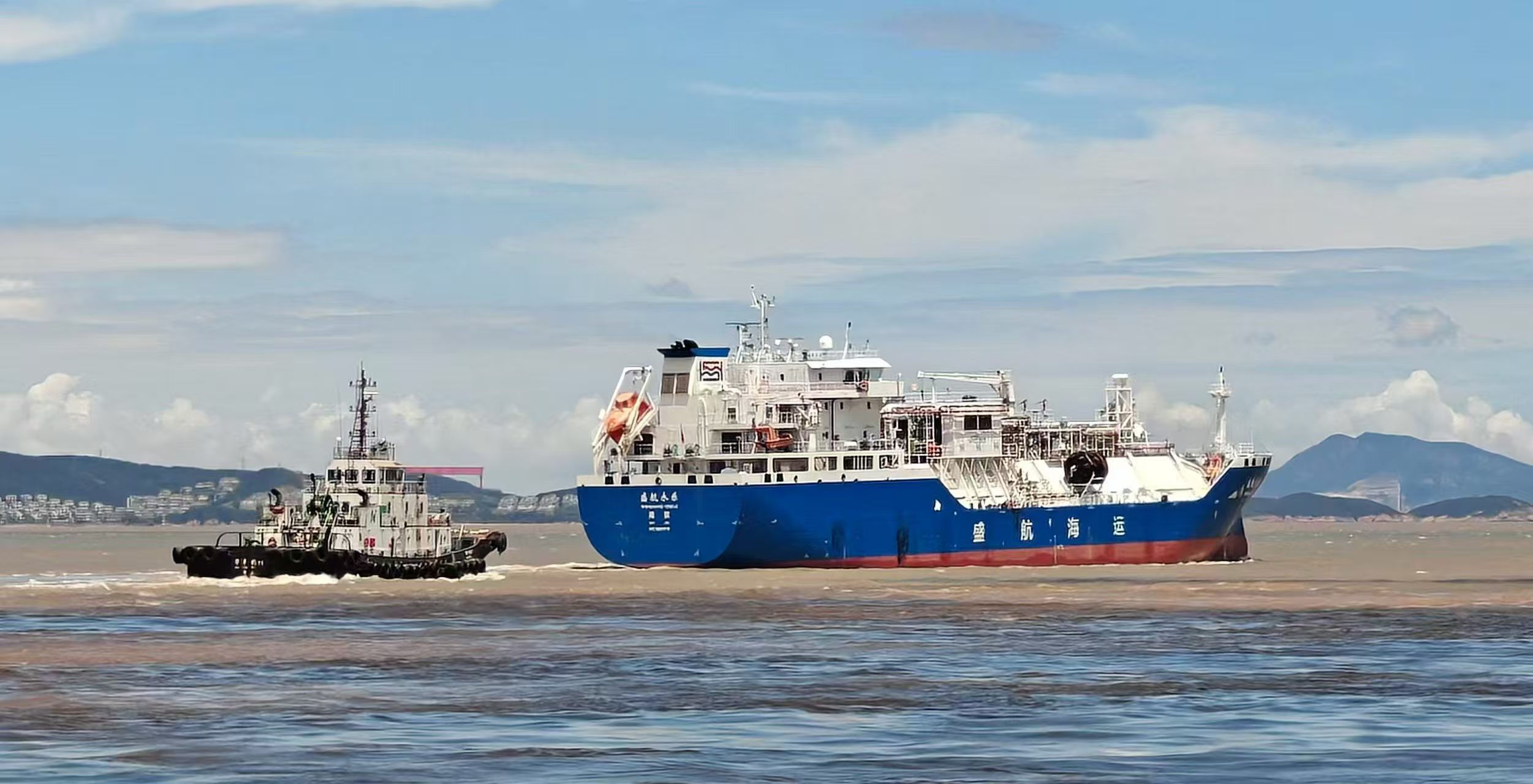
World’s First Operational Ammonia Bunkering Vessel Emerges
 Sustainability
World’s First Wind-Assisted LNG Carrier Named, Featuring Two 49-Metre Hard Sails
 Sustainability
Ships Built Today May Still Be Sailing in 2050 — So How Should We Design Them?
 Sustainability
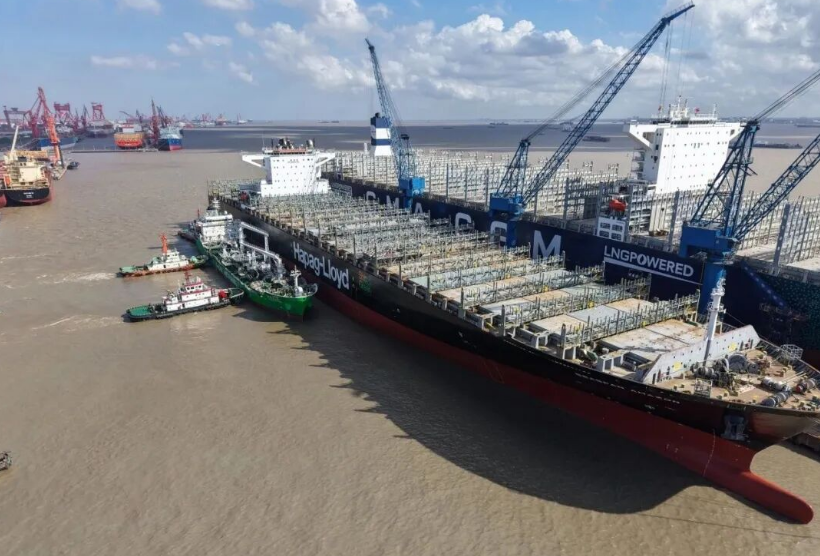
Hapag-Lloyd Completes First Biomethanol Bunkering
 Sustainability
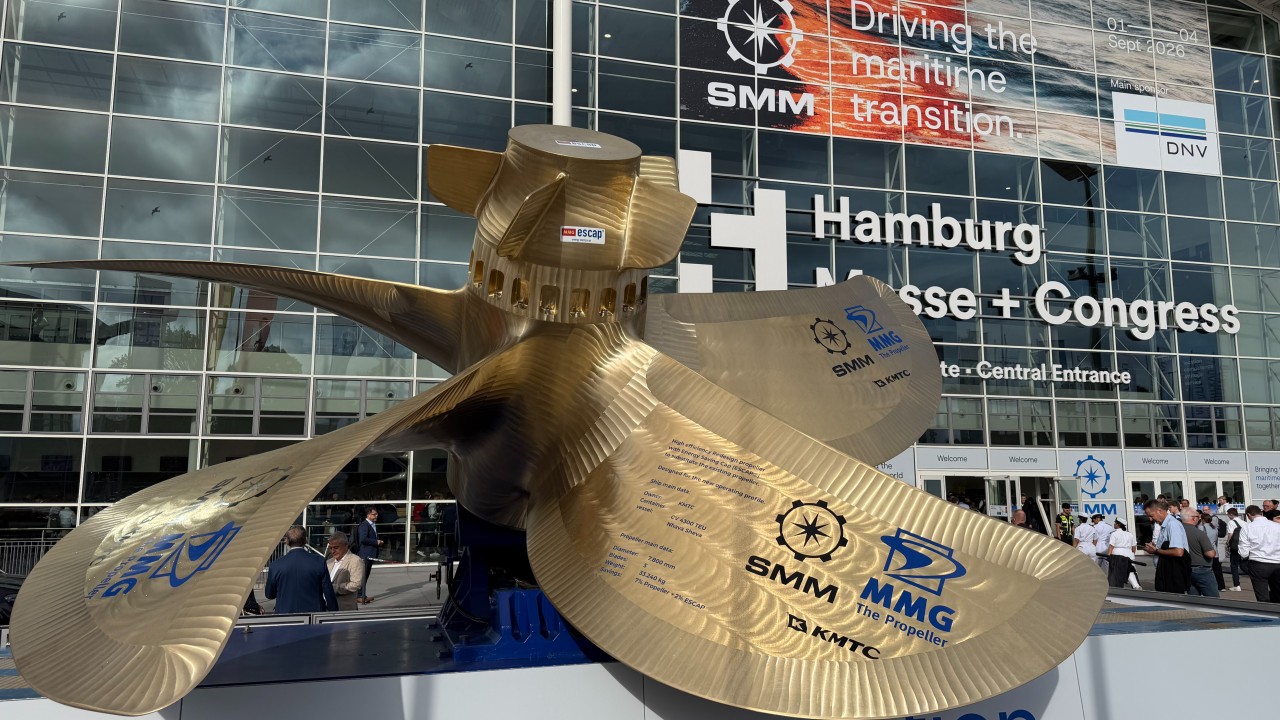
How Do You Bet on the Next 30 Years When Uncertainty Becomes the Norm?
 Sustainability
Energy efficiency may be shipping’s safest bet in an uncertain transition
 Sustainability
How much more does a methanol dual-fuel ship really cost?
 Sustainability