


From Cargo Movement to Market Access: Why China–GCC Project Logistics is Entering a New Phase
Author: Erich Rankl – Logistics Executive / Advisor, based in Oman

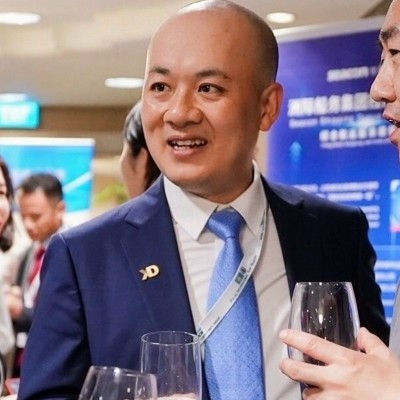
Oman’s emerging role in connecting Chinese project business with the wider GCC
China–GCC trade and investment relations are entering an increasingly interesting phase. For companies involved in shipping, project logistics, EPC contracting, manufacturing and industrial development, the opportunity in the Gulf is becoming broader than simply moving cargo from Asia to the Middle East.
After many years working across international logistics, shipping, port operations and project cargo, one observation has become increasingly clear to me:
The biggest opportunities in the Middle East are not necessarily created by moving more cargo. They are created by understanding where the cargo originates, where the investment is going, who controls the project, which trade corridor makes commercial sense, and which local partnerships can deliver the required solution.
This distinction is becoming particularly important for Chinese companies expanding their activities across the GCC.
The logistics question starts before the cargo moves
For a conventional shipment, logistics can often be reduced to a relatively straightforward sequence: origin, port, destination and delivery.
Project logistics is fundamentally different.
A large industrial, energy, infrastructure or renewable-energy project can involve thousands of containers, breakbulk shipments, heavy-lift components, transformers, steel structures, machinery and other specialized cargo. The physical movement of these items is only one element of the overall challenge.
Before the first vessel is nominated, important questions often need to be answered:
- Where will the project be located?
- Which port provides the most commercially and operationally suitable gateway?
- Is the cargo containerized, breakbulk or project/heavy lift?
- What customs regime will apply?
- Is temporary storage required?
- Can cargo be discharged and inspected efficiently?
- What inland route is available for oversized or heavy components?
- Are suitable trailers, cranes and lifting equipment available?
- Who will coordinate with the different stakeholders locally?
- Which party has the authority to make decisions when something changes?
- Does the logistics partner have sufficient local relationships and execution capability?
These questions can have a significant impact on the final landed cost and, more importantly, on the project's schedule.
For this reason, I believe the next stage of China–GCC logistics will increasingly be about logistics engineering and market knowledge rather than transportation alone.
Chinese investment is changing the logistics landscape
Chinese companies are becoming increasingly active across sectors such as renewable energy, power generation, infrastructure, manufacturing, metals, industrial development and construction throughout the GCC.
This creates opportunities for several different groups within the Chinese and wider Asian logistics ecosystem:
- EPC contractors
- equipment manufacturers
- project developers
- shipping companies
- MPP and heavy-lift operators
- freight forwarders
- project logistics specialists
- trading companies
- warehousing and transportation providers
For these companies, entering the GCC successfully requires more than establishing a freight rate.
A competitive logistics solution increasingly needs to combine international transportation with local market intelligence, regulatory knowledge, project planning and reliable execution partners.
This is where the distinction between a logistics provider and a genuine project logistics partner becomes important.
Oman deserves to be considered as part of a GCC strategy
Oman is particularly interesting because it should not necessarily be viewed as an isolated destination market.
Its geographic position, coastline, ports and connectivity provide several potential gateways for international cargo entering the Arabian Peninsula. Depending on the project, different Omani ports can serve very different purposes.
Sohar has developed into an important industrial and logistics center, with strong relevance for manufacturing, metals, petrochemicals and industrial projects.
Duqm offers a different proposition, particularly for large-scale industrial development, energy-related projects, heavy cargo and activities requiring substantial land and port infrastructure.
Salalah provides another strategic gateway, particularly for international maritime connectivity and cargo flows associated with the southern part of Oman and the wider region.
The right question, therefore, is not necessarily:
“Which Omani port is the best?”
It is:
“Which port and logistics corridor best fit the commercial, operational and geographic requirements of the specific project?”
That is a much more useful question for an EPC contractor, shipowner or project developer.
The importance of the local execution layer
One of the lessons repeatedly demonstrated by complex projects is that international logistics capability alone does not guarantee successful delivery.
A vessel can be perfectly planned. The freight rate can be competitive. The cargo can arrive on schedule.
And yet the project can still experience delays because of a customs issue, lack of suitable transport equipment, insufficient storage capacity, port congestion, documentation problems, road permits or poor coordination between different parties.
The local execution layer therefore becomes critical.
A successful project logistics structure may require coordination between:
Ø Chinese manufacturer / EPC
Ø International shipping / logistics provider
Ø Omani port
Ø Customs and regulatory authorities
Ø Customs broker / local representatives
Ø Transport and heavy-haul providers
Ø Storage / project site
Ø Final project delivery
The strength of this chain is determined not by its strongest participant, but often by its weakest link.
This is why local partnerships should be evaluated during the project-planning stage rather than after the cargo has already been booked.
Customs should be treated as part of project planning
Another area that deserves more attention is customs.
For large projects, customs clearance is not simply an administrative activity taking place when a vessel arrives.
Cargo classification, documentation, import procedures, exemptions where applicable, temporary admission requirements, inspections and the timing of customs declarations can all affect the physical movement of cargo.
For project cargo, this becomes even more important because cargo may be arriving in multiple shipments over many months.
A project can therefore benefit considerably from establishing the customs and regulatory strategy before the first shipment reaches the port.
In my experience, the best approach is to treat customs as an integral component of the logistics plan rather than as a separate function.
From freight forwarding to capacity management
The GCC project environment also creates an opportunity to rethink the traditional logistics model.
A project does not necessarily need another company simply to book freight.
It needs someone capable of coordinating capacity:
- vessel capacity
- port capacity
- storage capacity
- trucking capacity
- heavy-lift capacity
- customs capacity
- manpower
- equipment
- contingency options
This becomes particularly important when projects involve large volumes or unusual cargo dimensions.
The role of the logistics partner increasingly becomes that of a capacity manager and solution integrator.
This model can be particularly valuable for Asian companies that have strong capabilities at origin but require a reliable execution structure once their cargo reaches the GCC.
Why partnerships will become increasingly important
I expect the next stage of China–GCC logistics development to involve more cooperation between companies rather than simply competition between individual service providers.
A Chinese EPC may have excellent access to the project.
A Chinese manufacturer may control the equipment.
An Asian shipping company may have the vessel capacity.
A GCC logistics company may understand the local environment.
A customs specialist may understand the regulatory process.
A heavy-haul operator may have the required equipment.
The commercial opportunity lies in connecting these capabilities into one coherent project solution.
This creates opportunities for strategic partnerships, local representation, joint business development and project-specific cooperation.
For international companies, particularly those entering the GCC for the first time, a strong local partner can provide much more than transportation.
It can provide market intelligence, introductions, commercial support, regulatory understanding, supplier networks and local execution capability.
The opportunity goes beyond Oman
Oman can also be viewed as one component of a broader GCC logistics strategy.
Companies entering the region increasingly need to consider Oman alongside Saudi Arabia, the UAE, Qatar and other GCC markets.
The most appropriate logistics corridor may change depending on:
- project location
- cargo characteristics
- port capabilities
- customs requirements
- inland transportation
- project schedule
- available infrastructure
- cost
- final customer requirements
A Chinese company developing a GCC market-entry strategy should therefore ideally evaluate the logistics network before committing to a single route or operating model.
This is particularly relevant for companies planning repeated projects rather than one-off shipments.
The objective should be to establish a scalable logistics architecture that can support multiple projects across the region.
Looking ahead: a more integrated China–GCC logistics ecosystem
I believe the coming years will create significant opportunities for Chinese and other Asian companies in the GCC.
But the winners will not necessarily be those offering the lowest transportation rate.
They are likely to be the companies that can combine:
Asian supply-chain access
- international shipping capability
- GCC market intelligence
- local execution
- regulatory knowledge
- project-management capability
- strong commercial relationships
into a single, reliable solution.
This is particularly relevant as Chinese EPC contractors, manufacturers and investors continue to expand their international footprint.
For logistics professionals, the opportunity is therefore moving from “How do we move this cargo?” toward a much broader question:
“How can we help our customer successfully execute and develop its business in the GCC?”
That change may sound subtle, but commercially it is significant.
A personal perspective
Having worked across international logistics, shipping and project cargo, I increasingly see the China–GCC corridor not simply as a trade lane, but as an emerging business ecosystem.
The companies that understand the connection between cargo flows, investment, projects, ports, customs, transportation and local partnerships will have a considerable advantage.
For Chinese and other Asian companies considering Oman or the wider GCC, early engagement with experienced local and regional partners can often reveal opportunities and risks that are difficult to identify from outside the market.
I expect the next few years to produce some very interesting China–GCC project opportunities — and logistics will be an important part of making those opportunities commercially successful.
+++
Author: Erich Rankl – Logistics Executive / Advisor, based in Oman

READ MORE
 Technology
Waigaoqiao Shipbuilding wins RMB 2.76bn contract for China’s deep-ocean research platform
 Technology
Shiptec China 2026.10.28-10.30 | WE Tech Solutions- Energy Solutions Leading Marine Electrification
 Technology
Up to 6% Net Efficiency Gain: Everllence and Silverstream Integrate Air Lubrication with the Main Engine
 Technology
HiFleet Schedule Watch Shanghai Call Omissions Dominate as Ningbo Sees Both Retained and Omitted Calls
 Technology
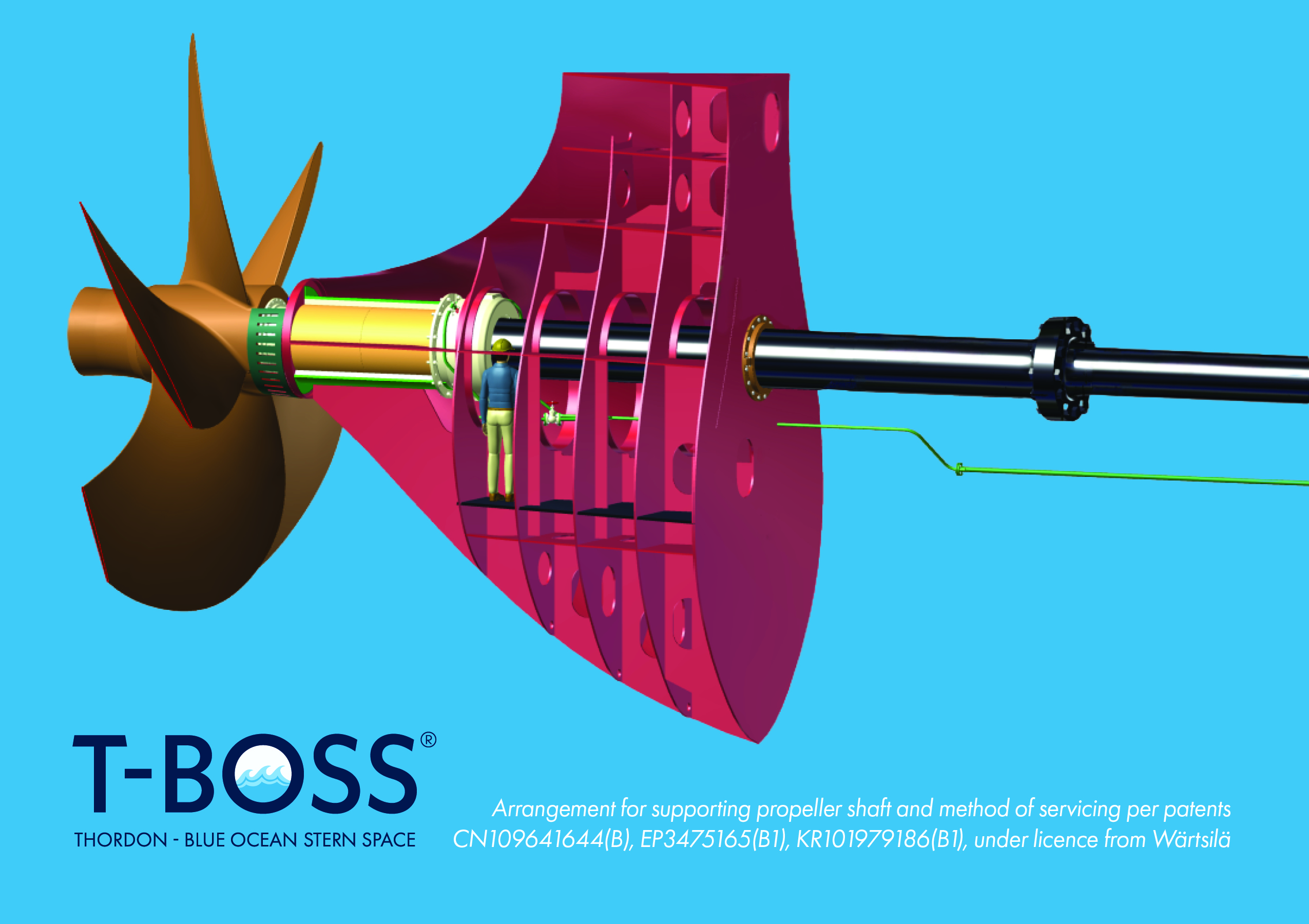
IN-DEPTH SUEZMAX STUDY MAKES CAPEX CASE FOR T-BOSS® STERNTUBELESS SHAFTLINE SYSTEM
 Technology
CMR KOREA: Empowering Maritime Safety & Efficiency with Advanced Communication & Monitoring Solutions
 Technology
Shiptec China 2026.10.28-10.30 | HYDWIN- From Standalone Breakthroughs to Full-Process Chain Technology: China's Green Shipbreaking Is Moving Toward a Systematized Intelligent Era.
 Technology
AI Alone Won't Change Behaviour. The Triple AI Will.
 Technology
Shipping’s AI Future Will Still Depend on People, Says Dr.Martin Stopford
 Technology