


Over 40%: Global Containership Orderbook Nears 14 Million TEU, Ratio Hits Highest Level Since 2009


The global containership newbuilding pipeline continues to expand at a rapid pace. According to Alphaliner’s Newsletter 33/2026, the worldwide orderbook had reached 1,724 vessels with a combined capacity of 13.97 million TEU by mid-August, compared with an existing fleet of approximately 34.16 million TEU.
Alphaliner describes the orderbook-to-fleet ratio as 40%; based on the two capacity figures it published, the ratio works out at approximately 40.9%. In other words, the containership capacity now under construction or awaiting construction is equivalent to more than two-fifths of the entire fleet currently in service.
The 40% threshold marks a new stage in the current containership investment cycle. At the peak of the previous expansion wave in late 2007, the orderbook-to-fleet ratio exceeded 60%. It subsequently declined for years following the global financial crisis and fell to a low level around 2021.
The extraordinary profits generated during the pandemic then gave liner operators and shipowners the financial capacity to restart fleet expansion and renewal programmes. After several years of sustained contracting, the industry now has close to 14 million TEU of additional capacity waiting to be delivered, while the orderbook ratio has climbed to its highest level since 2009.
Almost One Million TEU Added in Just Over Two Months
The speed of the recent increase is particularly striking. Xinde Marine previously reported, based on Alphaliner data, that the global containership orderbook stood at 1,592 vessels and 12.98 million TEU in June 2026, equivalent to 38.3% of the existing fleet.
Compared with the figures published in Newsletter 33, the orderbook has since expanded by approximately 132 vessels and 990,000 TEU. That represents capacity growth of about 7.6% and an increase of roughly 2.6 percentage points in the orderbook-to-fleet ratio in just over two months.
This increase has occurred while shipyards have continued to deliver vessels from earlier contracting rounds. New orders have therefore more than replenished the capacity removed from the orderbook through deliveries, pushing the total pipeline to another high.
Alphaliner also expects several industry majors to place further orders for large containerships during 2026, suggesting that the latest 40% reading may not mark the peak of the current cycle.
Several forces are sustaining the appetite for new tonnage. Major liner operators are using newbuildings to enlarge their networks, lower unit costs and increase the proportion of owned capacity in their fleets. Independent owners are supporting new projects with medium- and long-term charter coverage.
Fleet-renewal requirements, tightening efficiency rules, alternative-fuel strategies and the gradual extension of shipyard delivery slots beyond 2028 are also encouraging owners to make investment decisions earlier.
The 40% Pipeline Will Be Spread Across Several Years
The 13.97 million TEU orderbook will not enter service in a single year. Deliveries are spread across several years, while individual projects may be affected by construction schedules, design changes, financing arrangements and technology choices.
Scrapping, slower sailing speeds, port congestion, longer routings and liner network adjustments will also influence the amount of capacity that is effectively available to the market. The ratio therefore measures the scale of the future delivery pipeline rather than an immediate 40% increase in supply.
A large orderbook can also coexist with tight near-term vessel availability. The same Alphaliner newsletter showed that idle capacity represented only 0.9% of the approximately 34 million TEU global fleet as of 10 August, indicating that the liner fleet was effectively fully employed.
Longer voyages caused by geopolitical disruption, port congestion and schedule instability continue to absorb ships. Some newly delivered vessels are initially being used to add network buffers or replace older and less efficient tonnage. The market is consequently facing limited prompt availability today and a steadily rising delivery burden over the medium term.
Capacity Pressure Will Cascade Through the Size Segments
The composition of the orderbook will determine how the additional capacity affects individual markets. Large newbuildings normally enter the main east-west trades first, displacing existing vessels into north-south and regional services. This creates a cascading effect from the largest ship classes into the medium-sized and feeder segments.
Some smaller vessel categories may continue to experience tight charter availability and an ageing fleet, but sustained deliveries of large and medium-sized ships will gradually alter the supply-demand balance across regional trades as well.
The transition is also likely to widen the competitive gap between owners. Liner companies with global networks, stable cargo volumes and strong balance sheets can deploy new ships to upgrade services, replace ageing vessels and improve network efficiency. Owners with higher costs or limited charter cover will be more exposed to declining charter rates and fluctuations in asset values.
As more fuel-efficient tonnage enters service, older ships with higher consumption and weaker environmental performance could lose commercial competitiveness more quickly. The pace of demolition will therefore become an increasingly important counterweight to fleet growth.
Container Shipping Enters a Delivery Stress Test
An orderbook exceeding 40% establishes a high supply baseline for the years ahead. Strong container trade growth, continued route diversions and persistent port inefficiencies could allow the market to absorb much of the new capacity.
Slower cargo growth, shorter voyages following a normalisation of routing patterns, or improvements in fleet productivity would convert nominal capacity into effective supply more quickly, placing greater pressure on spot freight rates, time-charter earnings and second-hand vessel values.
The balance will be determined by the relative pace of three developments: newbuilding deliveries, cargo demand growth and the retirement of older ships. The market may remain supported by tight effective capacity in the near term, while the accumulated delivery pipeline creates increasingly visible medium-term pressure.
From 12.98 million TEU and 38.3% in June to 13.97 million TEU and more than 40% by mid-August, the global containership orderbook has continued to climb rapidly during the summer of 2026.
Its return to above 40% for the first time since 2009 confirms that the current newbuilding cycle has crossed another major threshold. Over the next several years, competitive performance will increasingly depend on each operator’s ability to absorb new tonnage, improve network efficiency, control costs and remove ageing capacity from the fleet.
Source: Alphaliner Newsletter 33/2026.

READ MORE
 Containers
China Merchants links container and bulker businesses in Australia trial
 Containers
Ningbo Containerized Freight Index Weekly Commentary North America Freight Rates Remained Elevated; Composite Index Decline Narrowed
 Containers
CMA CGM’s $1.4bn FedEx Supply Chain Deal: How Its Global Logistics Network Is Taking Shape
 Containers
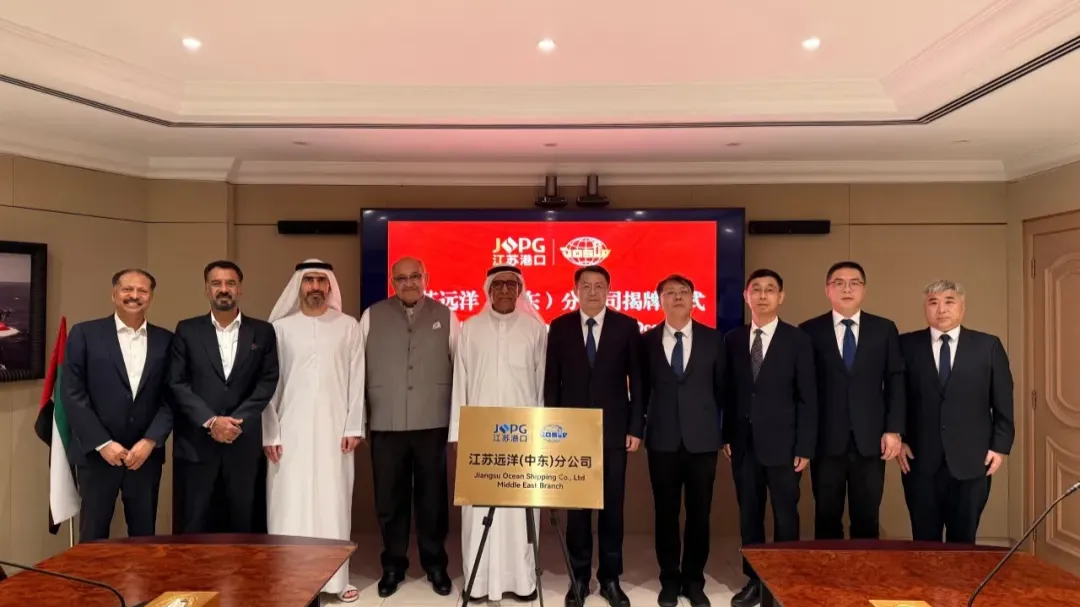
Global Ambitions, Provincial Roots: China’s State-Owned JOSCO Expands Overseas
 Containers
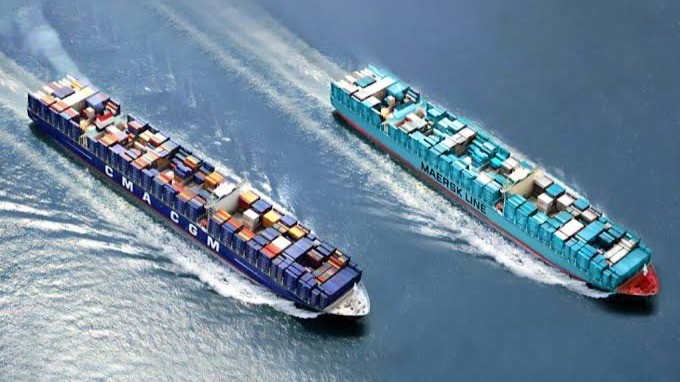
CMA CGM vs Maersk: A New Arms Race Begins!
 Containers
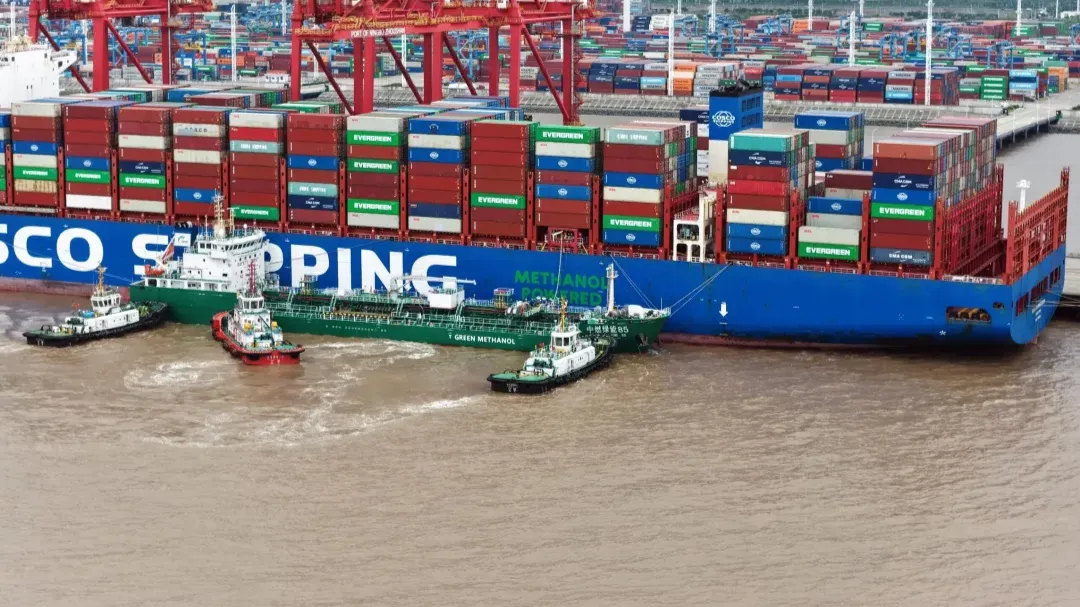
COSCO SHIPPING Sets Group Methanol Bunkering Record with 7,500-Tonne Delivery
 Containers
Up to 30 New Feeders: Inside Contships’ Fleet Renewal Strategy
 Containers
COSCO SHIPPING Holdings to Launch Third Far East–ECSA Service in December
 Containers
CMA CGM Expects Car Carrier Fleet to Reach Around 21 Vessels
 Containers