


Maersk Family Capital Moves Again: A.P. Moller Capital Takes 40% Stake in Philippine Logistics Platform
.

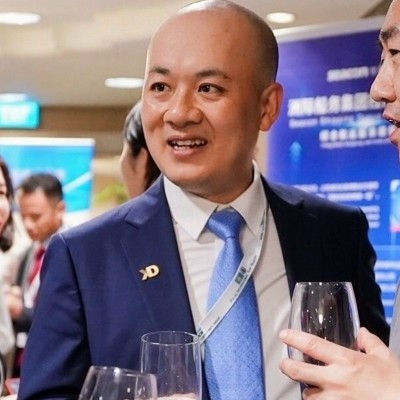
Days after A.P. Moller Holding unveiled its planned acquisition of Ocean Yield, another arm of the A.P. Moller system has completed a strategic investment in the Philippines — extending the group’s reach from maritime assets into the infrastructure that moves cargo after it reaches shore.
A.P. Moller Capital and Ayala Corporation have completed their partnership involving AC Logistics Holdings Corporation, with A.P. Moller Capital’s Emerging Markets Infrastructure Fund II acquiring a 40% stake through EMIF II Holding III B.V.
The transaction closed after the required conditions, including merger-control approvals, were satisfied. A.P. Moller Capital said the partnership would support AC Logistics in expanding its nationwide footprint, increasing capacity and improving its services and operational capabilities.
The investment may look like a conventional minority stake in a local logistics business. Viewed alongside A.P. Moller Holding’s agreement to acquire Ocean Yield, however, it reveals a much broader investment logic.
One transaction provides exposure to ships, long-term charters and maritime cash flows. The other provides access to cold chains, air cargo, warehousing, domestic distribution and project logistics.
Together, they show how the A.P. Moller system is positioning capital across both the sea and land sides of global supply chains.
A.P. Moller Capital Layout
The buyer of the AC Logistics stake is not the container shipping company A.P. Moller - Maersk , and it is not A.P. Moller Holding itself.
A.P. Moller Holding is the investment arm of the A.P. Moller Foundation and the long-term ownership platform at the top of the A.P. Moller Group. It holds and develops a portfolio that includes A.P. Moller–Maersk and a range of maritime, industrial and financial businesses.
A.P. Moller Capital, established in 2017, is an affiliated infrastructure fund manager within the wider A.P. Moller Group. It manages stand-alone funds investing primarily in transport, logistics, energy transition and other essential infrastructure in emerging markets. The firm says it manages approximately $2 billion in assets.
The distinction is important for reporting the transaction accurately.
A.P. Moller Holding is deploying long-duration ownership capital into Ocean Yield. A.P. Moller Capital is investing fund capital into AC Logistics on behalf of its infrastructure investors.
They are different entities with different mandates, yet both draw on the A.P. Moller Group’s industrial heritage, relationships and experience in shipping, transport and logistics.
What A.P. Moller Capital is buying
AC Logistics was established in 2021 and has developed into an integrated Philippine logistics platform.
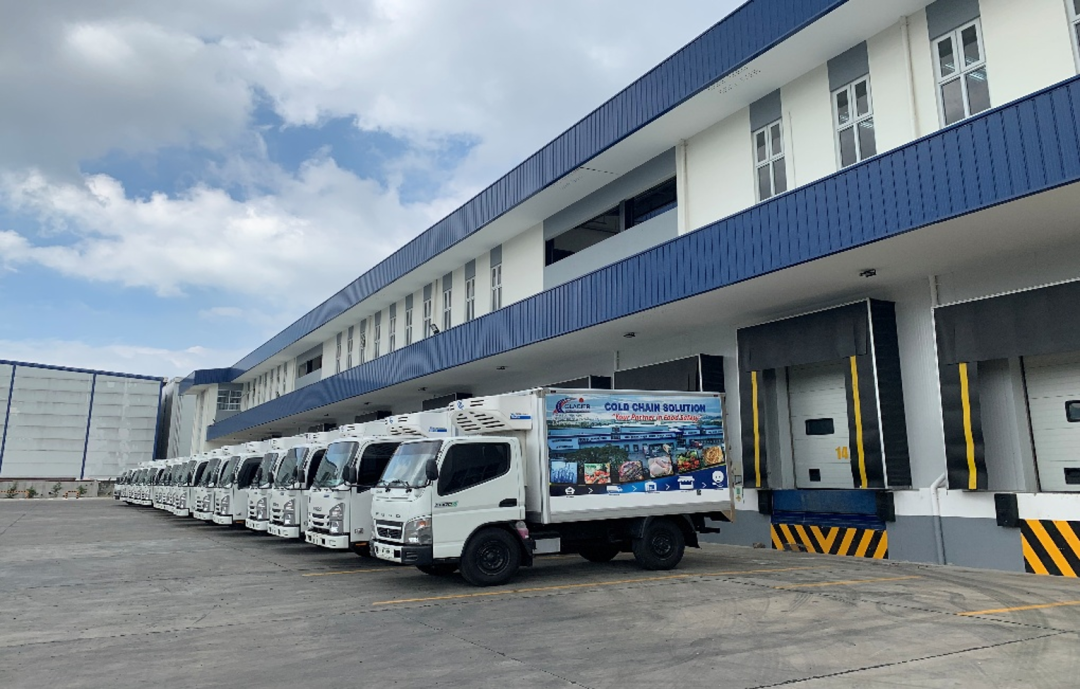
Its operations are centred on four strategic areas: cold chain, air cargo logistics, contract logistics and national distribution, and project cargo. The company serves sectors including food, agriculture, healthcare, pharmaceuticals, consumer goods and retail.
The Philippine Competition Commission said AC Logistics operates through Air 21 Holdings and a group of businesses including LGC Logistics, Cargohaus, U-Freight Philippines and U-Ocean. Together, these companies provide services ranging from domestic and international freight forwarding to warehousing and contract logistics.
That makes AC Logistics more than a freight-forwarding operation.
It is a platform spanning several links in the domestic supply chain.
Cold-chain infrastructure supports the movement of food, agricultural products, medicines and temperature-sensitive goods. Air cargo serves high-value and time-critical shipments. Contract logistics connects storage, inventory management and distribution. Project cargo supports industrial, energy and infrastructure developments.
In an archipelagic market such as the Philippines, these capabilities are particularly significant. Cargo may need to move between islands, airports, ports, warehouses and final customers through several transport modes. The efficiency of the national economy therefore depends heavily on the ability to integrate those links.
A.P. Moller Capital senior partner Lars Reno Jakobsen said the country’s geography and growth outlook create a clear need for more efficient, resilient and integrated supply chains. The fund manager also sees AC Logistics as a platform capable of delivering sustainable long-term growth while supporting the wider development of the Philippine logistics sector.
From Ocean Yield to AC Logistics
The timing of the transaction is notable.
On 2 July, A.P. Moller Holding announced an agreement to acquire 100% of Ocean Yield from funds managed by KKR.
Ocean Yield holds interests in more than 70 modern vessels across gas carriers, LNG carriers, containerships, crude, product and chemical tankers, and dry bulk carriers. Under KKR’s ownership, it invested more than $3 billion in expanding and modernising its portfolio, while increasing its long-term contracted backlog to more than $5 billion.
Ocean Yield offers exposure to maritime assets backed by long-duration contracts. AC Logistics offers exposure to the physical infrastructure and operating networks needed to move cargo through the domestic economy.
One is a ship-leasing platform. The other is an integrated logistics platform.
The two investments are being made through different A.P. Moller entities and should not be presented as a single coordinated transaction. Yet strategically, they reflect a similar preference for infrastructure that occupies a durable position in the movement of goods.
Ships generate value by carrying cargo across oceans.
Logistics platforms generate value by receiving, storing, handling and distributing cargo before and after the sea voyage.
Control over either side can be commercially valuable. Access to both creates a deeper understanding of the complete supply chain.
The investment case has moved beyond transport capacity
For much of shipping history, scale was measured principally in vessels and carrying capacity.
That remains central. Without ships, there is no ocean transportation.
But recent disruptions have shown that the reliability of a supply chain depends on far more than the ship itself. Port access, terminals, towage, warehouses, cold storage, inland transport, customs processes, aviation links and distribution networks can each become a constraint.
The Covid-era logistics crisis exposed the consequences when those systems became misaligned. More recent geopolitical disruptions have reinforced the importance of resilient trade routes and diversified logistics networks.
This is changing how long-term capital views transport assets.
Investors increasingly assess whether an asset sits at a critical point in the supply chain, whether it has durable customer demand, whether it benefits from structural infrastructure shortages and whether it can generate stable returns through different economic cycles.
AC Logistics fits that profile. Its businesses serve essential sectors and are embedded in recurring cargo flows rather than depending solely on a single freight market.
Ocean Yield fits the same broad category from the maritime side, with ships secured against long-term charter contracts and a diversified customer base.
The common thread is infrastructure with strategic relevance and visible long-term demand.
Why the Philippines matters
The Philippines offers strong long-term demand for better logistics integration.
Its fragmented geography creates persistent challenges in moving products efficiently between production centres, ports, airports, warehouses and consumers. Improving cold-chain capacity, distribution networks and freight connectivity can reduce losses, increase service reliability and support industries ranging from agriculture to healthcare.
AC Logistics therefore occupies a position that is both commercial and infrastructural.
A.P. Moller Capital is bringing transport-sector experience, operational knowledge and international connectivity. Ayala contributes deep local market knowledge, an established corporate network and experience building businesses in the Philippines.
The logic of the partnership is complementary: international infrastructure expertise combined with a strong domestic industrial partner.
The Philippine Competition Commission reviewed the transaction across freight forwarding, contract logistics and container liner services supplied to sea-freight forwarders. It concluded that the investment was unlikely to substantially reduce competition, noting that the relevant markets remain fragmented and competitive.
That leaves AC Logistics with room to expand through improved service, capacity and operational execution rather than relying simply on market consolidation.
A wider pattern in A.P. Moller investment
A.P. Moller Capital already has a portfolio of transport and logistics investments across emerging markets, including ports, cargo terminals, warehousing and integrated logistics platforms. Its current portfolio includes businesses such as BERGÉ Logistics, ALS Cargo Terminal, Vector Logistics, HAU Logistics and ARISE Ports & Logistics.
The AC Logistics investment therefore follows an established strategy.
What makes it particularly interesting is its proximity to A.P. Moller Holding’s renewed expansion in maritime assets.
The A.P. Moller system now has exposure to container shipping, tankers, towage, offshore services, ship leasing, ports and emerging-market logistics infrastructure through different companies and investment vehicles.
This does not mean all those businesses are being combined into one operating platform. Their ownership structures, investors and commercial objectives differ.
It does show that the group understands the value of owning positions across the infrastructure of global trade.
That infrastructure begins with ships, but it extends far beyond them.
From individual assets to supply-chain systems
The competitive question in transport and logistics is changing.
A vessel owner may control ocean capacity. A terminal operator may control a port gateway. A warehouse operator may control storage and inventory flow. A cold-chain provider may control access to temperature-sensitive distribution. A logistics platform may coordinate all these elements for the customer.
The greatest value increasingly lies in the ability to organise the system.
A.P. Moller Holding’s Ocean Yield transaction provides a platform for maritime assets and contracted cash flows. A.P. Moller Capital’s investment in AC Logistics provides a position in the Philippine market’s physical distribution network.
Seen together, they illustrate the shift from buying individual assets toward securing positions within supply-chain systems.
For shipping companies, this is an important signal.
Fleet scale will remain critical, but customers increasingly judge providers by the reliability of the entire journey. They want cargo visibility, storage, cold-chain integrity, inland delivery, customs coordination and contingency planning in addition to ocean transport.
For investors, the same trend favours infrastructure that is difficult to replace and deeply embedded in trade flows.
Buying a position in the supply chain
A.P. Moller Capital’s acquisition of 40% of AC Logistics is unlikely to generate the same level of attention as a major ship order or the acquisition of a 70-vessel leasing platform.
Its strategic message may be just as important.
The investment is a bet on the growing value of domestic logistics infrastructure in a market where geography, population distribution and economic expansion demand better connectivity.
It also shows how the boundaries of maritime investment are widening.
Ships remain essential. But ships require ports, cargo handling, warehousing, cold chains, distribution, financing and local operating networks.
A.P. Moller Holding’s move into Ocean Yield strengthens the maritime side of the family’s investment system. A.P. Moller Capital’s entry into AC Logistics strengthens its exposure to the infrastructure that connects international trade with the domestic economy.
The assets are different, and the investors behind them are different.
The broader direction is consistent.
In a global economy increasingly focused on resilience, security and dependable delivery, the most valuable position may no longer be ownership of a single asset. It may be the ability to connect ships, ports, warehouses, transport networks and customers into one functioning supply-chain system.

READ MORE
 Finance
“We Are Buying Ships”: NORDEN Raises 2026 Profit Guidance for the Fourth Time
 Finance
Cetus Maritime Advances Oslo IPO Plans with $133.6 Million Seacon Deal
 Finance
Overtaken by Shanghai, How Can London Keep Shipowners and Capital?
 Finance
Shanghai links safety records to RMB5m maritime loan
 Finance
Shipowners Have Made a Fortune. How Will They Spend It?
 Finance
HEIDMAR - Scaling for Growth: Capitalizing on Favorable Market
 Finance
Shipping’s Risk Equation Is Being Repriced as Finance, Insurance and Contracts Adapt
 Finance
Shandong Shipping and OSM Thome Form Singapore JV
 Finance
From RMB 1.87 Billion to RMB 4.55 Billion: What Changed at COSCO Shipping Energy in One Year?
 Finance