


ISO-Compliant Fuel, Real Operational Problems: LR Warns of Emerging Marine Fuel Risks
.

Some fuel batches supplied in Singapore passed routine ISO 8217 testing but were subsequently linked to filter blockages, purifier difficulties and increased maintenance onboard. As bunker blending becomes more complex, compliance with standard specifications may no longer provide a complete indication of how a fuel will perform in service.
A marine fuel can meet all required specification limits and still cause serious operational problems onboard.
A new report from Lloyd’s Register warns that shipowners and operators are facing an increasingly difficult category of bunker risk: fuels that comply with ISO 8217 parameters but nevertheless create instability, compatibility and machinery-related problems during storage, treatment and combustion.(https://www.lr.org/en/knowledge/research-reports/2024/fobas-fuel-insight-fuel-quality-reports/)
The findings are contained in the latest half-year fuel quality report issued by LR’s Fuel Oil Bunkering Analysis and Advisory Service, FOBAS.
According to the report, conventional off-specification fuel remains a persistent concern. However, a growing number of significant fuel-related incidents can no longer be identified simply by determining whether a sample is “on-spec” or “off-spec”.
Singapore fuel batches linked to onboard difficulties
FOBAS investigated a series of operational problems reported by vessels that bunkered in Singapore between March and April 2026.
The affected ships experienced fuel instability, filter blockages, difficulties with purifier operation and increased maintenance requirements. Despite these problems, the relevant fuel samples were not classified as off-specification under routine ISO 8217 testing.
More detailed forensic analysis subsequently found that several batches contained relatively high concentrations of Estonian shale oil. In some samples, the estimated shale oil content reached approximately 10% to 15%.
Shale oil is an acceptable marine fuel blending component under ISO 8217, meaning its presence does not in itself constitute a specification breach. FOBAS nevertheless found that higher concentrations may reduce the overall stability of a blended fuel and contribute to sediment formation, sludge accumulation or incompatibility during onboard storage and treatment.
These conditions can accelerate filter blockage, increase the load on fuel purifiers, reduce separation efficiency and place additional stress on fuel pumps and other components in the fuel supply system.
A fuel may therefore comply with conventional limits for sulphur, viscosity, density, water and sediment while still presenting operational risks because of its underlying blend composition.
LR said the incidents demonstrate how marine fuel risk is evolving. Refinery streams, blending components and supply chains are becoming more diverse, while routine testing remains focused on a defined set of specification parameters.
Such testing can confirm whether a fuel meets the stated standard, but it may not fully predict how the product will behave once it enters a vessel’s fuel system.
Conventional off-specification problems remain widespread
The emergence of operational issues involving compliant fuels does not mean that traditional off-specification cases have declined.
FOBAS reported continued volatility in global marine fuel quality during the first half of 2026. Repeated cases of non-compliant fuel indicate that bunker quality remains a persistent operational and supply-chain risk rather than a series of isolated incidents.
Common problems identified during the period included excessive sulphur, high water content, abnormal total sediment levels, poor stability, elevated catalytic fines, sodium contamination and distillate fuels with flashpoints below the required safety threshold.
Singapore and several major European bunkering locations continued to experience a complex range of fuel quality issues.
Catalytic fines can cause abrasive damage to fuel pumps, injectors, cylinder liners and piston rings. Excessive water and sediment increase the burden on separators and filtration systems, while low-flashpoint distillates can create a direct fire and safety hazard onboard.
The continued frequency of these cases means shipowners must remain cautious when selecting suppliers, assessing bunkering risks and managing newly delivered fuel.
Biofuel blends are not emerging as the main source of quality failures
The report also examined the performance of FAME-based biofuel blends as their use expands across major bunkering markets.
FOBAS said consumption of blends such as B30 continued to increase during the first half of 2026. However, the available testing and incident evidence does not indicate that the FAME component itself has become a major cause of marine fuel quality failures.
Where operational problems have occurred with biofuel blends, the underlying issue has often been traced to the conventional very-low-sulphur fuel oil component rather than the biofuel portion.
LR nevertheless cautioned that vessels using biofuels must continue to monitor cold-flow characteristics, storage stability, compatibility with other fuels and the transparency of the actual blend composition.
As the use of biofuels expands under shipping’s decarbonisation requirements, fuel testing, storage procedures and onboard management practices will need to develop accordingly.
Fuel management must move beyond parameter compliance
LR fuel specialist Murray Kirkwood said marine fuel quality risk is changing, with a growing number of vessels encountering fuels that satisfy the required parameters but still create difficulties during storage, treatment and use.
As fuel blends become more complex, owners and operators must evaluate not only whether a product is compliant, but whether it is sufficiently stable, compatible and suitable for the vessel’s machinery and operating conditions.
A fuel with poor stability, an unusual blend composition or incompatibility with existing bunker fuel onboard can create significant operational problems even when the laboratory certificate shows that it meets ISO requirements.
FOBAS therefore recommends closer examination of fuel stability, compatibility and blend composition, together with stronger correlation between laboratory results and actual vessel performance.
Where abnormal behaviour is detected, more advanced investigative testing may be required to identify blending components or contaminants that are not captured by routine specification analysis.
After receiving new fuel, vessels should closely monitor filter differential pressure, purifier sludge discharge frequency, sludge formation, fuel temperature and viscosity, as well as the condition of fuel pumps and the wider supply system.
Different fuel batches should also be kept segregated where possible, and compatibility should be assessed before mixing to reduce the risk of sediment and sludge formation.
With VLSFO, biofuel blends and other alternative fuels becoming more widely used, marine fuel composition will continue to diversify.
For shipowners, an ISO-compliant test certificate remains an essential part of bunker quality control. It can no longer be treated, however, as a complete guarantee that the fuel will perform safely and reliably onboard.

READ MORE
 Technology
Shiptec China 2026.10.28-10.30 | The Enterprises of International Pavilion
 Technology
Shipowners are finding a new business beyond ships
 Technology
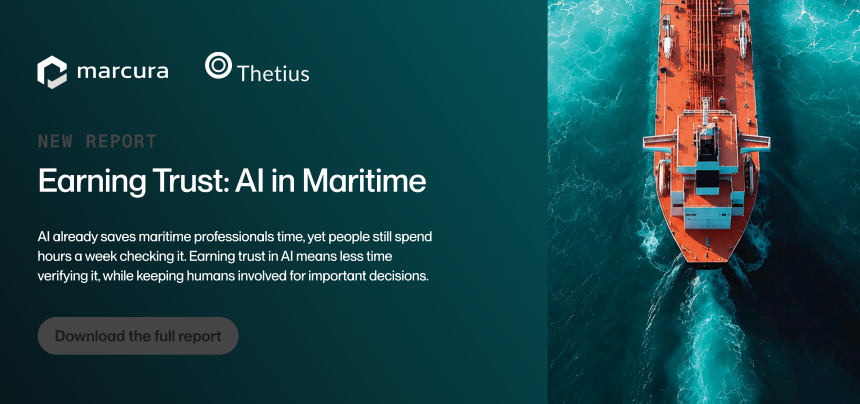
Maritime is using AI every day. Now comes the harder part: trusting it to act.
 Technology
Connecting maritime digitalisation to process
 Technology
Shiptec China 2026.10.28-10.30 | Russian Delegation to Make a Grand Appearance at the 17th International Shipbuilding,Marine Equipment and Offshore Engineering Exhibition For China
 Technology
AI Is Moving Into Shipping’s Core Business. What Will Set Companies Apart?
 Technology
Shiptec China 2026.10.28-10.30 | German Pavilion | High-Precision Threading Tools & Clamping Systems: NORIS Debuts at Dalian Maritime Exhibition
 Technology
Shiptec China 2026.10.28-10.30 | German Pavilion | Mayr Safety Brakes: Robust, Powerful and Seawater-Corrosion Resistant – Safe and Durable Product Solutions for Harsh Environments
 Technology
Shiptec China 2026.10.28-10.30 | TECHNOBIO with POWER-Z: Improving Power and Thermal Efficiency through Fuel Additives
 Technology