


Wanted: Four Second-Hand Capesize Bulk Carriers for Huaxia Financial Leasing
Huaxia Financial Leasing Moves for Four Second-Hand Capesize Bulk Carriers From Crown 63 bulkers and grain carriers to 210,000-dwt Newcastlemax newbuildings, the Chinese leasing house is expanding deeper into large dry bulk assets
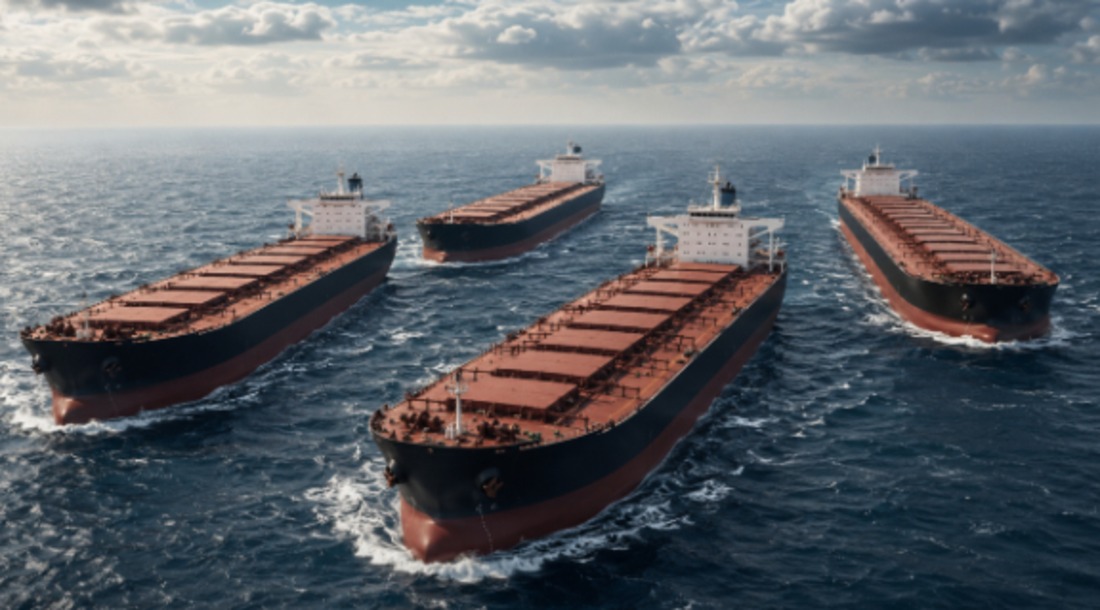
Xinde Marine News — Huaxia Financial Leasing Co., Ltd. is stepping up its exposure to large dry bulk shipping assets.
Recently, Huaxia Financial Leasing issued a public notice for the sourcing of four second-hand Capesize bulk carriers, inviting shipowners and shipbrokers acting on behalf of owners to submit qualified vessel candidates.
According to the notice, the company plans to source four second-hand Capesize bulk carriers. Each participating institution may submit at least one vessel. Vessels and suppliers that pass the screening process will become eligible to participate in Huaxia Financial Leasing’s subsequent supplier selection process for the four second-hand Capesize bulk carriers.
The requirements are clearly defined. The candidate vessels must be available for delivery by the end of December 2026 or earlier, with an age range of 10 to 14 years. All vessel certificates must remain valid for more than three months, and the vessels must comply with applicable maritime regulations and classification society requirements.
The screening process will adopt a limited-number selection mechanism. The upper limit is 20 qualified applicants, calculated by shipowner or representative owner. If more than 20 applicants pass the qualification review, Huaxia Financial Leasing will rank candidates based on factors including vessel condition and delivery schedule.
This means Huaxia Financial Leasing is targeting mid-aged Capesize tonnage rather than very old assets. Based on the 2026 timeline, the 10-14-year age range broadly corresponds to vessels built between 2012 and 2016. For a financial leasing company, this age segment can provide a practical balance between asset price, remaining service life, immediate availability and leasing efficiency.
Second-hand vessels and newbuildings move in parallel
The four-vessel Capesize sourcing plan is not an isolated move.
Only about one month earlier, Huaxia Financial Leasing launched a shipyard sourcing process for six 210,000-dwt Newcastlemax bulk carriers. The project covers six vessels under a 2+2+2 structure. The vessels are required to meet EEDI Phase III and Tier III requirements, with delivery in 2029 or earlier. The maximum price is set at USD 79.5 million per vessel, and the shipyards must have proven capability in building Newcastlemax bulk carriers.
Taken together, these two moves show that Huaxia Financial Leasing is entering the large dry bulk segment through a combined strategy: second-hand tonnage for faster asset deployment and newbuildings for longer-term fleet positioning.
Second-hand Capesize vessels can be delivered more quickly and start generating cash flow sooner. Newcastlemax newbuildings, meanwhile, are better aligned with future regulatory requirements, energy efficiency standards and long-term fleet renewal needs. For a leasing company, this structure helps balance delivery timing, asset duration, market exposure and customer demand.
Huaxia Financial Leasing has also been active in the medium and large dry bulk segments. In May 2026, the company launched a supplier sourcing process for supervision services related to eight 80,000-90,000-dwt multi-purpose grain carriers. The scope covers drawing review, specification review, on-site supervision, project acceptance and delivery support for the newbuilding project.
This indicates that Huaxia Financial Leasing’s dry bulk portfolio is no longer concentrated in one vessel type. Its asset coverage is expanding across Ultramax, Kamsarmax/Panamax-size tonnage, grain carriers, Capesize vessels and Newcastlemax bulk carriers.
Earlier projects enter the delivery phase
While new projects are being advanced, several previously arranged vessel assets have already entered the delivery phase.
On March 5 this year, New Dayang Shipbuilding, a subsidiary of SUMEC Marine, delivered the first Crown 63 3.0 bulk carrier built for Huaxia Financial Leasing. The vessel, named OCEAN GRATITUDE, is a 63,500-dwt bulk carrier that meets EEDI Phase III and Tier III emission standards. After delivery, the vessel is operated by SUMEC Marine.
The project stems from a batch cooperation between Huaxia Financial Leasing, New Dayang Shipbuilding and SUMEC Marine. On April 2, 2024, Huaxia Financial Leasing signed newbuilding contracts and lease agreements with New Dayang Shipbuilding and SUMEC Marine for eight 63,500-dwt bulk carriers.
With the first vessel now delivered, the series has started moving from orderbook to operation. This also gives Huaxia Financial Leasing more practical experience in dry bulk operating leasing, vessel delivery management and customer coordination.
From 63,500-dwt Crown-series bulk carriers to 82,600-dwt bulkers, 80,000-90,000-dwt grain carriers, 210,000-dwt Newcastlemax vessels and now second-hand Capesize bulk carriers, Huaxia Financial Leasing’s dry bulk asset line is becoming increasingly diversified.
The company’s focus is extending from standard medium-sized bulk carriers to larger, more cyclical and higher-value dry bulk assets.
Expanding its shipping leasing asset pool
Huaxia Financial Leasing Co., Ltd. was established in April 2013 as a national financial leasing company approved by the former China Banking Regulatory Commission. It was jointly initiated by Hua Xia Bank Co., Ltd. and Kunming Industrial Development & Investment Co., Ltd., with registered capital of RMB 13 billion.
In recent years, shipping has become an important part of Huaxia Financial Leasing’s business portfolio.
Public information shows that the company initially entered the shipping sector through dry bulk operating leasing and later expanded into LNG carriers, PCTCs, offshore wind installation vessels and offshore construction equipment.
Its vessel asset strategy has several clear features. It uses operating leasing and project companies to hold vessel assets. It works with Chinese shipyards to build standardized vessel series. It selects vessel types with attention to green, energy-saving and regulatory requirements. It also uses second-hand vessel acquisitions to supplement its asset pool when market timing is suitable.
The latest sourcing plan for four 10-14-year-old second-hand Capesize bulk carriers follows this logic.
The Capesize and Newcastlemax markets are currently being shaped by several forces. On the demand side, long-haul bulk cargo flows, including the expected ramp-up of iron ore exports from Simandou, could support tonne-mile demand for large bulk carriers over the medium and long term. On the supply side, fleet ageing, environmental rules, tight shipyard slots and high newbuilding prices have increased the appeal of quality second-hand tonnage.
Compared with waiting for newbuilding deliveries, acquiring or leasing mid-aged Capesize vessels allows market participants to secure capacity more quickly and participate in mainline cargo flows such as iron ore, coal and bauxite.
For Huaxia Financial Leasing, the significance is also strategic. Large dry bulk vessels carry higher single-asset value, offer flexible leasing structures and can support long-term cooperation with industrial customers, shipowners, operators and commodity players.
By advancing second-hand Capesize vessels and Newcastlemax newbuildings in parallel, Huaxia Financial Leasing is building a more complete asset ladder in the large dry bulk sector.
Financial leasing returns to the core of shipping assets
In recent years, Chinese financial leasing companies have become increasingly important in global ship finance. Compared with traditional bank loans, leasing companies can offer more flexible structures, including sale-and-leaseback, operating leasing, project company ownership and long-term charter-linked arrangements.
Ships are long-life, capital-intensive assets with strong cash flow characteristics, making them highly suitable for financial leasing.
As the shipping industry enters a cycle shaped by energy transition, environmental regulation, supply chain restructuring and fleet renewal, the role of leasing companies is also evolving. They are no longer merely capital providers. Through vessel selection, asset structuring, charter arrangements, residual value management and partner screening, they are becoming active participants in the construction of shipping asset portfolios.
Huaxia Financial Leasing’s recent moves send a clear signal. In the shipping sector, the company is shifting from individual vessel projects toward a more systematic asset allocation strategy. Its dry bulk focus is moving from medium-sized tonnage to a broader range of vessel segments. Its newbuilding pipeline is now being supplemented by second-hand vessel sourcing.
The four second-hand Capesize bulk carriers represent a new step in Huaxia Financial Leasing’s expansion into large dry bulk assets.
With six Newcastlemax newbuildings, eight 80,000-90,000-dwt multi-purpose grain carriers and the previously ordered Crown 63 series progressing, Huaxia Financial Leasing is set to become a more visible player in the dry bulk leasing market.
For China’s shipping finance sector, this also reflects a wider trend: mainstream shipping assets, especially dry bulk vessels, are returning to the strategic allocation list of financial leasing companies.
In the next stage of the market, vessel value will be shaped not only by freight cycles, but also by cargo flows, environmental compliance, asset age, financing structures and long-term residual value. Those able to secure the right tonnage at the right time will be better positioned in the next round of shipping asset revaluation.


READ MORE
 Dry Cargo
Yangzijiang Maritime linked to 4+2 Kamsarmax order
 Dry Cargo
Black Sea Wheat Loadings Plunge 78% as Grain Trade Reroutes
 Dry Cargo
China Merchants Signs $2.8 Billion-Plus Simandou Shipping Deal
 Dry Cargo
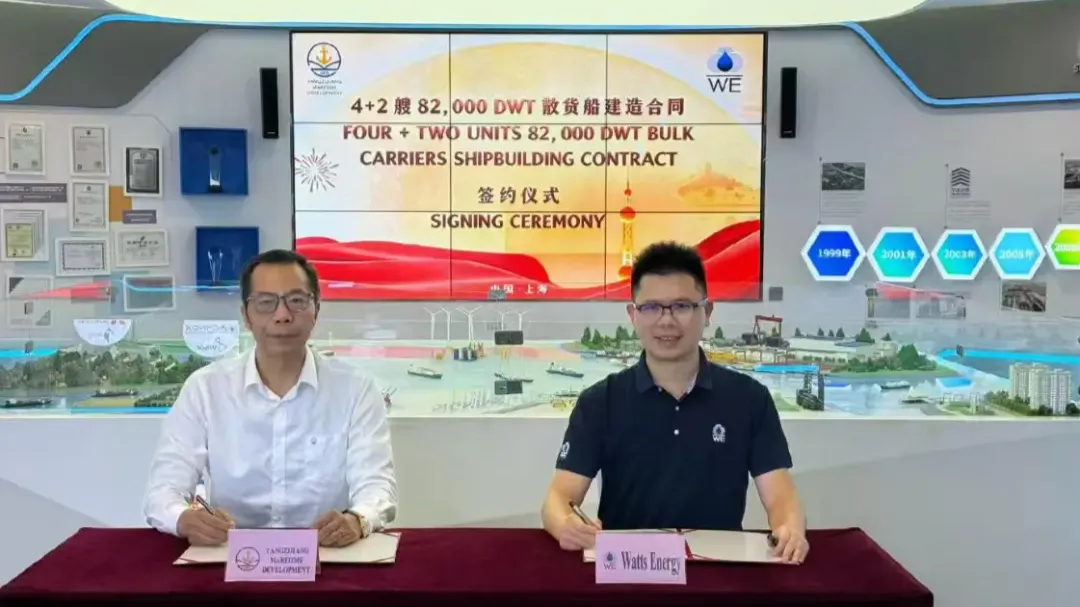
Yangzijiang Maritime Orders 4+2 Kamsarmaxes as Watts Energy Expands into Merchant Shipbuilding
 Dry Cargo
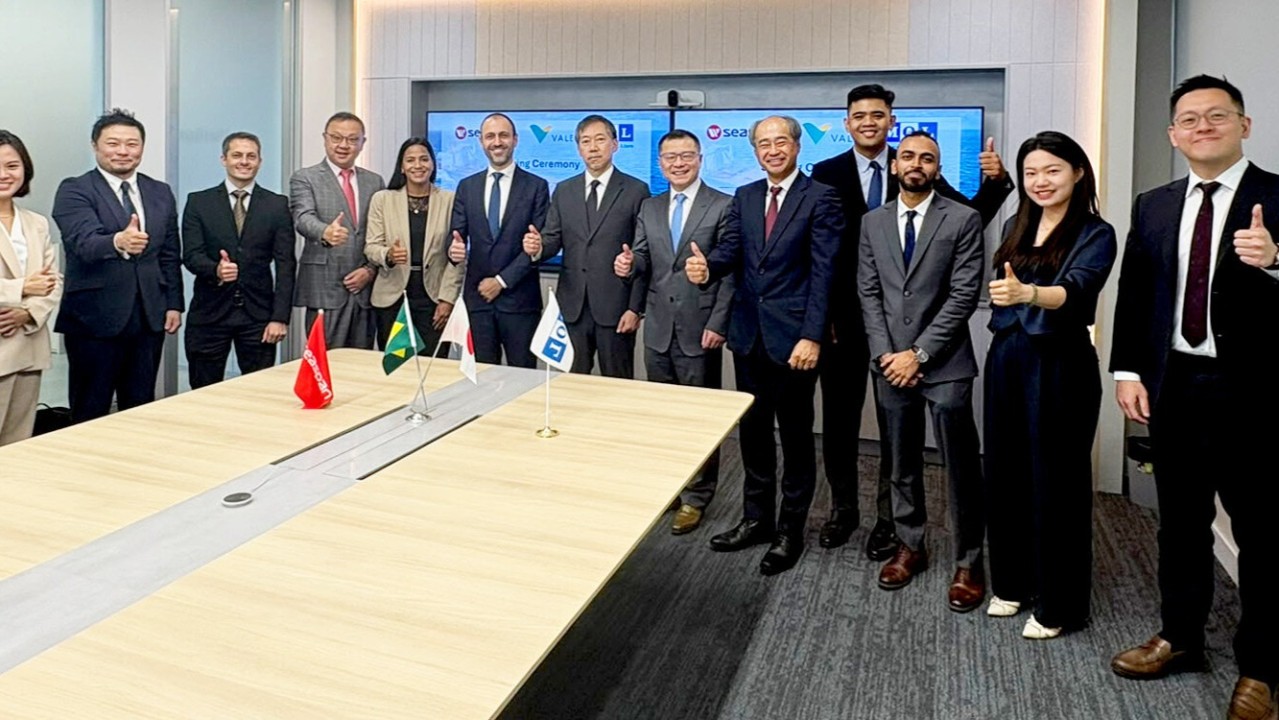
Seaspan Enters Newcastlemax Market, with Yangzijiang Set to Build Two Tri-Fuel Ore Carriers
 Dry Cargo
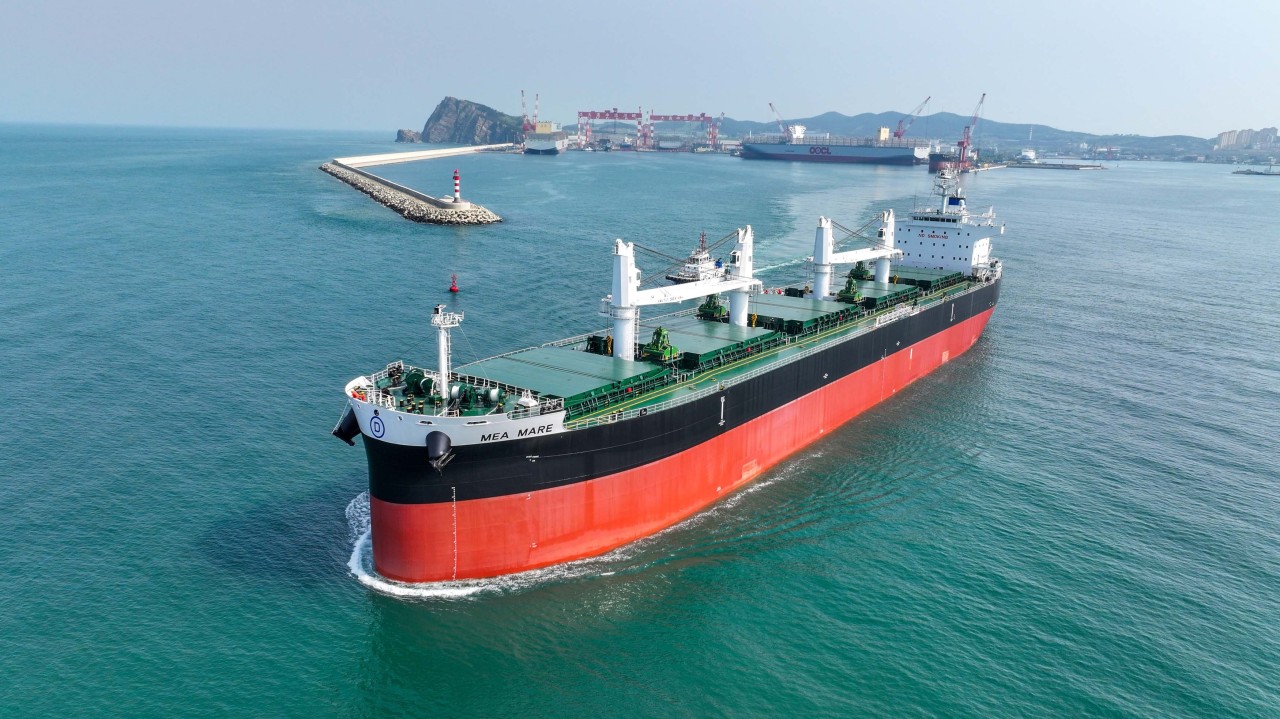
Shipowners Bet on Ultramaxes: 42 Ships for Chinese Yards, Deliveries Stretch into 203
 Dry Cargo
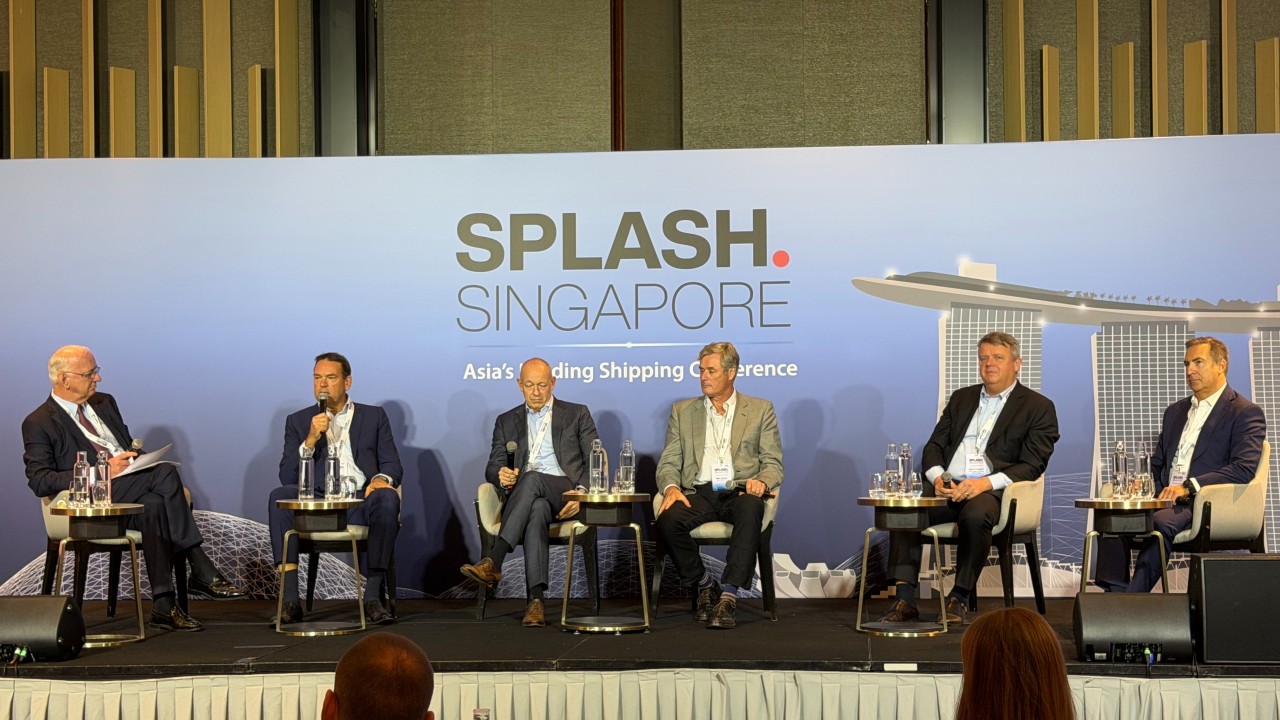
“We Are Buying Ships”: Why Dry Bulk Is Beating Expectations
 Dry Cargo
40 Days from Brazil to China: COSCO SHIPPING Bulk’s New Grain Fleet Takes Shape
 Dry Cargo
Wooyang orders four triple-fuel Newcastlemax bulkers at China’s New Times for Vale contracts
 Dry Cargo