


China Launches GSTC Green Marine Fuel Certification System in Shanghai
Shanghai moves from green fuel bunkering to certification, trading and supply-chain infrastructure
Xinde Marine News
Green marine fuel is no longer only a question of production capacity or bunkering capability. Increasingly, it is a question of certification.
As the IMO Net-Zero Framework continues to leave key details unresolved, including lifecycle greenhouse gas accounting, fuel certification, chain-of-custody rules and the treatment of green fuel attributes, the international market has largely relied on certification schemes such as ISCC and RSB.
China is now accelerating the build-out of its own certification capacity.
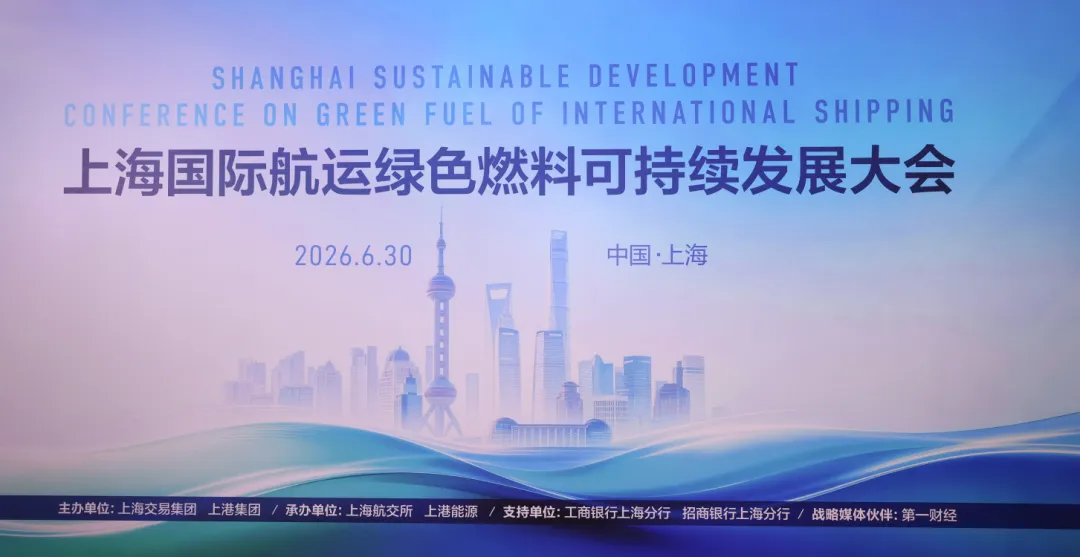
On June 30, the Shanghai International Shipping Green Fuel Sustainable Development Conference was held in Shanghai. The event was jointly organised by Shanghai Exchange Group and SIPG, and hosted by the Shanghai Shipping Exchange and SIPG Energy.
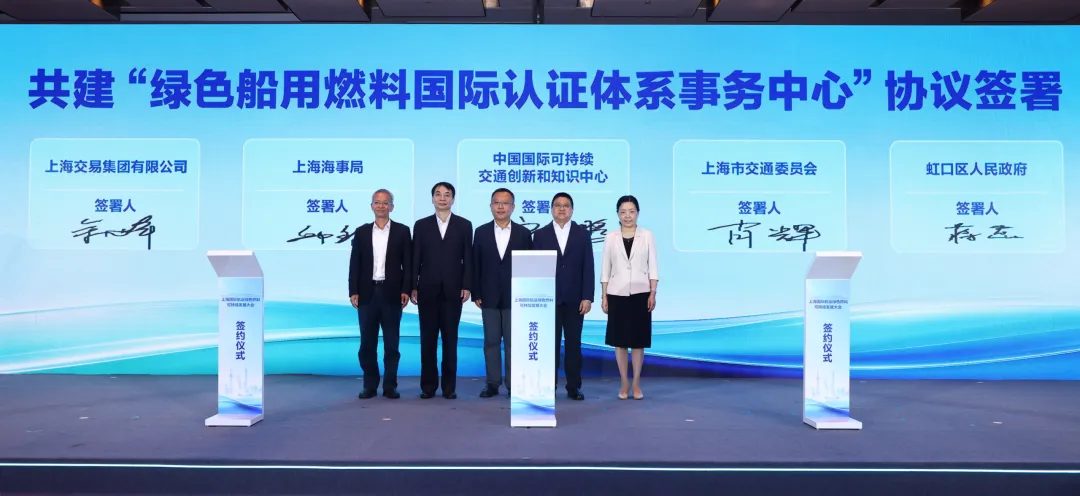
One of the most important outcomes was the launch of the Green Marine Fuel International Certification System Affairs Center in Shanghai, together with the official operation of China’s independently developed GSTC Green Marine Fuel Certification System.
For China’s green marine fuel sector, GSTC can be understood as a certification framework positioned alongside international schemes such as ISCC and RSB. Its significance is not simply that another organisation has been established. More importantly, it shows that China is trying to move from green fuel production and bunkering to the more difficult layer of certification, accounting and international rule alignment.
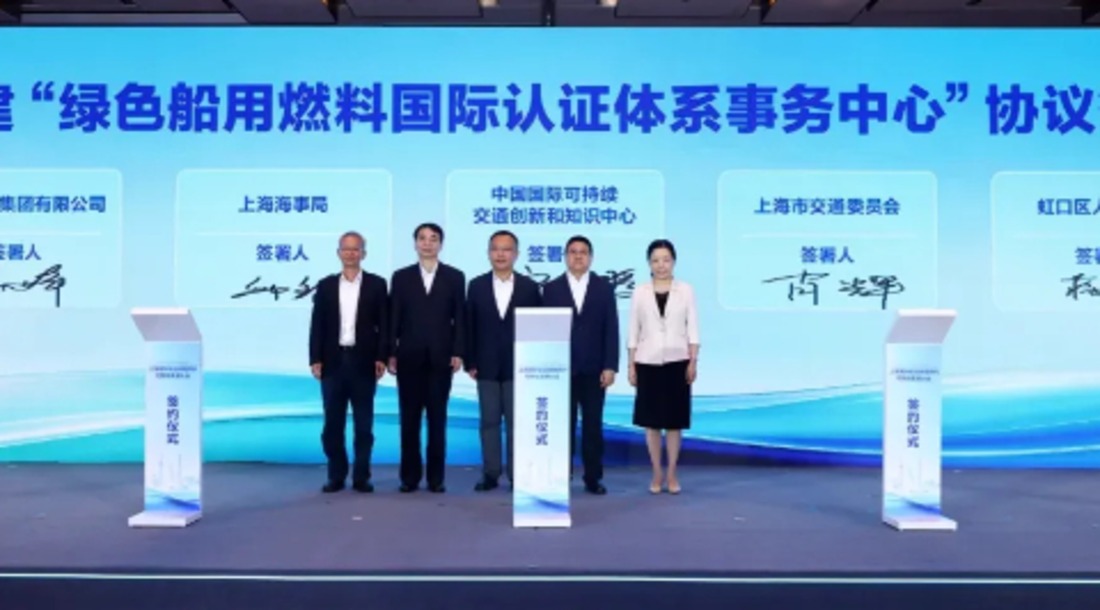
According to the conference information, the centre was jointly established by the China International Sustainable Transport Innovation and Knowledge Center, the Shanghai Municipal Transportation Commission, the Shanghai Maritime Safety Administration, the Hongkou District Government and Shanghai Exchange Group.
This gives the system a clear institutional backing. Over the past few years, several Chinese maritime, energy and standards-related institutions have been studying green fuel certification. The Shanghai launch indicates that this work is now moving from technical discussion into operational implementation.
The GSTC framework currently covers several core modules.
At the top level, it includes a governance charter and sustainability principles. Under the sustainability section, the framework covers different feedstock and energy pathways, including agricultural biomass, forestry biomass, waste and residues, sustainable electricity and carbon sources, direct land-use change, low indirect land-use-change risk materials, and waste and chemicals generated during production.
The framework also includes traceability and chain-of-custody requirements, lifecycle greenhouse gas emission calculation methodology, and management procedures for certification bodies, auditors, supply-chain operators, risk management, dispute resolution, supervision, labelling, claims and certificates.
Some sections are still marked for further expansion. This is important. GSTC should not be seen as a finished global standard overnight. It is better understood as a certification architecture that has now entered its operational phase, with detailed standards and procedures expected to be expanded and refined over time.
The timing is also important.
Under future IMO regulation, the value of a green marine fuel will depend not only on whether it is methanol, ammonia, hydrogen, biofuel or e-fuel. It will depend on whether its carbon intensity can be verified, whether its feedstock is accepted, whether its lifecycle emissions can be calculated under a recognised method, and whether its certificate can be trusted by shipowners, charterers, ports, regulators, insurers and financiers.
Without certification, green fuel is only a physical product. With certification, it becomes a tradable compliance instrument.
This is why the GSTC launch matters. It gives China a potential foundation for future IMO discussions, international green fuel trade and domestic green fuel market development.
Another major outcome of the conference was the signing of an agreement to jointly build the Shanghai International Shipping Green Fuel Trading Platform. The platform will be developed by the Shanghai Shipping Exchange, Shanghai Environment and Energy Exchange, and CHN Energy Hydrogen Technology.
The platform is designed to pilot a closed-loop process covering green fuel certification confirmation, registration, trading, settlement and cancellation. In the longer term, this could support the formation of a “Shanghai price” for green marine fuels, especially if physical supply, certification and trading infrastructure can be connected effectively.
A third key development was the formation of a cross-regional green methanol supply chain.
Shanghai, Jilin and Liaoning are working together to build what has been described as the “North Methanol Southbound” corridor. The proposed chain links green methanol production in Taonan, Jilin, with storage and transshipment through Dalian Port, and final bunkering at Shanghai Port.
This is more than a logistics arrangement. It connects inland and northern China’s green fuel production capacity with one of the world’s largest international bunkering ports. If it can be scaled up, it may become an important model for moving Chinese green methanol from production bases to global shipping demand.
Shanghai has also made progress on the bunkering side. The port has already built parallel capabilities for LNG and green methanol bunkering, while the conference also launched a 2030 action plan to expand green fuel bunkering capacity.
In the certification session, five companies became the first market participants certified under the GSTC system, including China Energy Engineering Group, Hong Kong and China Gas, Shenergy Group, SIPG Energy and Shanghai Huayi Holdings. Envision Energy and several other companies also signed certification intention agreements.
Taken together, these moves show a clear direction.
Shanghai is not only trying to become a green fuel bunkering centre. It is trying to build a full green marine fuel service system covering certification, trading and bunkering. For China, this is a step from participating in the green fuel market to helping shape its infrastructure.
The challenge now is international acceptance.
For GSTC to become truly influential, it will need credible third-party verification, transparent lifecycle methodology, compatibility with IMO rules, and some degree of interoperability with existing international certification schemes. It will also need recognition from shipowners, charterers, energy companies and financial institutions.
But the direction is clear. As green shipping enters the compliance and accounting era, the competition is no longer only about who can produce green fuel. It is also about who can certify it, price it, trade it and deliver it to ships.
The launch of GSTC in Shanghai suggests that China intends to play a role in all four.

READ MORE
 Sustainability
Japan Completes Methanol Transport and Bunkering Vessel
 Sustainability
Maersk Bunkers U.S.-Produced Corn Ethanol
 Sustainability
‘While I am President, there will be no global taxes’
 Sustainability
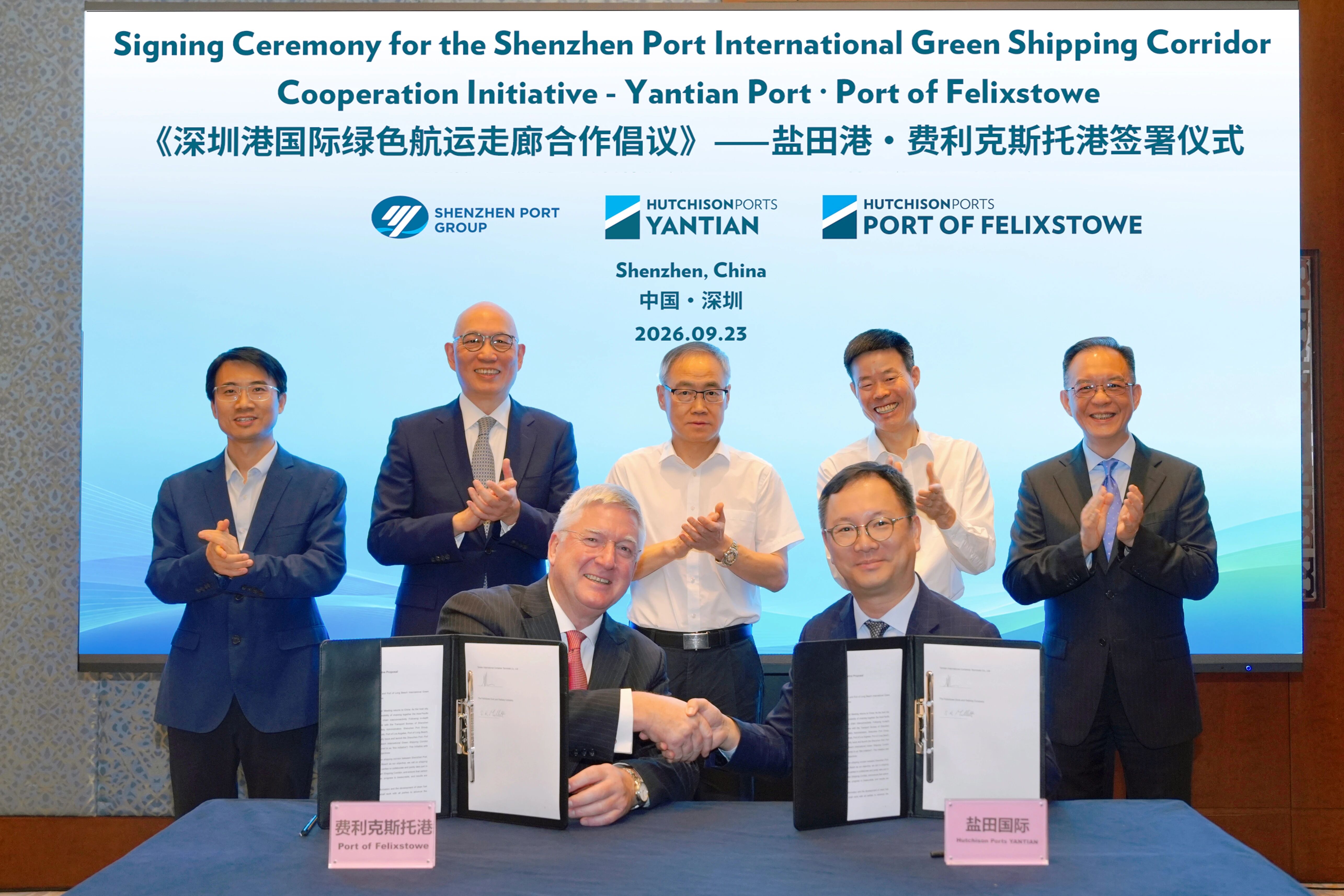
Yantian and Felixstowe Sign Green Shipping Corridor Cooperation Initiative
 Sustainability
When the Future Can No Longer Be Predicted, How Do Shipping Companies Survive?
 Sustainability
Fleet Management Lights Up Anchor Plaza in Blue for World Maritime Day 2026
 Sustainability
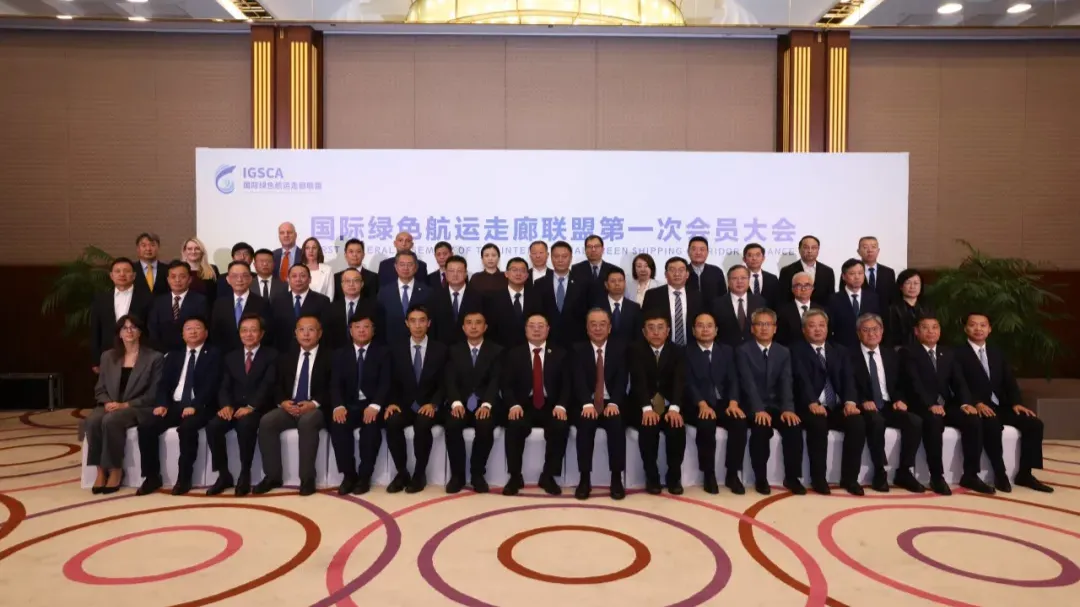
COSCO , CMA CGM and SIPG Join Launch of International Green Shipping Corridor Alliance
 Sustainability
Zero-Emission-Capable Ship Orders Slide as IMO Uncertainty Weighs on 2030 Target
 Sustainability
Fueling Now and the Future: IBIA Hong Kong Forum on Alternative Marine Energy
 Sustainability