


China-Europe Cargo Gets an Arctic Shortcut as Sea Legend Resumes Weekly Service
The China-Europe Arctic Express connects Ningbo-Zhoushan with Felixstowe in around 20 days, offering exporters a faster, lower-emission alternative to traditional Suez and Cape routes.
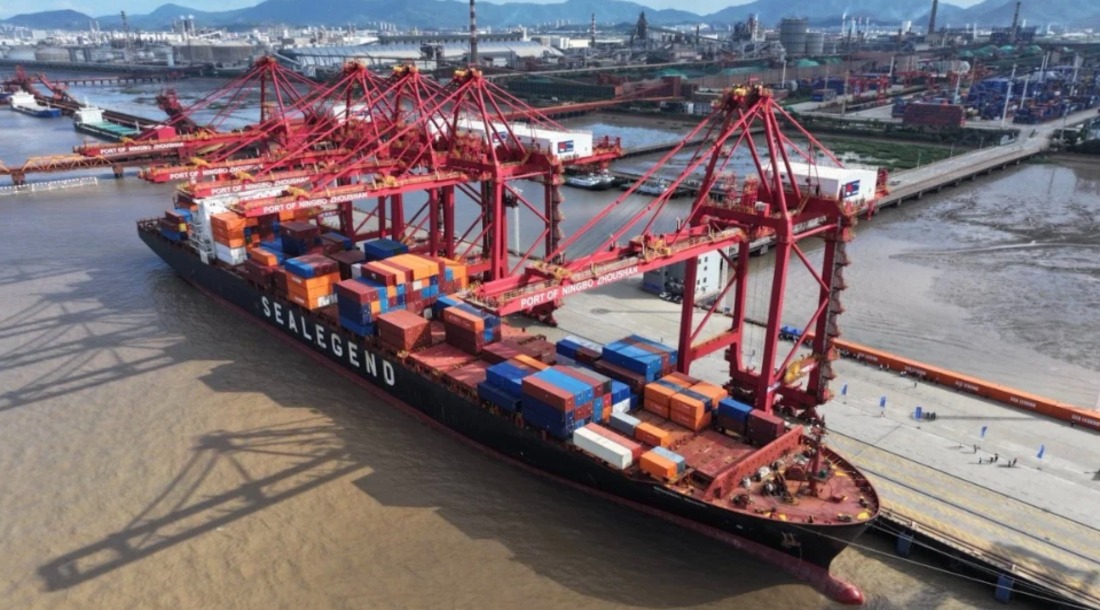

Sea Legend Shipping has resumed regular weekly operations of its China-Europe Arctic Express (CAX), positioning the service as a faster and lower-carbon alternative for time-sensitive cargo moving from China to Europe.
The service uses Ningbo-Zhoushan Port as its core hub, connecting multiple domestic feeder and cargo-gathering ports before sailing directly to the UK’s Port of Felixstowe. It can also provide access to a number of optional European ports, giving Chinese exporters a new route choice beyond traditional Suez Canal and Cape of Good Hope services.
The CAX service takes advantage of the Northern Sea Route across the Arctic, often described in China as part of the “Polar Silk Road”. According to the operator, the full transport time can be shortened to around 20 days, compared with roughly 30 to 40 days via the Suez Canal route, 40 to 50 days via the Cape of Good Hope, and about 25 days by China-Europe railway services.
For exporters of high-value and time-sensitive goods, the route is being marketed as a dedicated logistics channel for new energy equipment, energy storage systems, e-commerce cargo and other products requiring faster delivery windows. The relatively low-temperature sailing environment is also presented as an advantage for certain temperature-sensitive and high-value cargoes.
Sea Legend has also worked with PICC to develop a dedicated polar cargo insurance solution, designed to provide additional risk coverage for goods moving along the Arctic route. This is intended to address shipper concerns over cargo safety, voyage uncertainty and the operational risks associated with polar navigation.
The shorter voyage distance is also expected to reduce fuel consumption and voyage-related emissions. According to the service operator, carbon emissions per shipment could be reduced by as much as 50% compared with longer conventional routes. For Chinese exporters facing rising pressure from European carbon-related rules, logistics emissions disclosure and green supply chain requirements, the Arctic express service could offer an additional compliance and marketing advantage.
The return of weekly CAX operations comes as global supply chains continue to face pressure from congestion, geopolitical disruption, longer diversions and higher carbon costs. For cargo owners shipping from China to Europe, the service offers not only a shorter transit time, but also an alternative corridor that can help reduce dependence on conventional east-west routes.
The China-Europe Arctic Express has previously attracted attention from major Chinese state media, including CCTV and Xinhua, as a strategic logistics channel supporting the stability and diversification of China’s foreign trade supply chains.
With regular weekly operations now being resumed, Sea Legend’s CAX service could become an important test case for the commercialisation of Arctic container shipping. While polar navigation still faces seasonal, environmental and operational constraints, the route highlights a broader trend in global shipping: cargo owners are increasingly looking for faster, more resilient and lower-emission transport options as trade patterns continue to shift.

READ MORE
 Containers
Ningbo Containerized Freight Index Weekly Commentary Overall Demand Weakened During the Holiday; Freight Rates Declined on Most
 Containers
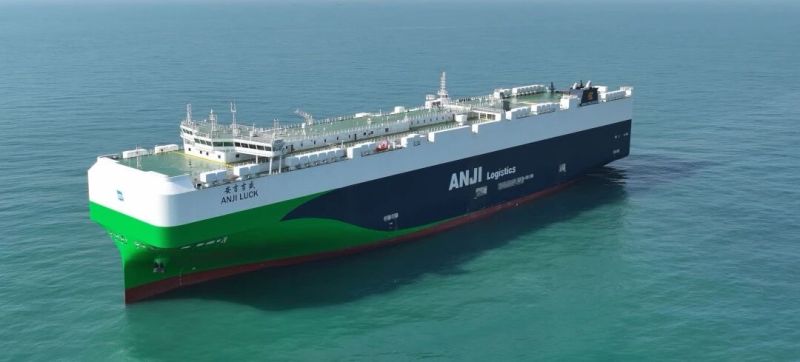
SAIC Anji Logistics is moving into the 11,000-CEU class.
 Containers
14m TEU Orderbook Puts Container Shipping on Course for a 2027 Capacity Test
 Containers
COSCO SHIPPING Holdings Steps Up Asia-Pacific Expansion with Dual-Brand Push
 Containers
From Shanghai to London: A Chinese Shipping Derivative Is Going Global
 Containers
Veteran German Owner Returns to Boxship Newbuildings as Offen Moves on 2+2 7,000-TEU Ships at GSI
 Containers
Maersk’s Decade-Long Transformation: Has Its End-to-End Logistics Strategy Worked?
 Containers
Ningbo Containerized Freight Index Weekly Commentary Freight Rate Trends Continued to Diverge; Composite Index Remained Stable
 Containers
Maersk overtakes COSCO to become Asia’s largest intra-Asia liner
 Containers