


Half of Seafarers Are Ready to Leave – So Why Is Adding Crew So Difficult?
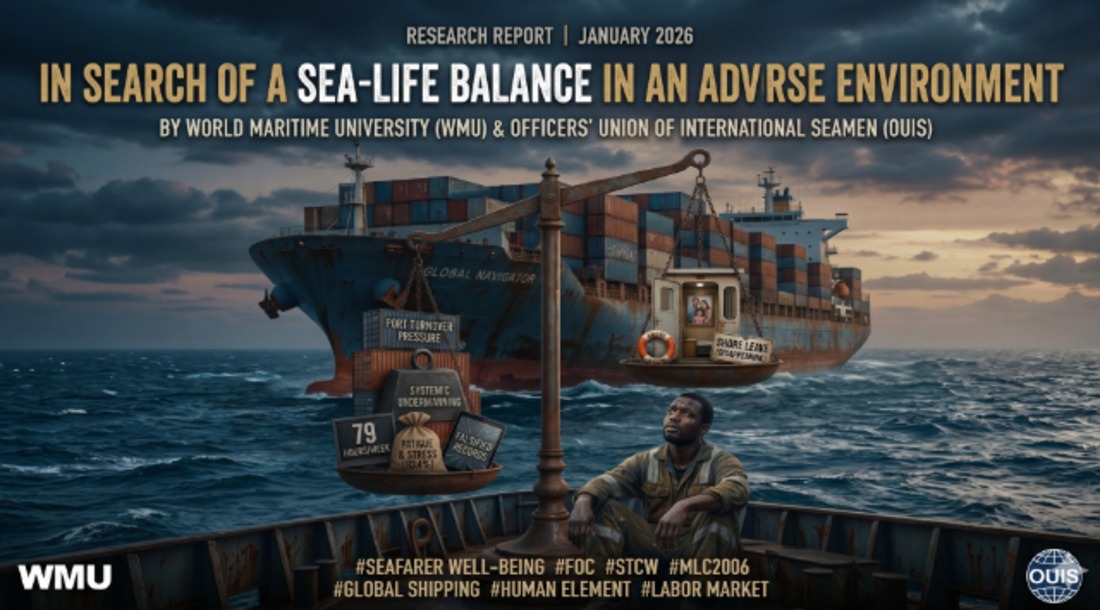

In Sarch of a Sea-Life Balance in an Adverse Environment
According to a research report titled In Search of a Sea-Life Balance in an Adverse Environment, published in January 2026 by the World Maritime University (WMU) and commissioned by the Officers' Union of International Seamen (OUIS), nearly half of the global active seafarers are planning to permanently leave the industry within the next five years. This massive survey, which covered 99 different countries and successfully collected responses from 4,372 frontline seafarers, paints an extremely worrying picture with detailed data: the global maritime workforce is enduring immense pressure that exceeds physical and psychological limits, and the industry's overall retention rate is alarming.
In this comprehensive report, the data presents a brutal reality:
- The average weekly working hours of surveyed seafarers worldwide are as high as 71 hours.
- Among groups on specific high-intensity routes or constrained by specific jurisdictions (such as US-flagged seafarers), this number climbs to an extreme 79 hours per week.
- Approximately one-third of the respondents were classified as having a "severe and potentially dangerous" stress level in psychological health assessments, their mental state depleted by chronic work overload and social isolation.
- Against this backdrop, over 93.4% of seafarers explicitly stated that extreme fatigue is currently the most pervasive and fatal safety hazard in daily ship operations.
Faced with this situation, a fundamental and poignant question naturally arises in the minds of the public and outside observers: Since the daily work of seafarers is so grueling that it threatens the safe operation of ships and human life, why don't shipping companies at the top of the industry chain effectively dilute and alleviate the workload of each individual by expanding crew manning?
Limitations of International Maritime Regulations
Regarding the international standards for the minimum safe manning of ships, there has been a long evolutionary process. The widely followed standard currently is Resolution A.1047(27), Principles of Minimum Safe Manning, adopted in 2011. The core purpose of this resolution is to ensure that every ship is manned with seafarers who are sufficient in number and competent in qualifications to meet the comprehensive needs of ship safety, security, safe navigation, port operations, and marine environmental protection, explicitly emphasizing that seafarer welfare and health must be safeguarded by avoiding fatigue.
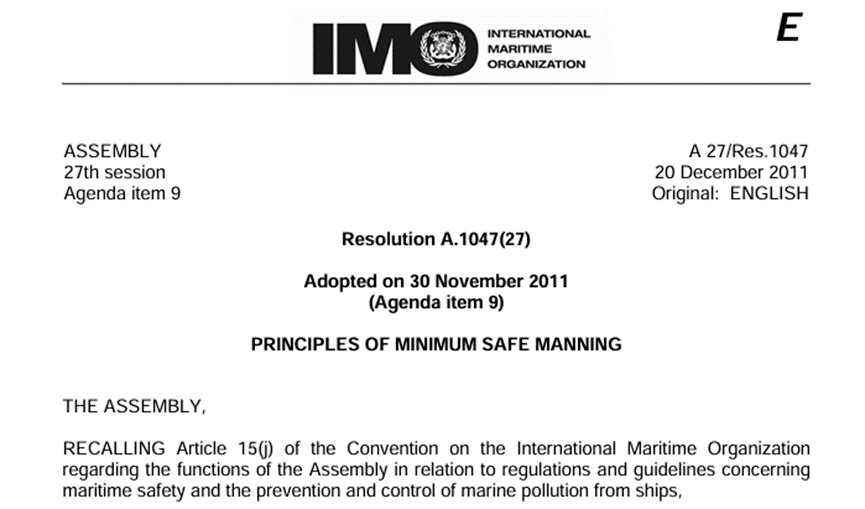
In paragraph 1.4 of Annex 2 to Resolution A.1047(27), the IMO clearly proposes a crucial concept: when determining the minimum safe manning of a ship, full consideration must be given to the number of qualified personnel required to meet "peak workload" situations, while also taking into account the seafarers' shipboard watchkeeping and rest hour requirements. This peak workload covers high-pressure scenarios such as safe mooring in severe weather conditions, the unassisted emergency evacuation of passenger ships at night and in bad weather, the extreme pressure on small vessels to enter port, load/unload cargo, and sail immediately on the same day, and the comprehensive watchkeeping of the engine control room by engineering staff when navigating narrow channels or during berthing/unberthing.
However, the core of the problem lies in the fact that there is currently no internationally recognized mathematical formula or quantitative model that can accurately translate these "peak workloads" into a specific number of crew members. In practice, when shipowners apply to the flag state for a Minimum Safe Manning Document (MSMD), they often calculate manpower needs based on routine cruising status on autopilot across the ocean, deliberately ignoring or severely compressing the need for redundant personnel during port operations and emergencies.
Under an ideal international regulatory framework, the MSMD establishes merely the ultimate red line to prevent systemic dangers to the ship. Yet, in the highly commercialized and fiercely competitive international shipping market, this bottom line has been distorted into the "absolute maximum" limit for shipowners when allocating manpower. The International Transport Workers' Federation (ITF) has harshly pointed out in multiple reports that realistic minimum safe manning levels are actually determined by shipowners, not regulators.
The fundamental driver of this regulatory distortion is the vicious competition among flag states under the "Flags of Convenience" (FOC) system. The global shipping market allows shipowners to freely choose their vessel's country of registration and fly its flag based on economic interests. To attract more ship registrations and obtain lucrative registration fees and tonnage tax revenues, many FOC countries have abandoned strict enforcement of safety standards, catering instead to shipowners' demands to cut costs. When a shipowner submits a manning application based on absolute minimum costs and an extremely streamlined crew, the competent authorities of these flag states often rubber-stamp the approval without hesitation, entirely skipping substantial fatigue load tests or safety redundancy assessments.
In such an ecosystem, any shipping company that attempts to proactively increase manning out of humanitarian or long-term safety considerations will find itself at an absolute operational cost disadvantage against competitors who squeeze labor to the baseline. As related research points out, flag states' compromises on manning levels for profit—even reducing ship registration services to mere money-making tools—allow shipowners to ruthlessly cut crew sizes. This forces workloads far beyond normal human endurance onto a limited number of onboard seafarers, creating a mechanism where bad money drives out good.
Restrictions of Operating Costs
Industry data shows that crew costs typically account for 30% to 35% of a conventional commercial ship's total operating costs. For US-flagged vessels, this proportion is as high as 70%, whereas for foreign-flagged vessels, it is only about 28%. Adding a crew member is far from as simple as paying an extra monthly salary; behind it lies a complex chain of hidden costs:
Cost CategoryEstimated ExpenseSTCW Compliance TrainingUSD 50,000 to USD 100,000 per ship, per yearLiving ProvisionsUSD 100 to USD 150 per person, per dayCrew Change LogisticsUSD 200,000 to USD 400,000 per ship, per year
Note: Crew change logistics are highly volatile and can skyrocket due to pandemics or geopolitical conflicts. In an extreme case recorded by the International Chamber of Shipping, a single crew change cost a staggering USD 820,000.
Commercial Turnover Pressure
Modern port logistics strive for extreme turnover efficiency, and every minute a ship spends in port is viewed as a loss of cost. A minimal crew must simultaneously handle loading/unloading, ballast water operations, PSC inspections, resupply, and emergency repairs within an extremely short timeframe, with zero redundant manpower to share the burden. Research indicates that the degree of fatigue during port turnaround far exceeds that of the voyage phase. If shipowners dare not say "no" to cargo owners to maintain freight rate competitiveness, it is even less likely they will permanently increase fixed manning to alleviate this short-term peak fatigue.
Physical and Engineering Design Limitations
If operating costs are the core subjective motive for shipowners' refusal to expand manning, then the unalterable physical design layouts of modern ships and the mandatory baseline requirements for hardware facilities set by international conventions are the insurmountable objective barriers hindering increased manning. A modern commercial ship is an industrial product that pushes space utilization to its absolute limits from its initial design. Adding a crew member means completely upending the existing hardware structure of the living quarters and the statutory baseline for life-saving equipment.
Statutory Maximums of Life-Saving Equipment (SOLAS)
According to the rigid regulations of the International Convention for the Safety of Life at Sea (SOLAS) and the accompanying International Life-Saving Appliance (LSA) Code, the configuration of a ship's life-saving equipment determines the absolute maximum number of personnel the ship can carry. This is not merely a theoretical number; it determines whether the ship can obtain a seaworthiness certificate.
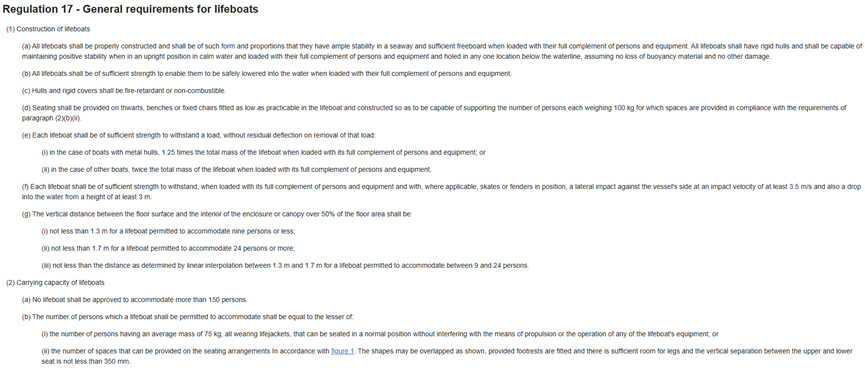
The convention sets precise proportional requirements for the life-saving capacity of different ship types. For example, ordinary cargo ships must be equipped with lifeboats on both sides capable of accommodating 100% of the ship's total personnel. Passenger ships or special purpose ships, due to their high personnel density, must have a total life-saving equipment capacity of at least 125% of the total number of people on board.
The SOLAS Convention establishes extremely strict upper-limit parameters for the physical specifications of a single lifeboat. With the special exemption of new catamaran-style rescue boats used on some super cruise ships, the statutory maximum carrying capacity of standard enclosed lifeboats is strictly limited to under 150 people. The convention even makes detailed quantitative rules regarding the average weight of personnel (75 kg), the space occupied after donning a lifejacket, and the vertical distance within the lifeboat (e.g., the internal clear height of a lifeboat carrying more than 24 people must not be less than 1.7 meters).
This means that for an already-built ship, its statutory maximum carrying capacity is determined by the capacity of the life-saving equipment installed at the factory. If a shipowner wishes to increase manning on an existing vessel and this addition exceeds the minimal redundant capacity reserved during design, the ship must enter a dry dock. It would have to remove old equipment, redesign and install larger-capacity lifeboats and heavier launching appliances, then recalculate and verify the vessel's structural stability and unsinkability, and finally update all statutory safety certificates. The direct engineering costs generated by this series of structural modifications and the indirect economic losses caused by lengthy suspensions of operations are entirely unacceptable to any profit-driven commercial shipowner.
Constraints of Living Space by the Maritime Labour Convention (MLC 2006)
The 2006 Maritime Labour Convention (MLC 2006) is praised by the international community as a major pillar for protecting seafarers' rights. Its original intention was to significantly improve the living and accommodation conditions of seafarers on board by establishing uniform global standards. However, these stringent standards established to safeguard welfare have objectively set an extremely high hardware barrier to entry for increasing manning, rendering the traditional practice of "trading per capita living space for more hands" illegal.
MLC 2006 not only bans crowded and dilapidated communal cabins but comprehensively establishes the principle that newly built non-passenger ships must provide an individual single cabin for every seafarer. Furthermore, it implements extremely precise quantitative controls over the minimum net floor area, internal clear height, lighting, and soundproofing standards of the cabins.
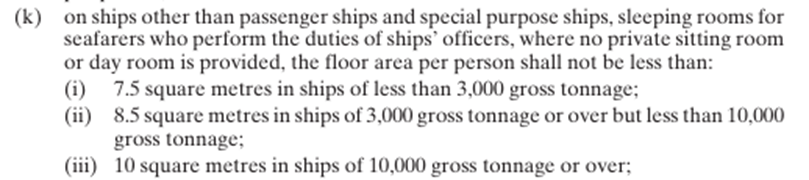
Beyond floor space, the convention mandates that in all crew accommodation areas where personnel require full freedom of movement, the clear headroom must absolutely not be less than 198 cm (or 190 cm depending on specific exemptions). Concurrently, all exterior bulkheads of accommodation spaces and decks bordering high-temperature engine rooms must be fitted with qualified thermal and acoustic insulation materials. They must also be equipped with an independent, dual-power supply lighting system and an HVAC system sufficient to maintain climate conditions.
In commercial ship design, naval architects must, while ensuring safety, maximally compress the volume of the accommodation area to release more space for loading profitable cargo. Therefore, once a ship's design is finalized and it is delivered for operation, its number of MLC-compliant single cabins is fixed. Under the convention's tight compliance framework, shipowners simply cannot accommodate newly added seafarers through the crude traditional methods of adding bunk beds or sleeping on the floor in existing cabins. Faced with unexpandable steel superstructures, even if shipowners were willing to bear the extra wage costs, there are fundamentally no legal and qualified rooms on board to house the extra crew members.
Technological Progress Ironically Exacerbates Fatigue
Automation has not eliminated the total amount of work; rather, it has led to a load transfer from physical to cognitive tasks. Under the Unattended Machinery Space (UMS) model, engineers engage in heavy preventive maintenance during the day. When a fault occurs, a very small number of watchkeepers must deal with massive alarms and complex decision-making, keeping them highly tense.
Senior officers spend hours every day processing emails, checklists, and reports, effectively being reduced to "maritime data entry clerks." Automation has not only failed to justify manning reductions but has actually exacerbated fatigue.
The Catch-22 and the "Culture of Adjustment"
All these contradictions ultimately back frontline seafarers into a corner. According to currently effective international regulations, especially the rigid rules of MLC 2006 and the STCW Convention, the maximum statutory working hours for all seafarers must not exceed 14 hours in any 24-hour period, or 72 hours in any 7-day period. Correspondingly, minimum rest periods must absolutely not be less than 10 hours in any 24-hour period, and 77 hours in any 7-day period.
However, facing a 10,000-ton behemoth with a crew of only a dozen or so, simultaneously satisfying demanding commercial turnaround requirements, intensive equipment maintenance tasks, and the aforementioned rigid rest hour red lines is a mission impossible. Consequently, the entire global shipping industry has spawned a "culture of falsification" regarding work and rest hour records.
"Falsification" Becomes the Norm
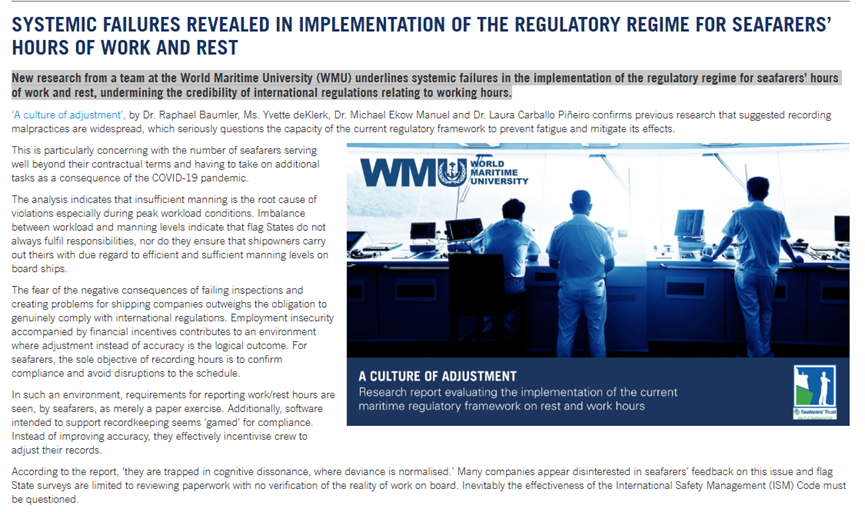
In 2020, the WMU, funded by the ITF Seafarers' Trust, released a research report titled A Culture of Adjustment, bringing this behavior to light for the first time. The subsequent 2024 follow-up report, Quantifying an Inconvenient Truth, used comprehensive data to reveal the prevalence of this falsification.
The latest questionnaire data shows that among the thousands of seafarers surveyed, a staggering 64.3% confessed to having voluntarily or forcedly manipulated official records of work and rest hours. All of this stems from two layers of deep-seated fears:
- Fear of external sanctions: 80.2% of seafarers involved in falsifying records admitted that the primary purpose was to create an illusion of compliance during stringent Port State Control inspections, avoiding ship detentions that would leave a devastating career stain.
- Fear of internal punishment: 75% of falsifiers stated this was to appease and avoid causing trouble for their employing shipping companies. In a highly competitive labor market lacking job security, any seafarer who truthfully records overtime risks hidden retaliation such as contract non-renewal, pay cuts, or dismissal.
According to internal statistics, over 88.3% of seafarers admit to exceeding the official maximum working hour limits at least once a month, with 16.5% severely exceeding them over ten times a month. Even more fatally, 28.1% of seafarers get less than 10 hours of actual rest per day; furthermore, an astonishing 89.6% have never enjoyed even a single full weekly day off during voyages lasting several months.
Software as an "Intelligent Accomplice"
In this practice of falsification, electronic recording software has degenerated into an accomplice forcing seafarers to lie. In-depth research points out that the work hour recording software widely used in the market currently is set at its algorithmic base logic to a "Gamed for success/compliance" mode.
When seafarers try to accurately input actual time spent after unexpected heavy operations (e.g., night-time bunkering, hold cleaning, or navigating pirate-infested waters), the system immediately triggers glaring red violation warnings. These real-time red warnings carry intense visual pressure. Some shipping companies even directly link "maintaining a zero-violation record with no red lights" to the ship's monthly KPI assessments and the seafarers' personal bonuses.
Under this mechanism, the software constantly "incentivizes" seafarers to repeatedly tweak and falsify every time node until the red denoting violation fades away, replaced by a sea of false green lights symbolizing perfect compliance. Seafarers are deeply trapped in extremely painful cognitive dissonance—they know full well that falsification is wrong. Yet, in a pathological organizational environment, falsifying becomes the only logical outcome for survival, and deviant behavior is thoroughly normalized.
The Chain Reaction of Systemic Understaffing
Systemic low-manning policies, perpetuated under the cover of a falsification culture, trigger a chain reaction that threatens navigational safety, the marine environment, and the physical and mental health of seafarers.
Medical and ergonomic research indicates that fatigue can impair seafarers' work performance and decrease alertness to a degree comparable to alcohol intoxication. Under a minimalist manning model, many ships adopt the extreme "6 on, 6 off" shift system, disrupting the human circadian rhythm. Engine room noise, vibrations, vessel rolling, and cross-timezone navigation further destroy sleep quality. Surveys show that seafarers' daily average fragmented sleep is only 7 hours, with 37.5% getting less than 6 hours. With severely weakened cognitive functions, a single error can easily escalate into a collision, grounding, or spill disaster due to the lack of backup personnel for cross-verification.
Additionally, the massive workload further reduces interpersonal communication, exacerbating social isolation and loneliness in an already closed environment. Even those with a certain degree of psychological resilience are drained by endless administrative tasks and alarms, leading to the spread of anxiety, depression, and extreme emotions. More seriously, port modernization, faster turnaround speeds, and security restrictions have made shore leave almost disappear. Many seafarers cannot step foot on land for months, fundamentally eroding basic human rights and leaving the industry perceived as cold and ruthless.
How are Shipowners and Ship Managers Responding?
Faced with the grim data that nearly half of seafarers plan to leave within five years, international ship management giants have not chosen to improve onboard conditions or increase manning. Instead, they are turning to lower-cost emerging markets, attempting to plug the talent gap through a global labor restructure.
Traditional channels heavily reliant on the Philippines, India, and Eastern Europe are increasingly drying up due to economic growth and rejection by the younger generation. Against this backdrop, Africa is viewed as the next "golden market": despite having long coastlines, African seafarers currently make up only about 3% of the global workforce. Bernhard Schulte Shipmanagement (BSM) has established a training center in Ghana and expanded deep into places like Egypt and Turkey. Danica and VTS Shipping are positioning themselves in East Africa, Indonesia, and Vietnam.
However, this approach does not resolve the core problem of understaffing. As the WMU report points out: as long as extreme fatigue, the culture of falsification, psychological torment, and the death of shore leave remain unchanged, any talent pipeline from new markets will merely be a "constantly leaking pipe." Once new crew members from Africa or Vietnam board a ship, they too will be rapidly consumed by the high-intensity labor and administrative burdens. With an attrition rate of nearly 50%, the injection of new blood will never keep up with the loss. This strategy of masking systemic fatigue with cheap fresh blood will inevitably lead to a dead end.

READ MORE
 Sustainability
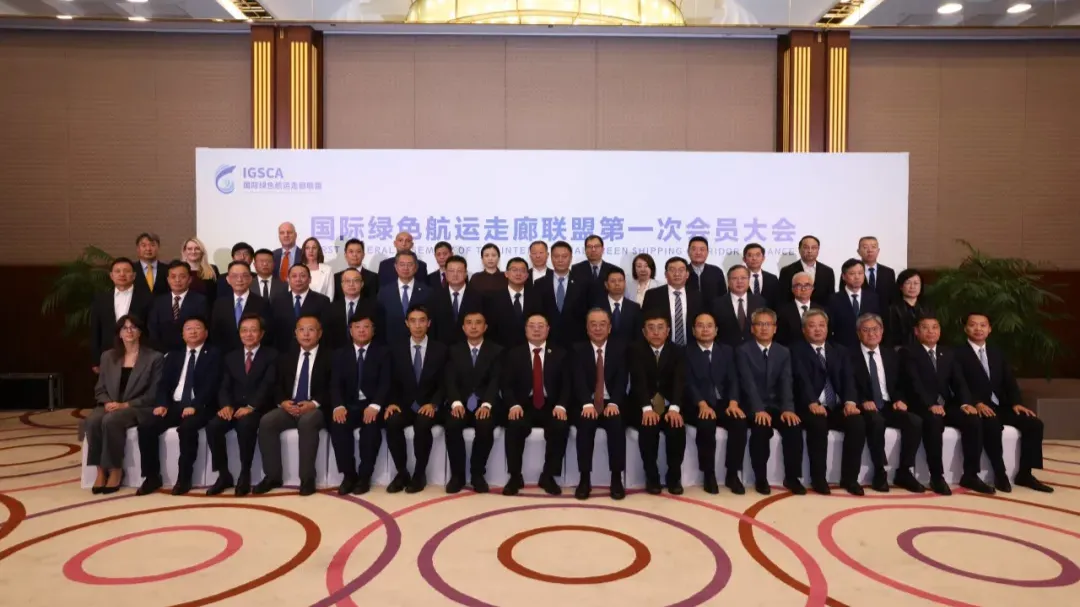
COSCO , CMA CGM and SIPG Join Launch of International Green Shipping Corridor Alliance
 Sustainability
Zero-Emission-Capable Ship Orders Slide as IMO Uncertainty Weighs on 2030 Target
 Sustainability
Fueling Now and the Future: IBIA Hong Kong Forum on Alternative Marine Energy
 Sustainability
Fleet Management Lights Up Anchor Plaza in Blue for World Maritime Day 2026
 Sustainability
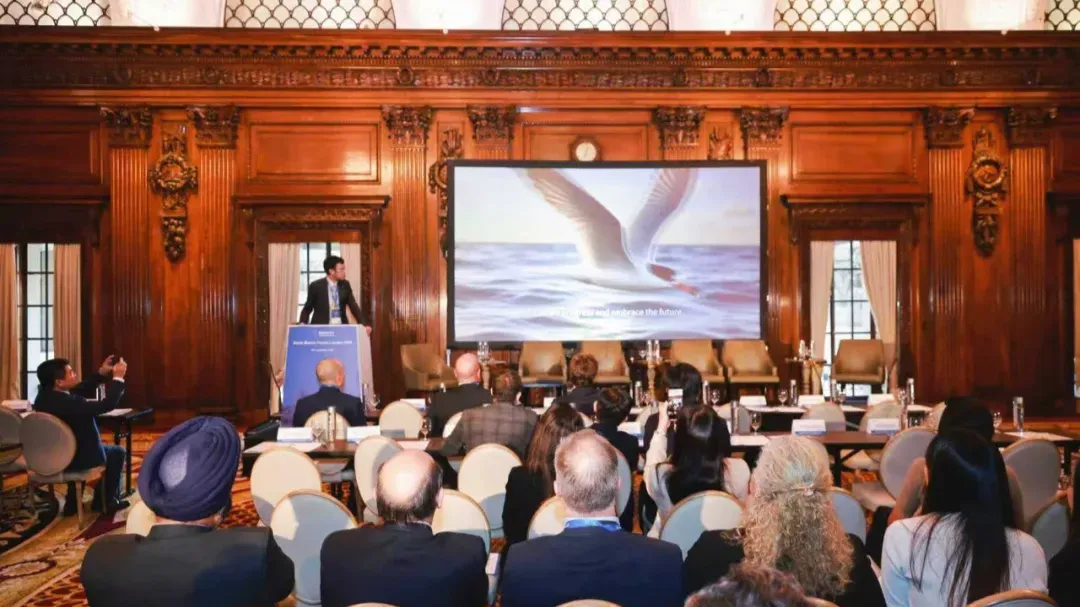
WMMF 2026 Promotional Film Debuts in London
 Sustainability
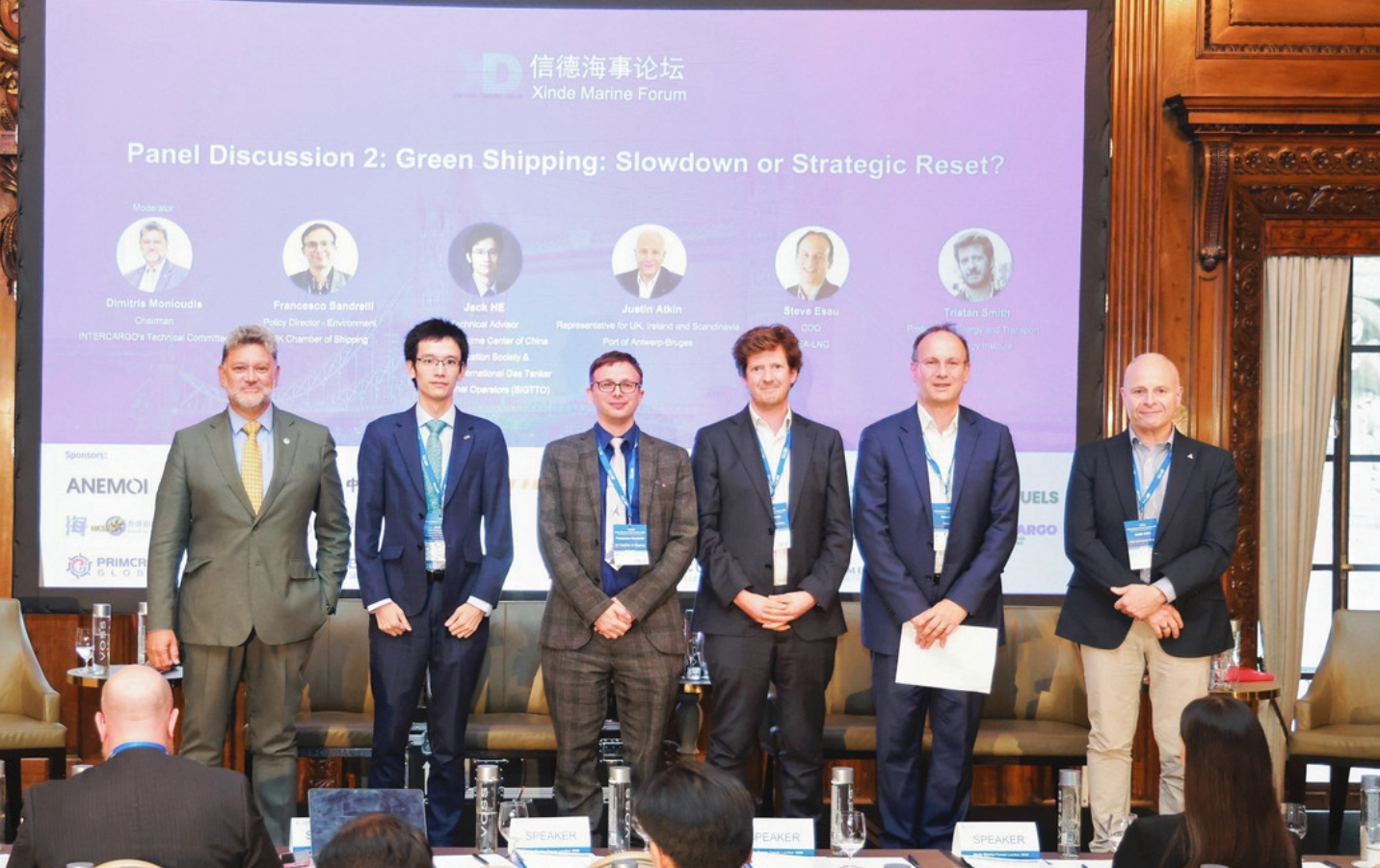
Xinde Marine Forum London 2026: Green Shipping Enters a Strategic Reset
 Sustainability
Shipping Has a Net-Zero Target — but Still Lacks the Rules to Deliver It
 Sustainability
Chimbusco completes first ammonia bunkering operation
 Sustainability
324 days ahead of schedule — another milestone for China’s shipbuilding industry
 Sustainability