


"China Connects the World"—NorthStandard Targets Further Expansion in China

"China Connects the World"—NorthStandard's Decade in Shanghai and Nearly Four Decades with Chinese Shipowners
By Chen Yang, Xinde Marine News
NorthStandard marked the tenth anniversary of its Shanghai office on 25 November 2026 with a China Members Seminar and evening celebration at The Peninsula Shanghai. Its business in China spans seven insurance lines, serving 150 members and insureds with approximately US$45 million in premiums. Managing Director Paul Jennings linked the club's continuing commitment to China with the country's wider maritime role. "China connects the world," he told guests.
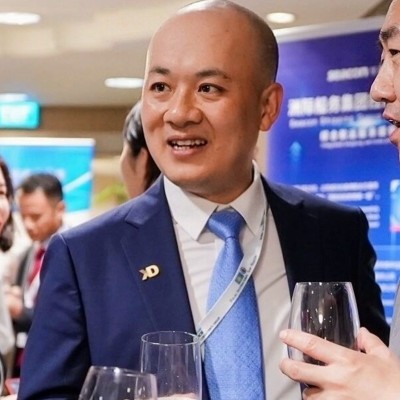
The gathering brought together longstanding Chinese shipping partners and NorthStandard colleagues from the UK and across Asia. Jennings recalled welcoming guests with Gary Chen at the Shanghai office's opening reception exactly ten years earlier, at the nearby Roosevelt Building on the Bund. Alan Lo, who had also spoken at that reception, was among those attending the anniversary celebration. Jennings made a point of welcoming him again.

China's Importance Reaches Across the Global Membership
"It is not possible to overstate the importance of China to shipping," Jennings told guests. He pointed to the country's shipbuilding and repair capabilities, its shipping fleet and ports, and the infrastructure and financial institutions supporting them. China was fundamental to both the present and future of global shipping, he said, while also providing stability during a period of considerable international volatility.
That assessment has practical implications for NorthStandard's international membership. Jennings noted that shipowners around the world have increasingly strong trading and business links with China, making the Shanghai office valuable to a much wider community of members. An owner based in Europe may have ships under construction at a Chinese yard, vessels entering a Chinese repair facility or a fleet regularly calling at the country's ports. The owner's headquarters may be thousands of miles away, but the need for local assistance arises where the ship is operating.
Chinese owners trading internationally face the same requirement in other jurisdictions. Following a casualty, surveys, investigations, legal procedures and communication with the parties involved can all require prompt attention. A Shanghai team familiar with a Chinese member's operations can coordinate with colleagues and correspondents elsewhere, helping the owner deal with events far from home.
Jennings linked those relationships directly to the club's plans. NorthStandard intends to deepen its engagement and further develop its position in China for the mutual benefit of members and business partners. As international shipping's commercial links with China expand, the Shanghai team has a growing role in supporting them.
Ten Years in Shanghai, Nearly Forty Years of Cooperation
Michael Hustler, NorthStandard's Head of Asia Pacific, placed the office anniversary within a longer history during his opening address that afternoon.

"We have been working with Chinese shipowners for nearly 40 years," he said. Establishing the Shanghai office in 2016 built on relationships already developed over several decades and gave the club a closer presence in the market.
At the time of the opening, North P&I Club, one of NorthStandard's predecessor organisations, reported approximately 7 million GT entered from Chinese-owned and operated vessels. Its Asia-Pacific membership accounted for around 63 million GT, or 34% of its total entered tonnage. Shanghai became North's fourth Asian office, joining Hong Kong, Singapore and Tokyo. There was already a substantial regional business to support.
The first three colleagues transferred from Hong Kong brought experience across shipping operations, law and claims. Gary Chen, now NorthStandard's Head of Greater China, graduated from Shanghai Maritime University, worked in ship operations and chartering, and subsequently studied maritime law at the University of Southampton. Baohai Gao had spent eight years practising maritime law before joining the club. Linus Wang had worked for a major Chinese state-owned shipping company for ten years. At the anniversary seminar, Gao addressed members as NorthStandard's P&I Claims Director for Asia Pacific.

The Shanghai office's responsibilities include member liaison, claims and loss prevention support in mainland China, together with relationships with shipowners, yards and correspondents. Underwriting centres in Hong Kong and Singapore support that work, while regional underwriting and claims teams have authority to make decisions within the local time zone. For an owner handling a casualty, arranging insurance or assessing a voyage, access to familiar people who can respond promptly has immediate operational value.
Xu Hui, Deputy General Manager of China Merchants Energy Shipping, described that value from a member's perspective. Management, legal and insurance teams on both sides maintain regular contact. Shanghai colleagues assist with claims, professional advice and loss prevention, and help the company access NorthStandard's expertise globally. During emergencies, Xu said, owners particularly need the club's support in assessing risks and managing the response.

Hustler's description of the relationship was direct. "Shipping remains a remarkably personal business. And insurance, particularly P&I, is ultimately about trust." Difficult claims, casualties, commercial disputes and situations requiring urgent help test relationships built over many years. He thanked Chen and the Shanghai team for their contribution.
A China Business Extending Across Seven Insurance Lines
Figures presented by Jack Marriott-Smalley, Head of Underwriting for Asia Pacific, showed the scale of NorthStandard's business in China. Its owned and time-charterers' P&I portfolio comprises 68 members and 487 ships, totalling 25.2 million GT, with US$31.1 million in premiums. The club reported a 9% share of Chinese-owned P&I entered tonnage.

The development of that business includes the work of both predecessor clubs. In 2018, Standard Club Asia entered into a cooperation agreement with Ping An Property & Casualty Insurance to provide P&I cover for Chinese shipowners undertaking ocean-going voyages. Xinde Marine News also reported in December 2022 on Standard Club's strike and delay reinsurance cooperation agreement with China P&I Club. North and Standard Club formally merged on 20 February 2023, bringing their member relationships, staff and insurance expertise into NorthStandard.
Including specialty insurance, NorthStandard's China business serves 150 members and insureds across seven lines, with approximately US$45 million in premiums. The disclosed figures imply that business outside the owned and time-charterers' P&I portfolio contributes around US$13.9 million, or roughly 31% of the China total. The breadth of insurance purchased reflects the range of risks owners are managing.
Different policies address different exposures. P&I responds to third-party liabilities, hull and machinery insurance covers physical damage to the vessel, and freight, demurrage and defence insurance provides legal costs cover and specialist support for contractual disputes. Strike and delay insurance can protect against income lost through delays caused by specified events.
A single casualty may involve damage to the ship, cargo claims, injuries and interrupted earnings. Discussing those exposures within a broader insurance relationship can help an owner coordinate cover and understand how the different parts of a programme respond.
Financial Resources Behind the Local Service
NorthStandard's Shanghai operation is supported by a substantial international organisation. The club reports approximately 270 million GT of poolable tonnage, representing 18% of the International Group of P&I Clubs' total on that basis, and employs more than 700 people. Anniversary materials described a network of 15 offices worldwide, including six Asian locations in Shanghai, Hong Kong, Singapore, Tokyo, Imabari and Seoul. The network brings together claims handlers, underwriters, lawyers, master mariners and marine engineers.
For a P&I club, financial strength matters over the full life of a claim. Serious maritime casualties can take years to resolve. In May 2026, NorthStandard reported premium income of US$938 million for 2025/26, up from US$886 million a year earlier. Its combined ratio improved from 114% to 105.5%, while free reserves increased by US$123 million to US$923 million. Jennings told guests in Shanghai that the club managed an investment portfolio of approximately US$2 billion.
Marriott-Smalley's forecast for the financial year ending 20 February 2027 points to further expansion. Premium income is expected to reach US$1.167 billion, an increase of approximately 24% from the previous year and above the US$1 billion target set at the merger. The net combined ratio is forecast at 95%, with free reserves expected to rise to US$978 million. NorthStandard holds an S&P financial strength rating of A with a stable outlook.

The club's November renewal outlook explained the contribution from its diversified insurance portfolio. Upstream Energy and Marine and Energy Liabilities have grown strongly, while Hull & War has generated additional premium income. Alongside favourable development in prior-year pool claims, specialty insurance is supporting the overall result. The P&I policy-year combined ratio is still expected to exceed 100%, highlighting the contribution of other business lines to the broader financial-year performance.
Managing Director Jeremy Grose said in that outlook that diversification reduced reliance on any single part of the portfolio and increased the club's capacity to invest in service delivery. Xu, speaking from the member's side, welcomed the integration of people, business capabilities and expertise following the 2023 merger, together with continued investment in loss prevention. Those are the areas where a larger organisation becomes directly relevant to an owner's daily operations.
Support Begins Before the Voyage
The afternoon's technical presentations addressed decisions owners face before a claim occurs. Junming Lim, FD&D Claims Director for Asia Pacific, examined emerging charterparty risks and shipping disputes. His presentation posed three questions familiar to owners dealing with war and piracy risks. Can owners refuse instructions? Can they deviate? Who pays?

Those decisions involve both navigational safety and the rights and obligations established by a charterparty. Lim used the Triton Lark case to discuss reasonable judgement and the evidence underpinning it, connecting geopolitical uncertainty with the contractual decisions owners must make.
Gao's presentation examined defective passage planning and seaworthiness. Errors in voyage preparation can affect an owner's responsibilities towards cargo interests, making passage planning a concern for shore management as well as the bridge team. Captain Yuwen Shen, Senior Loss Prevention Executive for Asia Pacific, followed with a presentation on bringing loss prevention from the boardroom to the bridge.

Commercial managers, legal teams and navigating officers have different responsibilities within the same voyage. A contractual decision made ashore must eventually be implemented on board, while an omission in voyage preparation may have legal consequences long after the voyage has ended.
Materials distributed at the event described practical services available to members. SureNav offers independent remote navigational audits, assessing bridge-team performance and recommending improvements. ECDIS Training Assessment supports deck officers' understanding of Electronic Chart Display and Information Systems. GlobeView combines maritime intelligence and AIS data to assist voyage planning. Fuel-quality and supply information can support purchasing decisions and help identify non-compliance risks.
The loss prevention offering also extends to seafarer health, including pre-employment medical examinations, rehabilitation following repatriation, overseas medical support and mental wellbeing resources. NorthStandard's 2026 Sustainability Report states that more than 17,000 seafarers benefited from its crew and wellbeing programmes. Fleet expansion and new technology continue to depend on people who are fit for their roles and able to obtain support when they need it.

Building the Next Decade with Members
Hustler sees China's influence on global shipping continuing to grow through fleet investment, shipbuilding, technology and the energy transition. New fuels and regulatory requirements are creating practical questions for ship operation and risk management. He said NorthStandard would continue investing in its people in China and ensure that members could access the expertise and resources of the global organisation.
Marriott-Smalley's presentation set out the club's priorities in China, including expanding relationships with shipowners and brokers, deepening engagement with existing members, combining local expertise with global capabilities, and increasing market share through sustainable, disciplined growth.
In the copy of his speech that Hustler handed to me, one sentence stood out in bold on a line of its own—"We want to hear from you as well." He wanted to understand what members were seeing, the problems they were handling and where they believed NorthStandard could do more. The operational experience of owners is part of the information needed to respond to changing fuels, technologies and geopolitical risks.
Xu offered a practical direction for that cooperation. China Merchants Energy Shipping is willing to share experience from fleet operations, work with the club on risk responses and apply the results in everyday management. Jennings, meanwhile, looked forward to developing NorthStandard's business in Shanghai and China with members and partners over the next ten years and beyond. Global insurance expertise will continue to inform the work in Shanghai, with Chinese owners' experience at sea contributing to the same relationship.


READ MORE
 Insurance & Law
GENCON 2022 Chinese (Hong Kong) Edition Launched in Hong Kong
 Insurance & Law
ICS Chair warns rising geopolitical risks threaten global trade and freedom of navigation at Hong Kong Global Maritime Trade Summit
 Insurance & Law
T&Z Launches Singapore Operations to Expand Marine Insurance Services
 Insurance & Law
Hong Kong’s First Locally Formed P&I Club Starts Operations with OOCL Grace Policy
 Insurance & Law
China P&I Seeks Full Membership of International Group
 Insurance & Law
China P&I Club Formally Applies to Join International Group of P&I Clubs
 Insurance & Law
UK P&I and TT Club Members Approve Merger to Form Transport Mutual with US$750 Million in Annual Premiums
 Insurance & Law
Gulf Marine Claims Estimate Puts War-Risk Pricing Under Pressure
 Insurance & Law
Historic First: Seaspan to Pay China P&I Club Calls in Offshore RMB for Two 14,000-TEU Newbuildings
 Insurance & Law