


Gulf Marine Claims Estimate Puts War-Risk Pricing Under Pressure

Marine insurers could face between $1.5 billion and $2 billion of claims arising from conflict-related casualties in the Gulf, according to industry reporting citing IUMI secretary general Lars Lange. The estimate remains preliminary, but the cost of keeping energy cargoes moving through the region is already spreading through insurance terms, freight rates and shipping contracts.
Marine insurers could face potential claims of up to $2 billion from the Middle East conflict, adding pressure to a war-risk market already contending with damaged ships, restricted navigation and sharply higher exposure around the Strait of Hormuz.
Industry reports citing Lars Lange, secretary general of the International Union of Marine Insurance, have placed the potential claims bill at between $1.5 billion and $2 billion across roughly 70 conflict-related marine casualties.
The figure should not be treated as an amount already paid—or necessarily as claims formally notified to insurers. No public breakdown has been released showing how much relates to hull damage, war risks, cargo, loss of hire or other marine covers. The eventual insured loss will depend on policy wording, damage assessments, deductibles and the extent to which claims are shared with reinsurers.
Even as a preliminary estimate, however, the figure gives underwriters a substantial loss record on which to base future decisions about rates, deductibles and capacity.
Insurance costs move through the contract chain
War-related perils are generally excluded from standard hull and machinery insurance and covered separately. When a vessel enters a designated high-risk area, its owner may need to obtain additional war-risk cover, often through a voyage-specific premium.
Pricing can vary according to the ship’s insured value, type, ownership, flag, cargo, route and time spent within the listed area. Insurers may also restrict particular ports, require advance approval or reserve the right to cancel and reinstate cover on revised terms.
The commercial consequences therefore extend beyond the insurance market. Owners may face higher premiums, larger deductibles and more restrictive voyage approvals. Whether those costs remain with the owner or pass to a charterer or cargo interest will depend on the charter party and sale contract.
The same voyage can also attract crew bonuses, security costs, additional fuel expenditure and waiting time. Disputes may arise over who ordered the voyage, whether a port remains safe and which party is responsible for additional insurance.
Insurers are not directly “recovering” the present claims bill from shipping companies. Rather, part of the cost is likely to feed into the future price and availability of cover, before being distributed through freight and commodity contracts.
Hormuz traffic remains heavily disrupted
The insurance estimate comes as visible commercial traffic through the Strait of Hormuz remains far below pre-conflict levels.
Only 17 trackable commodity vessels crossed the strait over the latest weekend, compared with 37 during the previous weekend, according to Kpler and LSEG data reported by Reuters. Before the conflict, the waterway typically handled about 125 large commercial vessels per day.
The figures do not capture the full traffic picture. Some tankers continue to navigate with their AIS transponders switched off, reducing their visibility in commercial vessel-tracking data.
Gulf producers and shipping companies have meanwhile developed a network of shuttle voyages and ship-to-ship transfers to keep exports moving. Tankers load at terminals inside the Gulf and transport cargo through Hormuz to more sheltered waters in the Gulf of Oman, where crude is transferred to larger vessels for the long-haul voyage.
Exports through Hormuz reached approximately 6.5 million barrels per day during September, according to Kpler data cited by Reuters. Around 2.5 million barrels per day were expected to be loaded through STS transfers in the Gulf of Oman during the month.
The system has allowed Gulf exports to continue, but at an exceptional cost. LSEG data cited in the same report placed benchmark VLCC freight for Gulf-to-China crude shipments above $30 per barrel. With crude trading at around $105 per barrel at the time, freight represented more than one-quarter of the cargo’s value, compared with 2% to 3% before the conflict.
Insurance is only part of that increase. The shortage of available tonnage, additional vessel requirements, operational delays and the compensation demanded by owners willing to enter the region are also supporting freight rates.
China sits directly in the cost chain
The disruption has particular significance for China as a major destination for Gulf crude and LNG.
One recent movement illustrates the new logistics. The VLCC Pinios transferred approximately 2 million barrels of Iraqi Basrah crude off Fujairah to another VLCC, New Constant, which was expected to proceed to China, Reuters reported.
Chinese refiners and gas buyers do not need to suffer a direct interruption for their costs to rise. Charterers may be required to pay additional insurance premiums, accept higher freight or secure alternative tonnage. Buyers purchasing cargo on delivered terms can encounter the same increase through the commodity price.
Shipowners also need to consider financing requirements. Loan documentation normally requires vessels to maintain specified insurance cover. Any restriction imposed by an underwriter must therefore be considered alongside the owner’s charter-party obligations and the conditions attached to its financing.
More intensive scrutiny of ownership structures, trading history and counterparties could further lengthen approval procedures and reduce the pool of acceptable vessels, even where the underlying cargo movement remains lawful.
Pressure extending beyond the Gulf
The Gulf losses are emerging as insurers confront heightened exposure in other conflict-affected shipping regions.
The London market’s Joint War Committee recently expanded its reporting requirements to the entire Black Sea, although voyages within the territorial waters of Bulgaria, Georgia, Romania and Turkey remain outside the notification requirement.
For underwriters, the central concern is accumulation: a geopolitical conflict can expose several ships, cargoes and ports simultaneously rather than producing a single, isolated casualty.
Capacity is likely to remain available for many voyages, but insurers can control their exposure through higher rates, smaller underwriting lines, stricter conditions and greater sharing of individual risks. Smaller operators, older ships and vessels with complex ownership or trading histories may find that process more difficult.
The eventual Gulf claims bill remains uncertain. What is already clearer is how quickly maritime risk moves beyond the insurance policy—into charter negotiations, vessel availability, freight rates and the delivered cost of energy.


READ MORE
 Insurance & Law
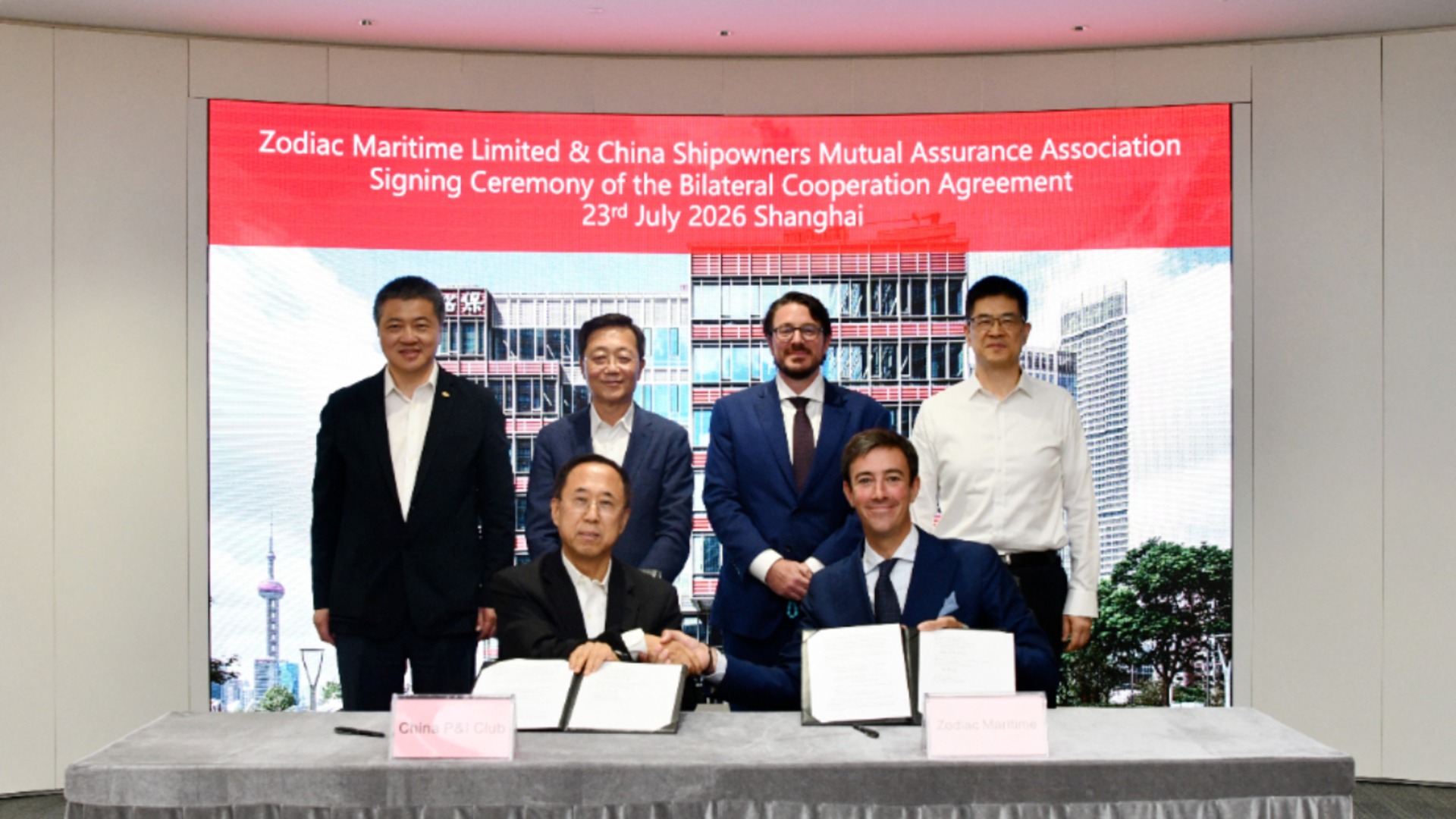
Zodiac Maritime Signs Cooperation Framework Agreement with China P&I Club
 Insurance & Law
Hainan Launches New Shipowners’ Mutual Insurance Association to Support Free Trade Port Shipping
 Insurance & Law