


“We Have Become a Security Company”: Shipping’s Painful Supercycle

“We have become a security company.”
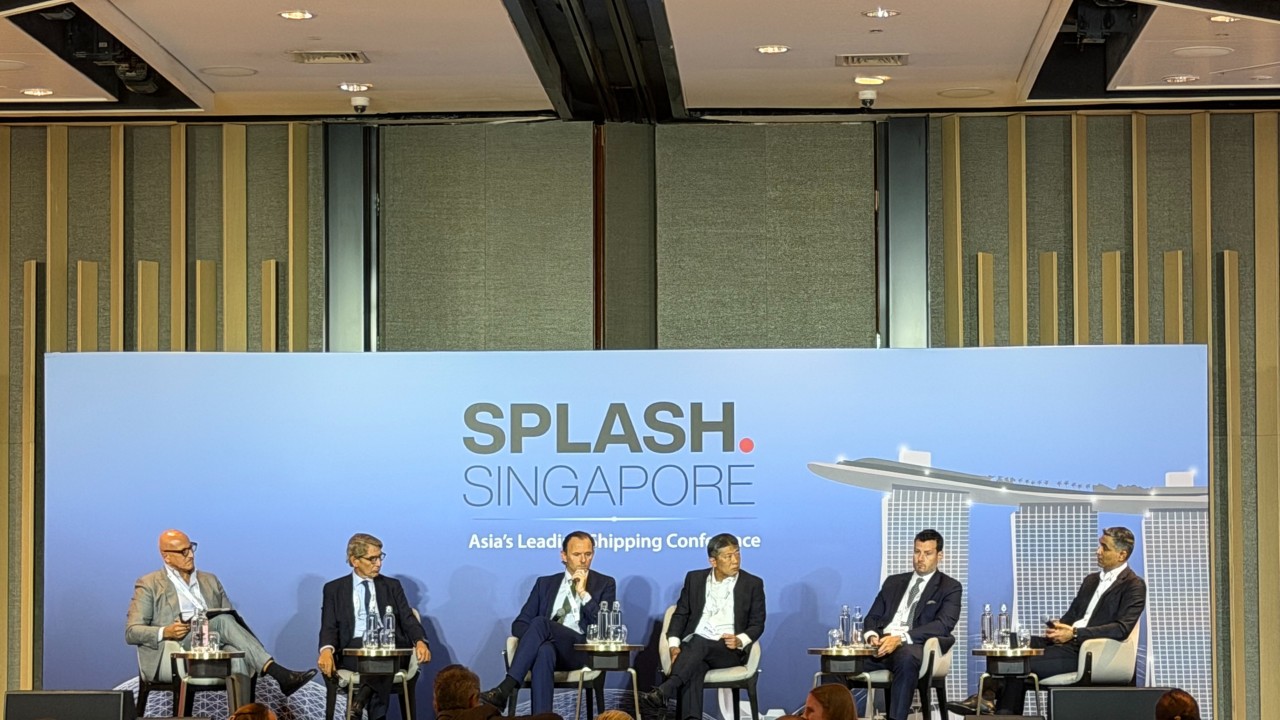
For Heidmar Inc. , which operates around 50 tankers, assessing where ships can safely trade has become a daily task. What threats might they encounter? What precautions are available? What needs to happen for a vessel to complete its voyage? Speaking at the 18th Annual Capital Link Shipping & Marine Services Forum in London on 15 September 2026, chief executive Pankaj Khanna described a business increasingly occupied with these questions.
Regional container carrier Folk Maritime is making similarly frequent adjustments. Chief executive Poul Hestbæk said the company reviews its network and vessel deployment every week as operating conditions and customer requirements change.
Higher freight earnings are bringing revenue into shipping companies. Persistent uncertainty is consuming the time and resources needed to earn it. Decisions about destinations, loading ports, crew willingness and alternative transport arrangements can determine whether a commercially attractive fixture becomes a completed voyage. Annual business plans and longer-term deployment strategies require continual adjustment.
Further changes are taking shape among cargo owners. Energy importers are diversifying their suppliers. Manufacturers are moving some production closer to consumers. Customers are reconsidering inventory levels and how much they will pay for security of supply. Those decisions will influence which ships and routes remain commercially relevant long after the immediate disruption has passed.
Strong markets, difficult voyages
“Disruption is music to our ears.”
Khanna was frank about the commercial benefits shipping has received from upheaval. Longer voyages, slower vessel turnaround and reduced availability of ships can all strengthen demand for vessel capacity. An industry discussing conflict and risk must also acknowledge the earnings it has generated from the resulting disruption.

Collecting those earnings, however, has become harder. Alongside changing cargo requirements, Heidmar must address whether seafarers are willing to enter dangerous waters, whether crew changes are necessary and how much pressure people on board are facing. Khanna acknowledged that strong markets are difficult to enjoy when every day brings another operational challenge.
Sadan Kaptanoglu, chief executive of Kaptanoglu Shipping and a former BIMCO president, described the situation as a “painful supercycle”. Risks in the Black Sea are compounded by threats in the Red Sea and the Strait of Hormuz, while sanctions and compliance requirements add further complexity. Shipowners welcome strong markets but also need a measure of stability to run their businesses.
Part of the freight premium reflects the cost of interrupted transport. Cargo takes a longer route, vessels need more time to complete a voyage, or fewer ships are willing to perform a particular trade. Rates rise as available capacity tightens. Owners receive more revenue while taking on additional security assessments, personnel arrangements and last-minute operational changes.
An attractive freight rate becomes a successful business outcome only when the vessel completes its voyage safely and the cargo reaches its destination. The higher the quoted return, the more carefully the operating team must assess the exposure behind it and its ability to manage that exposure.
Weekly networks, daily decisions
Hestbaek described Folk Maritime’s operating environment as a move “from strategy to tactics”. In the Middle East, changing transport conditions require the organisation to respond repeatedly and quickly.

A company may know which markets it wants to serve over the coming years. It still needs to reassess which services can operate reliably this week, which ports can support those services and where its ships should be positioned. Customers continue to need their goods even when established arrangements become unworkable. Carriers must develop alternatives and coordinate vessels, customers and crews in time to deliver them.
Tankers face a similar task. Khanna described moving vessels towards loading areas where demand had previously been less prominent. As customers source oil from different origins, ships must follow. Commercial teams looking for cargo also have to keep evaluating the safety of the trades they are considering.
These frequent adjustments place a growing burden on shore organisations. Market intelligence, voyage planning, crew coordination and security assessments all require people. The workload can increase much faster than companies can recruit and train staff.
Khanna said one of his immediate difficulties was hiring capable employees for shore positions. Shipping has spent years discussing the availability of qualified seafarers; shortages within the office are also becoming an operational constraint.
He sees artificial intelligence as a way to reduce repetitive work both ashore and on board, relieving some of the pressure on seafarers and office teams. He expects its use in shipping to expand rapidly over the next year or two.
For a business reassessing risk every day, staff time is a scarce resource. The more of it absorbed by routine processes, the less remains for exceptions and decisions requiring experience. Reducing repetitive work could give teams more capacity to manage changing voyages and customer requirements.
Shorter supply chains, longer oil voyages
Countries and companies are pursuing the same objective—more secure supplies—but their choices can move shipping distances in opposite directions.
Hestbaek sees growing interest in locating production closer to consumers and trading with partners whose political relationships are considered more dependable. Nearshoring, friendshoring and regional manufacturing networks are changing the origins and destinations of containerised cargo.
Automation also affects where production can take place. As robotics reduces the dependence of some manufacturing processes on labour, companies can give greater weight to delivery distances, transport reliability and responsiveness to customers. Long supply chains originally built around lower production costs face a fresh assessment of cost and risk.
Cargo volumes will be redistributed between ports and routes. Some finished products may require less long-haul transport, while regional movements of components, raw materials and intermediate goods may grow. Liner operators need to track where new cargo is generated and how regional services connect with their wider networks.
Folk Maritime sees opportunities in this regional trade. Hestbaek stressed the need to adapt quickly as flows change. Long-term service arrangements need enough flexibility to follow customers when their production and purchasing networks move.
In crude oil, Khanna sees procurement reaching further afield.
Energy importers seeking to reduce reliance on a single supplying region need additional sources. Adding origins such as the United States and Brazil can lengthen the journey between production and consumption. Khanna described changes in VLCC deployment in the Atlantic and renewed activity in trades that had previously become less prominent.
Restricted waterways can also change loading locations and voyage patterns. He cited oil loaded at Egypt’s Sidi Kerir and transported around the Cape of Good Hope. The cargo still needs to reach its buyer, but an obstructed route forces the trade to find another path, changing vessel requirements and deployment.
Inventories could support further demand. Countries that have drawn down reserves need to replenish them, while those that have discovered weaknesses in their stocks may seek to hold more. In Khanna’s assessment at the September forum, restoring inventories and trade arrangements could still take 12–18 months even if conflict eased quickly. Diversification of supply would continue to influence transport demand.
Procurement relationships established during a crisis may survive the reopening of a waterway. Alternative suppliers can become permanent parts of a purchasing portfolio. Companies remember the consequences of interrupted deliveries, and importing countries must consider whether they will have enough stocks and alternative sources when the next disruption arrives.
Manufacturers may bring production closer to customers to reduce delivery risk. Energy importers may spread purchasing across more distant suppliers to reduce concentration risk. Trade continues, while sailing distances, port combinations and demand for different vessel types change around it.
Reliable supply comes at a price
Customers want cargo delivered on time. They also want alternatives when an established service fails. Maintaining that capability costs money.
Hestbaek noted that customers frequently ask for resilience but can be surprised when they discover its cost. In Folk Maritime’s markets, security of supply has become an urgent priority. Agreeing who pays for the capacity and flexibility needed to provide it remains a separate commercial challenge.
Alternative routes require preparation. Repositioning ships affects other services. Keeping capacity available carries an opportunity cost. A carrier expected to provide a replacement solution at short notice needs resources in place before the emergency occurs. More specific supply commitments require equally clear agreements on costs, responsibilities and the scope of service.
The consequences of disrupted transport also spread beyond the freight bill. Imported goods become more expensive, factories wait for materials and energy supplies come under pressure. Kaptanoglu warned that, while supply chain disruption may appear primarily as inflation in wealthy markets, in more vulnerable regions it can threaten food supplies and basic survival.
Seafarers bear a direct share of the pressure. Khanna said some are willing to undertake voyages into dangerous waters and others are not, requiring companies to arrange crew changes and adjust assignments. Higher freight rates can reflect scarce capacity, but they cannot settle questions about the circumstances faced by the people on board.
Kaptanoglu repeatedly emphasised freedom of navigation and seafarer safety. Commercial vessels carry food, energy and industrial materials, while their crews work to support families. Their safety must not fade from public attention as conflict continues.
René Kofod-Olsen , group chief executive of V.Group, reported encouraging officer retention and interest in cadet programmes within his organisation. He called for greater recognition of seafarers’ professionalism, commitment and ability to manage difficult situations, alongside the support they need. Ships continue to trade through challenging conditions because people make those voyages possible.
Customers can pay more for transport and companies can design alternative routes. Carrying out those plans still requires qualified crews, dependable shore support and an organisation capable of making sound safety decisions.
Today’s disruption is changing tomorrow’s customers
Persistent operational crises are also affecting shipping’s energy transition.
Kaptanoglu expressed concern that security, sanctions, compliance and daily operating demands are drawing attention away from decarbonisation. Owners must plan fleets with operating lives stretching decades ahead while dealing with immediate emergencies.
Hestbaek has seen a similar shift in customer priorities. Folk Maritime continues to work on its green transition, but security of supply dominates current conversations. The most urgent question is whether the cargo can be delivered.
Energy consumers, meanwhile, are looking for ways to reduce their exposure. Kofod-Olsen highlighted investment in small modular reactors, or SMRs, and the potential for energy security concerns to support nuclear power and other alternatives. If more energy demand is met through different sources of electricity, shipping businesses carrying the commodities displaced by that change will also be affected.
High transport earnings and long-term customer choices are connected. The more expensive and unreliable a supply route becomes, the stronger the incentive to find other origins, increase stocks or change the energy mix. Owners can profit from an existing pattern of trade while their customers work to reduce dependence on it.
Shipping companies have to operate on two timescales: how to complete this week’s voyages, and what their customers will need to transport over the next decade. Immediate problems require constant attention. Long-term investment also needs to follow changes in purchasing, production and energy consumption.
What remains when the market turns?
Strong freight markets encourage investment. New orders eventually become additional ships. Kaptanoglu warned that a growing orderbook could create pressure if the disruptions supporting the market begin to ease.
Owners place orders against today’s earnings, but the ships may arrive under very different trading conditions. Less diversion, more efficient ports and faster vessel turnaround can release capacity previously absorbed by disruption. Ships already under construction will continue to enter service.
Demand will change as well. Diversified sourcing may lengthen voyages, restocking may create a temporary increase in cargo, and regional production may reshape individual liner trades. These forces will emerge and recede at different speeds. Vessel types and markets can consequently experience very different cycles.
Hestbaek recalled a warning from his student years: “Never underestimate the capacity of the shipping industry to end good times.” Strong markets make expansion easier to justify. By the time new capacity arrives, the assumptions supporting those investment decisions may have changed.
Kaptanoglu described diversifying across shipping and shipyard businesses. Hestbaek emphasised the ability to adjust networks and deployment. Khanna sees technology helping to address pressure on personnel and processes. Each approach requires investment while earnings are strong if it is to support the business through a different market.
Cash generated during a favourable cycle can expand a fleet. It can also strengthen people, technology and operating systems. Those choices will affect whether a company can keep serving customers through the next disruption—and remain competitive when trade flows more freely again.
Behind the remark that a shipping company has become a security company lies a set of responsibilities carried out every day: send the vessel out safely, deliver the cargo reliably, and bring the ship and its people home. That is what makes the next fixture and the next voyage possible. High freight rates can produce an exceptional period of earnings. A lasting business depends on performing those responsibilities well, voyage after voyage.

READ MORE
 Tankers
Tanker Captains Paid Up to $100,000 a Month—Plus $50,000 per Voyage
 Tankers
As Erasmus Targets 100 Ships, John Su Keeps Returning to Survival
 Tankers
Oil Majors Are Eyeing Ships Delivering in 2030. What Are They Worried About?
 Tankers
TOP Ships’ Four-Tanker Deal Links Chinese Leasing With Long-Term Charters
 Tankers
Uni-Tankers Secures Eight Stainless Steel Chemical Tankers to Be Built at Haidong
 Tankers
Tankers Are Earning $1 Million a Day. Why Shipowners Fear “World Peace”
 Tankers
Transpetrol Makes LR1 Debut with Two 75,000-dwt Tankers at Yangzijiang
 Tankers
Nanjing Tanker Seeks Four More LR2s as Product Tanker Expansion Accelerates
 Tankers
Trafigura Moves Deeper into Shipowning as Volare Shipping Heads for an Oslo Listing
 Tankers