


Shandong Shipping Signs Deal for 2+4 Ethanol/Methanol Tri-Fuel VLOCs

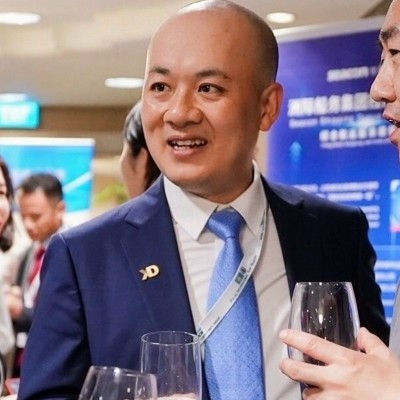
Shandong Shipping has formally advanced its next-generation green ore carrier project by signing a cooperation agreement covering two firm and four optional 325,000-dwt ethanol/methanol tri-fuel very large ore carriers.
The agreement was signed on 27 August by Shandong Shipping Corporation, CSSC Qingdao Beihai Shipbuilding and China Shipbuilding Trading during a ceremony marking a new strategic partnership between Shandong Marine Group and China State Shipbuilding Corporation.
Under the widely used “2+4” structure, the project comprises two firm vessels and options for another four. The agreement therefore formalises the initial pair of second-generation Guaibamax vessels and could eventually expand the series to six ships.
Shandong Marine Group did not disclose the contract value, the delivery dates or the deadline for exercising the four options.
From initial partnership to a 2+4-vessel agreement
The project began taking shape at the end of March. During the Green and Intelligent Shipping High-Quality Development Forum held in Qingdao on 31 March, Shandong Shipping, Minsheng Financial Leasing, CSSC Power Group and Qingdao Beihai Shipbuilding signed a letter of intent for two 325,000-dwt ethanol/methanol tri-fuel ore carriers.
The arrangement brought together the shipowner, financial institution, shipbuilder and engine developer at an early stage of the project.
In April, Brazilian mining group Vale confirmed that it had signed a 25-year contract of affreightment with Shandong Shipping for the first two second-generation Guaibamax vessels, with options to add further newbuildings.
The ships will be built by Qingdao Beihai Shipbuilding, with CSSC Power Group participating in the development of the main engines. They are scheduled to begin entering service in 2029 and will primarily transport iron ore from Brazil to China.
The propulsion package was confirmed in May, when CSSC subsidiary WinGD announced what it described as the world’s first orders for large ocean-going ethanol-fuelled engines. Each of the two vessels will be powered by a six-cylinder 6X82DF-M/E low-speed engine with an 820-mm cylinder bore.
The latest agreement between Shandong Shipping, Beihai Shipbuilding and China Shipbuilding Trading further defines the commercial structure as two firm vessels plus four options.
The signing coincided with a new strategic cooperation agreement between Shandong Marine Group and CSSC. The two groups intend to expand collaboration in shipbuilding, capital investment, talent development, technological innovation, offshore engineering equipment, marine energy and green inland shipping.
The tri-fuel VLOC programme is one of the first major shipbuilding projects to be advanced under the new partnership.
World’s first large ocean-going ships designed around ethanol fuel
The vessels will adopt Vale’s second-generation Guaibamax design. Each ship will be approximately 340 metres long and have a deadweight capacity of 325,000 tonnes, placing it among the world’s largest vessels dedicated to long-haul iron ore transportation.
The ships will be capable of operating on ethanol, methanol or conventional marine fuel. They will also incorporate provisions for potential future conversion to LNG or ammonia, allowing the propulsion system to respond to changes in fuel availability, pricing and emissions regulations.
Ethanol is the most distinctive element of the project. Brazil has an established sugarcane ethanol industry supported by mature production, storage and distribution infrastructure. As the ships will operate mainly on routes originating in Brazil, the fuel supply chain can be closely aligned with the cargo source and the vessels’ long-term trading pattern.
Vale estimates that replacing conventional marine fuel with second-generation ethanol could reduce greenhouse gas emissions by as much as 90% on a full lifecycle basis.
Each ship will also be equipped with five rotor sails, together with a high-efficiency main engine, hydrodynamic energy-saving devices, a shaft generator, variable-frequency equipment and a low-friction silicone hull coating.
The rotor sails will use wind energy to generate additional thrust, reducing engine loads and fuel consumption. The shaft generator and variable-frequency equipment will further improve onboard energy efficiency.
Vale expects the complete package of propulsion and energy-saving technologies to reduce greenhouse gas emissions by approximately 15% compared with the first-generation Guaibamax vessels currently in operation.
WinGD’s 6X82DF-M/E engine is being developed from its existing X-DF-M methanol engine platform. Modifications will be made to the fuel supply system and injection pressure to accommodate the difference in energy density between ethanol and methanol.
The first engines are expected to be delivered in early 2029. WinGD’s engine contract also includes options for additional units, corresponding with the four optional vessels covered by the latest shipbuilding agreement.
A 25-year COA underpins the investment
Shandong Marine Group said the project uses an innovative commercial structure that brings together a global mining company, Chinese financial institutions, shipbuilding companies and marine engine technology providers.
Under the disclosed arrangement, Vale will provide long-term iron ore cargoes, Shandong Shipping will operate the vessels, financial leasing institutions will support the investment, Beihai Shipbuilding and China Shipbuilding Trading will handle construction and commercial execution, while CSSC Power Group and WinGD will provide the core propulsion technology.
The 25-year contract of affreightment gives the vessels long-term cargo and revenue support, helping mitigate the commercial risks associated with introducing ethanol to large ocean-going ships for the first time.
Shandong Shipping has increasingly used a model combining long-term cargo contracts, financial leasing and professional ship management to develop its large dry bulk fleet. By securing transportation demand from major international cargo owners such as Vale, the company can coordinate ship investment, financing and operations while maintaining more stable earnings from its dry bulk business.
The vessels also form part of Vale’s broader efforts to decarbonise its maritime supply chain. Shipping emissions account for a portion of the mining group’s value-chain emissions, and the second-generation Guaibamax design is intended to reduce emissions per tonne of cargo through larger carrying capacity, lower energy consumption, low-carbon fuels and wind-assisted propulsion.
Brazil’s established ethanol supply chain gives the fuel pathway a particularly strong fit with Vale’s Brazil-to-Asia iron ore trades.
Firm 325,000-dwt green VLOC orderbook rises to 12 vessels
According to the latest Clarksons order records, Shandong Shipping had previously placed firm orders at Qingdao Beihai Shipbuilding for ten 325,000-dwt methanol dual-fuel VLOCs.
The series comprises four vessels contracted in 2023, with hull numbers OC325K-17 to OC325K-20; two vessels recorded in 2024, OC325K-21 and OC325K-22; and four additional vessels contracted in 2025, OC325K-23 to OC325K-26.
In June 2025, Shandong Marine Group and Beihai Shipbuilding signed an agreement covering the construction of ten 325,000-dwt methanol dual-fuel ore carriers. Clarksons’ contract records and the consecutive hull numbers indicate that this agreement covered the overall ten-vessel programme, including the six ships already recorded at the time. The number of additional firm vessels placed in 2025 was therefore four.
Shandong Shipping’s previous firm orderbook for this type consequently stood at ten methanol dual-fuel VLOCs, rather than 16.
Including the two newly formalised ethanol/methanol/fuel-oil tri-fuel vessels, Shandong Shipping now has 12 firm 325,000-dwt green VLOCs ordered at Beihai Shipbuilding: ten methanol dual-fuel vessels and two tri-fuel vessels.
If all four options under the latest agreement are exercised, the total programme could expand to 16 ships.
Construction of the methanol dual-fuel series is already underway. The first vessel, OC325K-17, has completed dock construction and floated out, with delivery expected by the end of 2026. The remaining ships will follow under the construction programme and are expected to serve Vale-related iron ore transportation contracts.
The tri-fuel vessels are scheduled to begin delivery in 2029, extending Shandong Shipping’s green VLOC fleet from methanol dual-fuel propulsion to ships capable of switching between ethanol, methanol and conventional marine fuel.
With ten methanol dual-fuel VLOCs already on order and another two firm plus four optional tri-fuel vessels now covered by the latest agreement, Shandong Shipping is building a sizeable fleet of low-carbon ore carriers backed by long-term demand from a major international mining customer.
The programme brings together long-term cargo contracts, financial resources, alternative fuels and Chinese shipbuilding capabilities, making it one of the most significant projects in the ongoing decarbonisation of the global dry bulk shipping sector.

READ MORE
 Shipbuilding
Steel Giant Shagang Eyes Shipbuilding as a Booming Market Draws Industrial Capital
 Shipbuilding
Hengli Secures 12 Tanker Orders, Retaining World’s Largest VLCC Orderbook
 Shipbuilding
Hengli Signs 11 VLAC Contracts in One Week
 Shipbuilding
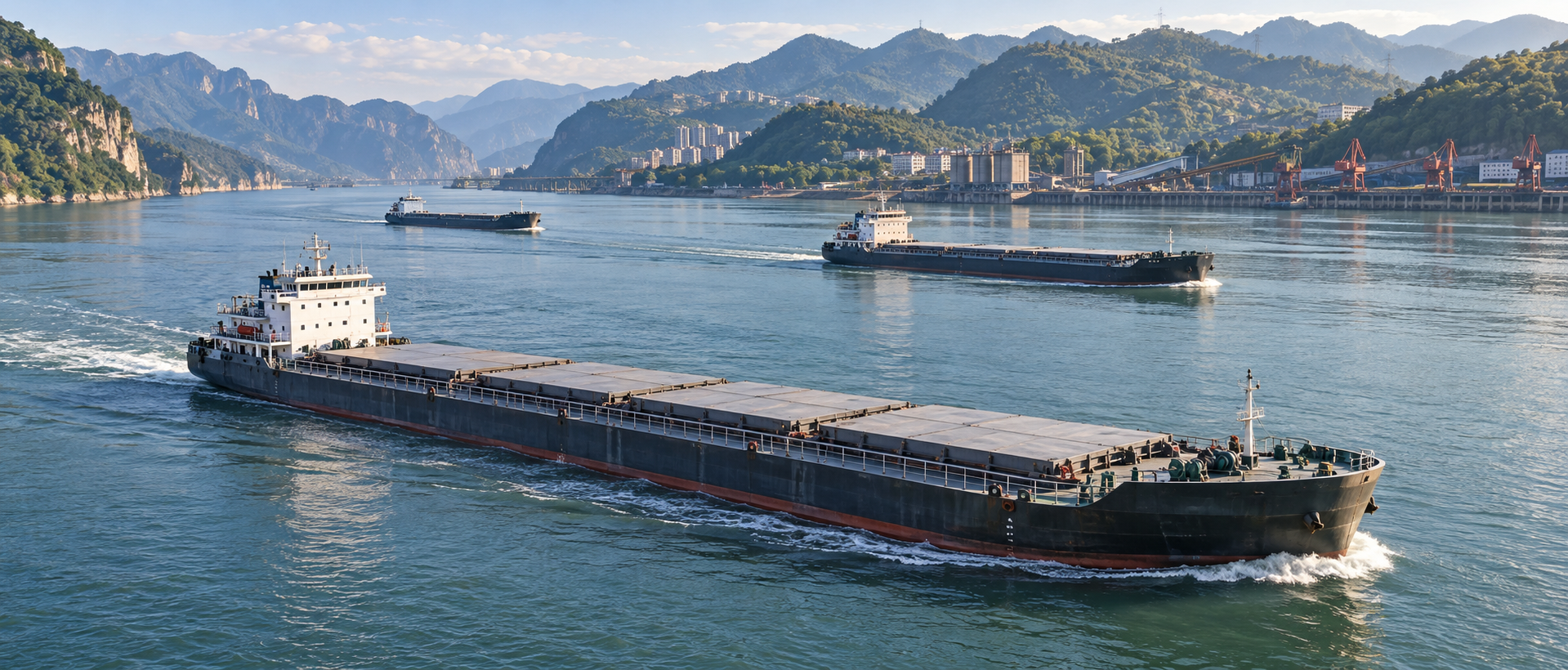
Yichang Changyun plans RMB120m inland bulker programme
 Shipbuilding
China ZWI Enters Ocean Shipping with VLGC Acquisition and Chemical Tanker Newbuild Project
 Shipbuilding
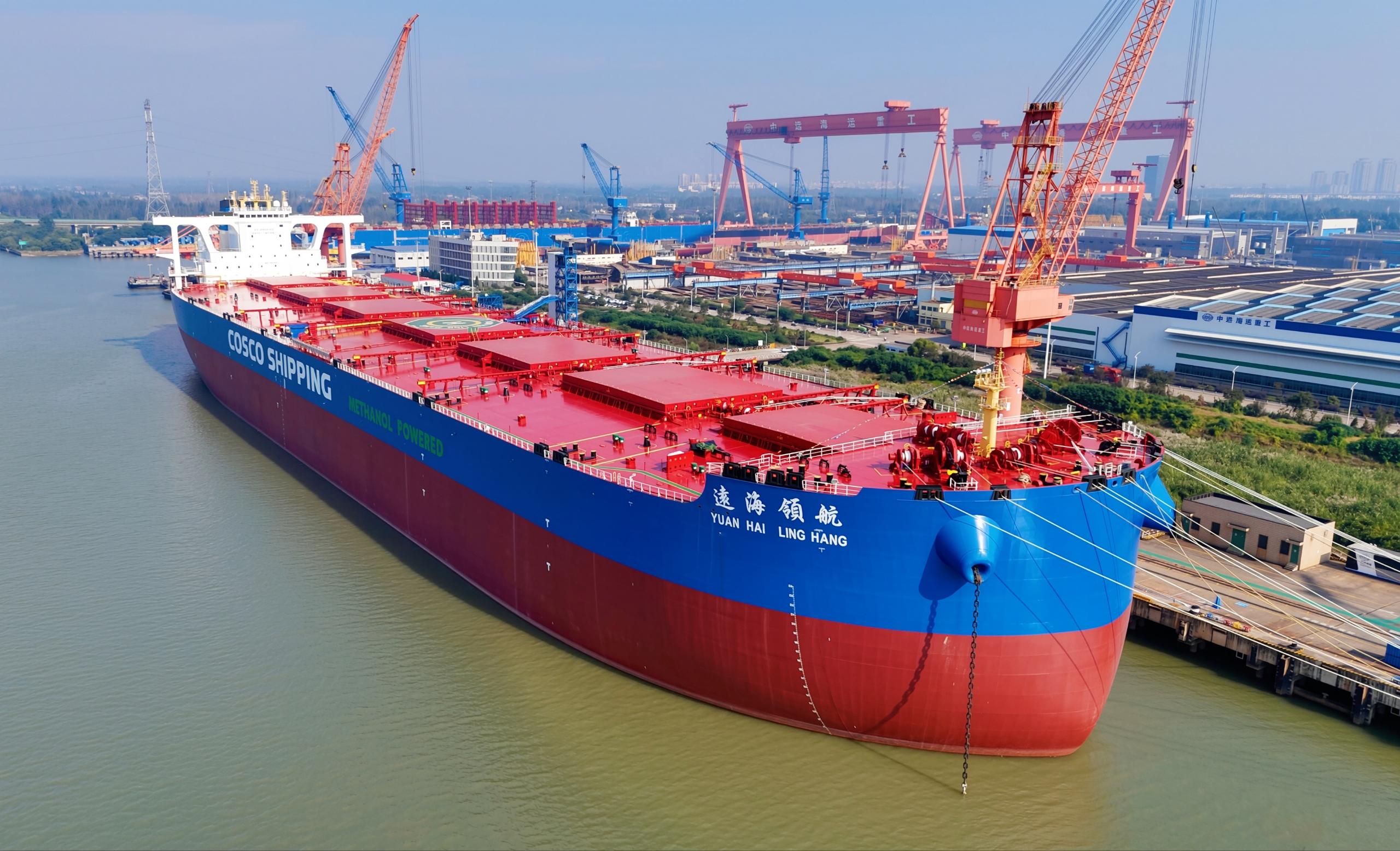
World’s First 325,000-DWT Methanol Dual-Fuel Ore Carrier Delivered
 Shipbuilding
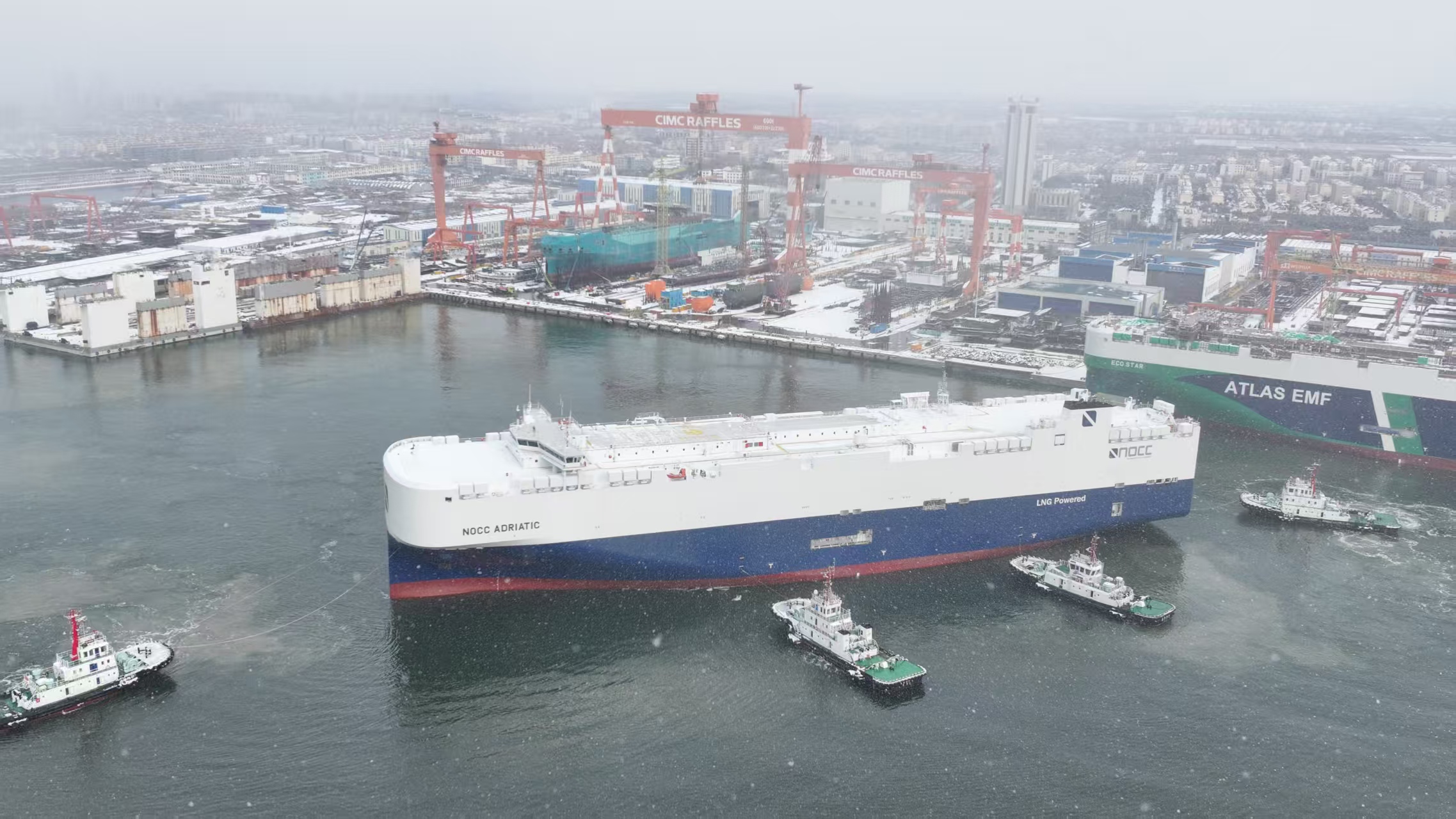
CIMC Raffles Extends NOCC Car Carrier Programme to 2030
 Shipbuilding
Grimaldi Advances New ConRo and Multipurpose Projects as Fleet Renewal Continues
 Shipbuilding
COSCO Shipping Specialized Carriers Shifts Eight 60,000-DWT Heavy-Lift Ships from Chengxi to Dalian
 Shipbuilding