


8 more!Wan Hai Steps Up Fleet Expansion with 50-Vessel Newbuilding Programme
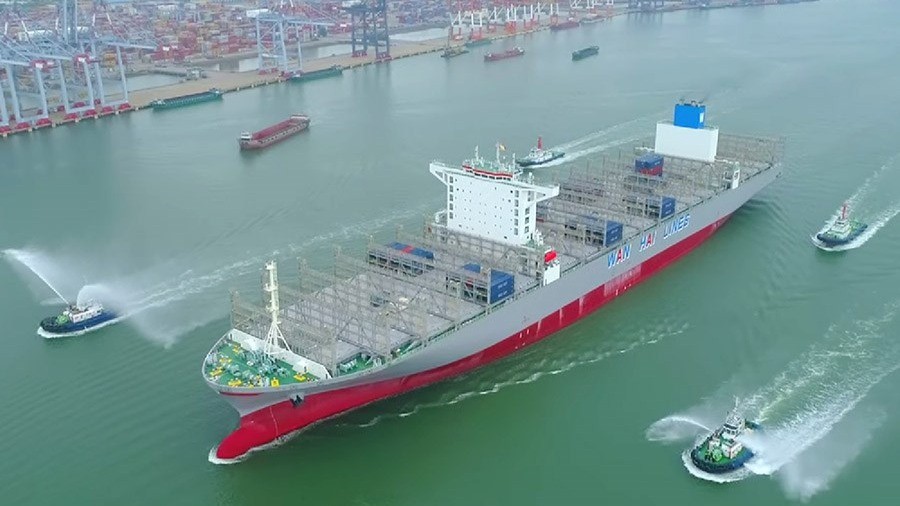
Wan Hai Lines is accelerating its fleet renewal and expansion programme, with around 50 directly ordered newbuildings totalling more than 500,000 TEU now tied to projects launched since 2024. Its latest move is a major order at Shanghai Waigaoqiao Shipbuilding, where Wan Hai now has one 9,200-TEU vessel and seven 11,000-TEU vessels on direct order. The 11,000-TEU ships will be designed with both methanol dual-fuel-ready and LNG dual-fuel-ready capabilities.
Wan Hai Lines is continuing to expand its newbuilding programme as the Taiwanese container carrier reshapes its fleet around a broader range of vessel sizes and future-fuel options.
On 12 August, Wan Hai announced that its subsidiary Wan Hai Lines (Singapore) Pte. Ltd. would purchase six approximately 11,000-TEU containerships from Shanghai Waigaoqiao Shipbuilding Co., Ltd. and China Shipbuilding Trading Co., Ltd.
According to the company’s disclosure, the vessels are priced at between US$118 million and US$124 million each, giving the six-ship package a total value of US$708 million to US$744 million. The disclosed price includes vessel upgrade equipment.
All six vessels will be designed with both methanol dual-fuel-ready and LNG dual-fuel-ready capabilities, giving Wan Hai additional flexibility over their future propulsion configuration.
Wan Hai said the investment was made in consideration of the group’s long-term development and overall operational requirements.
The company also updated another Waigaoqiao newbuilding project first disclosed in March. That programme now comprises one approximately 9,200-TEU methanol dual-fuel-ready containership and one approximately 11,000-TEU vessel designed to be both methanol and LNG dual-fuel ready.
Together with the latest six ships, Wan Hai’s direct newbuilding programme at Waigaoqiao now stands at eight vessels: one 9,200-TEU ship and seven 11,000-TEU ships.
The 9,200-TEU vessel is priced at between US$102 million and US$112 million, while the seven 11,000-TEU ships are valued at US$118 million to US$124 million each. On that basis, the eight-vessel programme represents an investment of approximately US$928 million to US$980 million, with combined nominal capacity of around 86,200 TEU.
From 7,000 TEU to 11,000 TEU: Wan Hai deepens ties with Waigaoqiao
Wan Hai’s relationship with Shanghai Waigaoqiao Shipbuilding has developed quickly.
In 2024, the carrier acquired two approximately 7,000-TEU newbuildings constructed by Waigaoqiao. The ships had originally been associated with another owner’s newbuilding programme before being taken over by Wan Hai. The first of the pair, WAN HAI 711, has since entered the carrier’s fleet.
Following those two vessels, Wan Hai moved into direct newbuilding contracts with Waigaoqiao.
The cooperation expanded first into the 9,200-TEU segment and has now moved further up to 11,000 TEU. Including the two earlier 7,000-TEU vessels, Waigaoqiao is now associated with 10 Wan Hai ships across the 7,000-TEU, 9,200-TEU and 11,000-TEU segments.
Of these, eight are direct Wan Hai newbuilding orders.
The latest 11,000-TEU programme is particularly notable. Seven ships of this size represent around 77,000 TEU of nominal capacity and will introduce a dual-ready approach covering both methanol and LNG.
Waigaoqiao has therefore moved from supplying Wan Hai with two resale newbuildings to becoming a significant builder for the carrier’s next generation of medium-to-large containerships.
A new fleet expansion cycle
The latest Waigaoqiao programme forms part of a much broader fleet investment cycle.
Wan Hai’s previous major expansion took place during the container shipping boom of 2021 and 2022. During that period, the company invested heavily both in regional ships of around 3,000 TEU and in much larger vessels capable of supporting its expansion into long-haul trades.
In 2021, Wan Hai ordered five approximately 13,200-TEU vessels from Hyundai Heavy Industries, while another series of 13 approximately 13,100-TEU ships was built by Samsung Heavy Industries.
Together, the two programmes gave Wan Hai 18 vessels in the 13,000-TEU class.
These ships significantly changed the profile of a fleet historically concentrated on intra-Asia and regional trades. Their arrival gave Wan Hai greater capacity to operate longer-haul and transoceanic services while increasing the average size of its owned fleet.
At the same time, Wan Hai continued to add around 3,000-TEU vessels from Japanese yards including JMU and Nihon Shipyard, preserving the smaller and highly flexible tonnage required for its dense Asian network.
The final vessel in Samsung Heavy Industries’ 13-ship, 13,100-TEU series, WAN HAI A20, was delivered in 2025, bringing that earlier expansion cycle largely to completion.
By then, however, Wan Hai had already started another major round of investment.
Twenty methanol-capable ships anchor the mid-sized fleet
Wan Hai returned to large-scale ordering in 2024, initially focusing on the 8,000-TEU range.
The company ordered 12 approximately 8,000-TEU methanol dual-fuel containerships from CSBC Corporation, Taiwan, with options for a further four vessels. Those options were subsequently exercised, taking the series to 16 ships.
At around the same time, Wan Hai placed an order for four approximately 8,700-TEU methanol dual-fuel vessels at HD Hyundai Samho.
Together, the two projects account for 20 new vessels in the 8,000-8,700-TEU range.
This segment remains highly compatible with Wan Hai’s network. Ships of this size can serve intra-Asia trades while also being deployed on services linking Asia with India, the Middle East and other regional markets. They provide more scale than traditional feeder and regional vessels while retaining considerably greater deployment flexibility than very large mainline ships.
The orders also marked an important shift in propulsion strategy, with methanol moving from an industry-wide future-fuel concept into a significant part of Wan Hai’s own newbuilding programme.
Twelve 16,000-TEU ships strengthen long-haul capability
Wan Hai simultaneously continued to increase the size of its largest vessels.
In October 2024, the carrier ordered eight approximately 16,000-TEU containerships, split equally between HD Hyundai Samho and Samsung Heavy Industries.
The 16,000-TEU design surpassed Wan Hai’s existing 13,100-TEU and 13,200-TEU vessels to become the largest newbuilding class in its fleet programme.
A further four 16,000-TEU vessels were ordered in April 2025, with two placed at HD Hyundai Samho and two at Samsung Heavy Industries.
Wan Hai therefore now has 12 vessels of around 16,000 TEU, with six being built at each Korean yard.
Once delivered, these ships will reinforce Wan Hai’s long-haul fleet alongside the earlier 13,000-TEU series.
Wan Hai has so far stopped short of moving into the 20,000-24,000-TEU ultra-large containership segment pursued by some of the world’s largest carriers. The 16,000-TEU class still offers substantial economies of scale while retaining more flexibility across ports and trades.
That approach fits Wan Hai’s network profile, where intra-Asia and regional services remain a major part of the business even as the company continues to strengthen its long-haul presence.
Huangpu Wenchong secures 10 ships as LNG enters the fleet strategy
Wan Hai’s fleet programme expanded further into Chinese yards at the end of 2025.
The carrier initially placed six approximately 6,000-TEU containerships with CSSC Huangpu Wenchong Shipbuilding and China Shipbuilding Trading Co. The ships were specified as LNG dual-fuel ready.
Wan Hai subsequently added another four vessels of the same type in March 2026, taking the programme to 10 ships.
The 6,000-TEU class continues to provide an important building block for Wan Hai’s regional network. Such vessels are suitable for trades where cargo volumes or port restrictions make much larger vessels less efficient, while still offering sufficient capacity for services extending towards India and the Middle East.
The propulsion specification also signalled a further evolution in Wan Hai’s fuel strategy.
While the major 2024 programme had been strongly associated with methanol, the Huangpu Wenchong series introduced LNG-ready capability into the carrier’s newbuilding portfolio.
The latest 11,000-TEU Waigaoqiao ships now go a step further by incorporating readiness for both fuel pathways.
Around 50 direct newbuilding orders since 2024
Based on publicly disclosed projects, Wan Hai has directly ordered approximately 50 vessels since 2024, representing more than 500,000 TEU of nominal capacity.
The current programme can be summarised as follows:
10 × 6,000 TEU — Huangpu Wenchong — LNG dual-fuel ready
16 × 8,000 TEU — CSBC — methanol dual-fuel
4 × 8,700 TEU — HD Hyundai Samho — methanol dual-fuel
1 × 9,200 TEU — Shanghai Waigaoqiao Shipbuilding — methanol dual-fuel ready
7 × 11,000 TEU — Shanghai Waigaoqiao Shipbuilding — methanol and LNG dual-fuel ready
12 × 16,000 TEU — HD Hyundai Samho and Samsung Heavy Industries — alternative-fuel-related specification
In total, these projects amount to approximately 50 ships and 501,000 TEU.
Wan Hai also acquired two 7,000-TEU Waigaoqiao-built newbuildings in 2024. Including those vessels, the broader pool of new ships associated with the company’s latest fleet investment cycle reaches 52 vessels and around 515,000 TEU.
Some of these ships have already been delivered, while many others will join the fleet over the coming years.
A three-tier fleet is taking shape
The composition of these orders points towards a clear three-tier fleet structure.
At the first level are vessels between 6,000 TEU and 8,700 TEU. Wan Hai has 30 ships across the 6,000-TEU, 8,000-TEU and 8,700-TEU classes in its latest programme. These vessels remain closely aligned with its core intra-Asia and regional businesses and can also serve India, the Middle East and other inter-regional trades.
The second level covers vessels of around 9,200-11,000 TEU. Waigaoqiao’s eight direct orders make up the main part of this segment. In particular, the seven 11,000-TEU ships offer greater unit-cost efficiency than the 8,000-TEU class while retaining considerably more route flexibility than large mainline vessels.
The third level consists of the 13,000-16,000-TEU fleet. The earlier 18 ships of around 13,000 TEU established Wan Hai’s large-vessel capability, while the new 12-ship 16,000-TEU series will further strengthen its position in long-haul trades.
Rather than concentrating investment in a single size class, Wan Hai is building scale across several strategically important segments.
Chinese yards secure 18 direct orders
The newbuilding programme is also reshaping Wan Hai’s shipyard portfolio.
During the previous fleet expansion cycle, Korean yards including Hyundai Heavy Industries and Samsung Heavy Industries handled most of Wan Hai’s large containership orders, while Japanese yards supplied many of its smaller regional vessels.
Since 2024, the picture has become more diversified.
CSBC in Taiwan has secured the 16-ship 8,000-TEU programme. Korean builders HD Hyundai Samho and Samsung Heavy Industries remain central to Wan Hai’s largest tonnage, particularly the 12 vessels of 16,000 TEU, while HD Hyundai Samho also holds the four 8,700-TEU ships.
Chinese mainland shipyards have meanwhile built up a sizeable position in the 6,000-11,000-TEU range.
Huangpu Wenchong currently holds 10 vessels of 6,000 TEU, while Waigaoqiao has one 9,200-TEU and seven 11,000-TEU ships on direct order.
Together, the two Chinese yards account for 18 direct newbuilding orders from Wan Hai.
Including the two 7,000-TEU Waigaoqiao vessels acquired earlier, 20 vessels associated with Wan Hai’s current fleet renewal cycle are being built at Chinese mainland yards.
From methanol to LNG — and now both
Fuel flexibility has emerged as one of the defining features of Wan Hai’s latest fleet investment.
The company’s large 2024 newbuilding programme was heavily focused on methanol, with the 8,000-TEU and 8,700-TEU series establishing a substantial methanol-capable fleet.
The 6,000-TEU Huangpu Wenchong series then introduced LNG dual-fuel-ready capability.
Wan Hai’s latest 11,000-TEU ships combine both approaches. By specifying the vessels as both methanol dual-fuel ready and LNG dual-fuel ready, the carrier is preserving greater optionality over how the ships may ultimately be powered during their operating lives.
The future marine fuel landscape remains uncertain. Green methanol, bio-LNG, synthetic methane and other low- or zero-carbon fuels are developing at different speeds, while questions remain over supply, pricing and bunkering infrastructure.
For ships expected to remain in service for more than two decades, maintaining technical flexibility at the design stage can reduce the risk of becoming locked into a single fuel pathway.
From the 18 large 13,000-TEU vessels ordered during the previous expansion cycle to around 50 directly ordered ships exceeding 500,000 TEU since 2024, Wan Hai is substantially reshaping its fleet.
The carrier is reinforcing its traditional strength in the 6,000-8,700-TEU segment, building out a new 11,000-TEU fleet, adding 16,000-TEU ships for long-haul services and keeping both methanol and LNG options open for the future.
The latest Waigaoqiao programme adds another significant piece to that strategy — and further strengthens the role of Chinese shipbuilders in Wan Hai’s next-generation fleet.

READ MORE
 Shipbuilding
DryDel Orders Two Kamsarmax Bulkers at Tsuneishi
 Shipbuilding
Erasmus Orders Two More Feeders in Fourth Huangpu Wenchong Deal in Six Months
 Shipbuilding
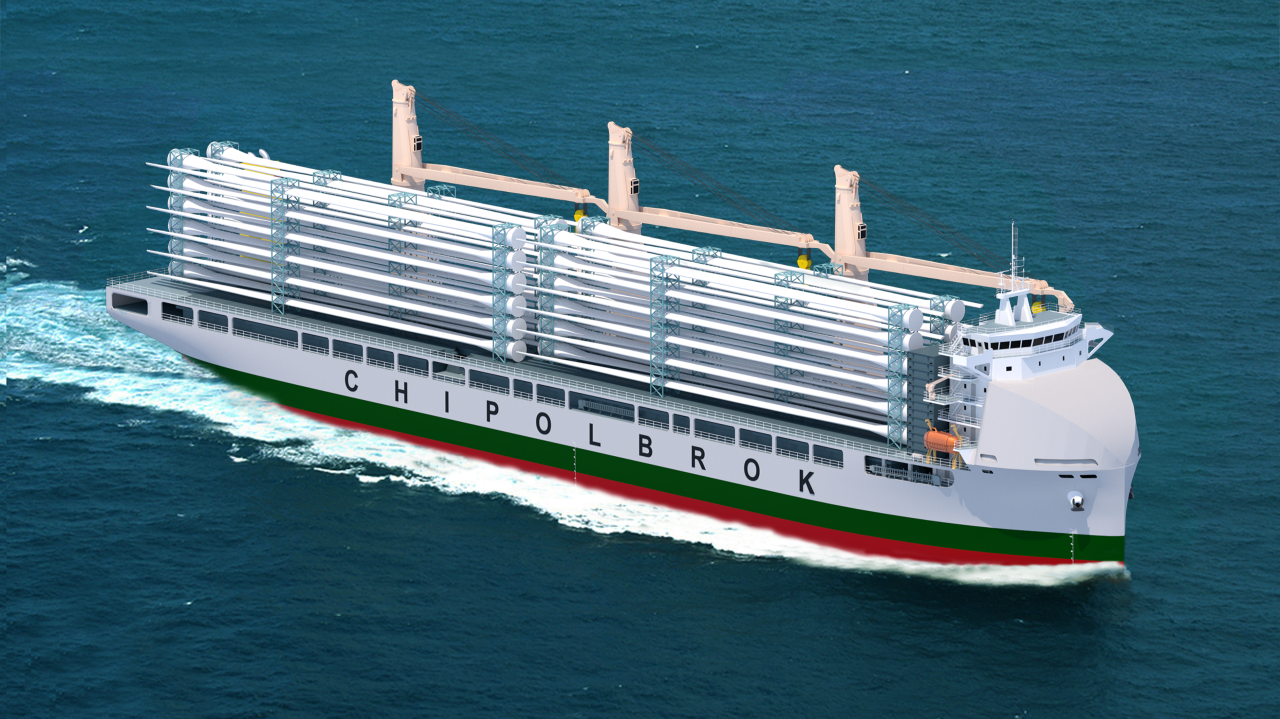
Chipolbrok Begins Construction of First 60,800 DWT Forward-Accommodation Heavy-Lift Vessel
 Shipbuilding
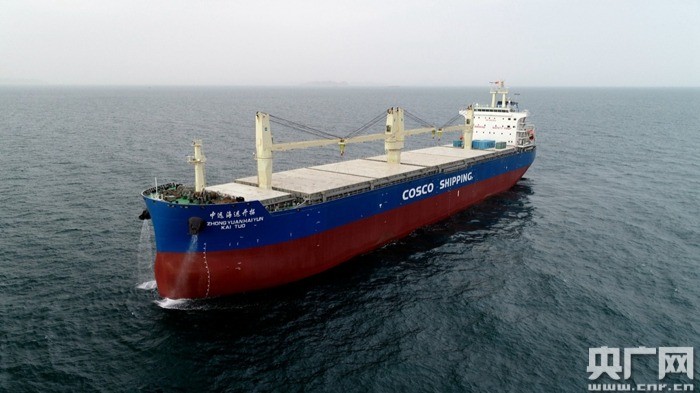
COSCO Shipping Specialized Carriers Shifts Eight 60,000-DWT Heavy-Lift Ships from Chengxi to Dalian
 Shipbuilding
Jianglong Adds $40m Offshore Vessel Order to 2026 Contract Run
 Shipbuilding
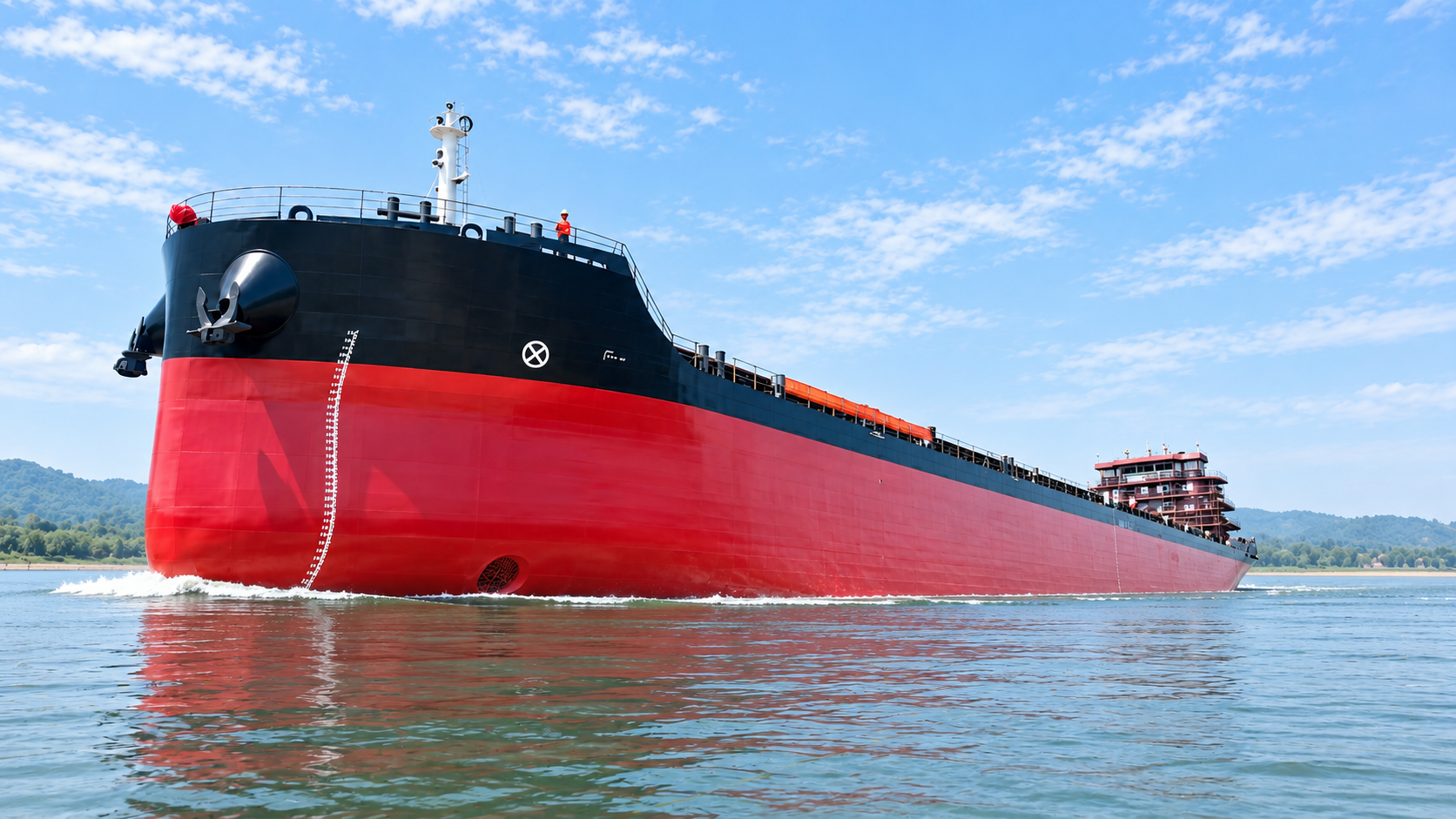
Hubei Firm Proposes RMB427m LNG and Methanol Vessel Programme
 Shipbuilding
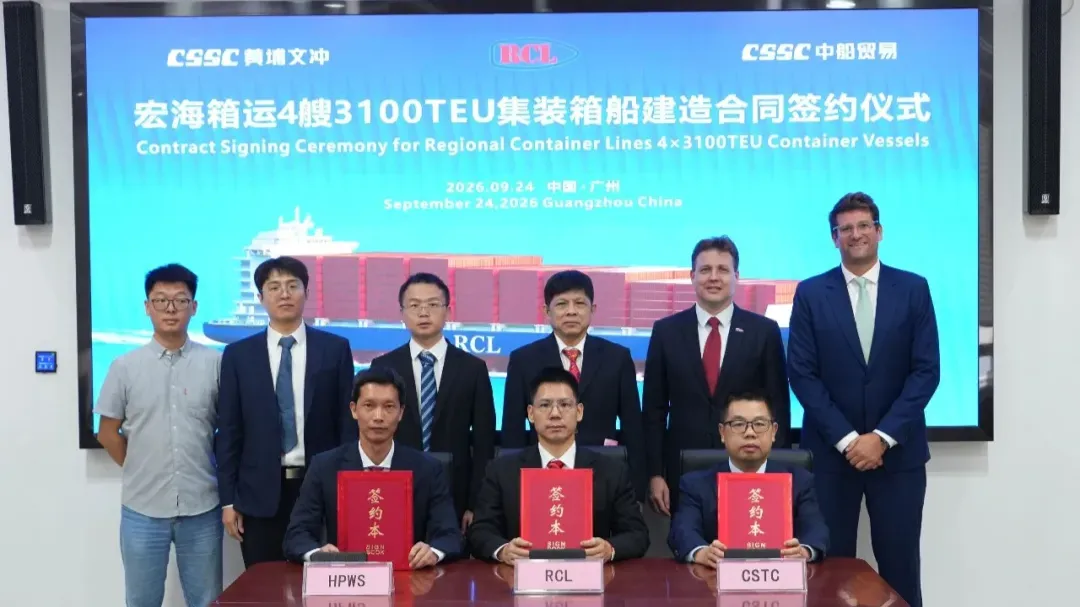
4 More,totally 16 Since 2024: Why RCL Keeps Ordering at Huangpu Wenchong
 Shipbuilding
Zodiac Linked to First LNG Carrier Order at Hanwha Ocean
 Shipbuilding
RCL Adds Four Feeders to Its Huangpu Wenchong Programme
 Shipbuilding