


Container Ship Grounds in the Strait of Hormuz as Iran’s “Designated Route” Controls Draw Attention
Xinde Marine News — On July 1 local time, Iranian state media reported that a container ship had recently run aground in the Strait of Hormuz.
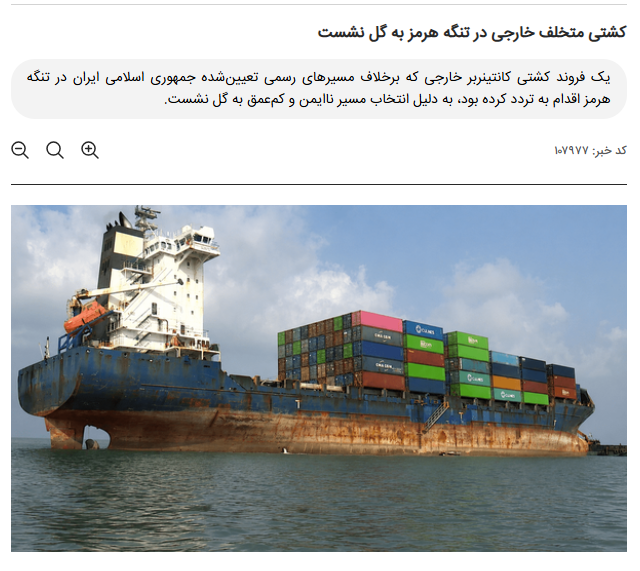

According to the Iranian side, the vessel failed to follow the route designated by Iran and instead chose another passage. It then grounded in shallow waters and was unable to continue sailing.
As of now, the authorities have not disclosed the vessel’s name, flag, owner, ship manager, exact grounding location, casualty status, or any cargo damage. Common maritime security channels, including the United Kingdom Maritime Trade Operations, have also not issued an independent alert on the incident. The specific cause of the incident, the vessel’s condition, and any subsequent refloating arrangements still need further confirmation from the owner, flag state, salvage party, or maritime security agencies.
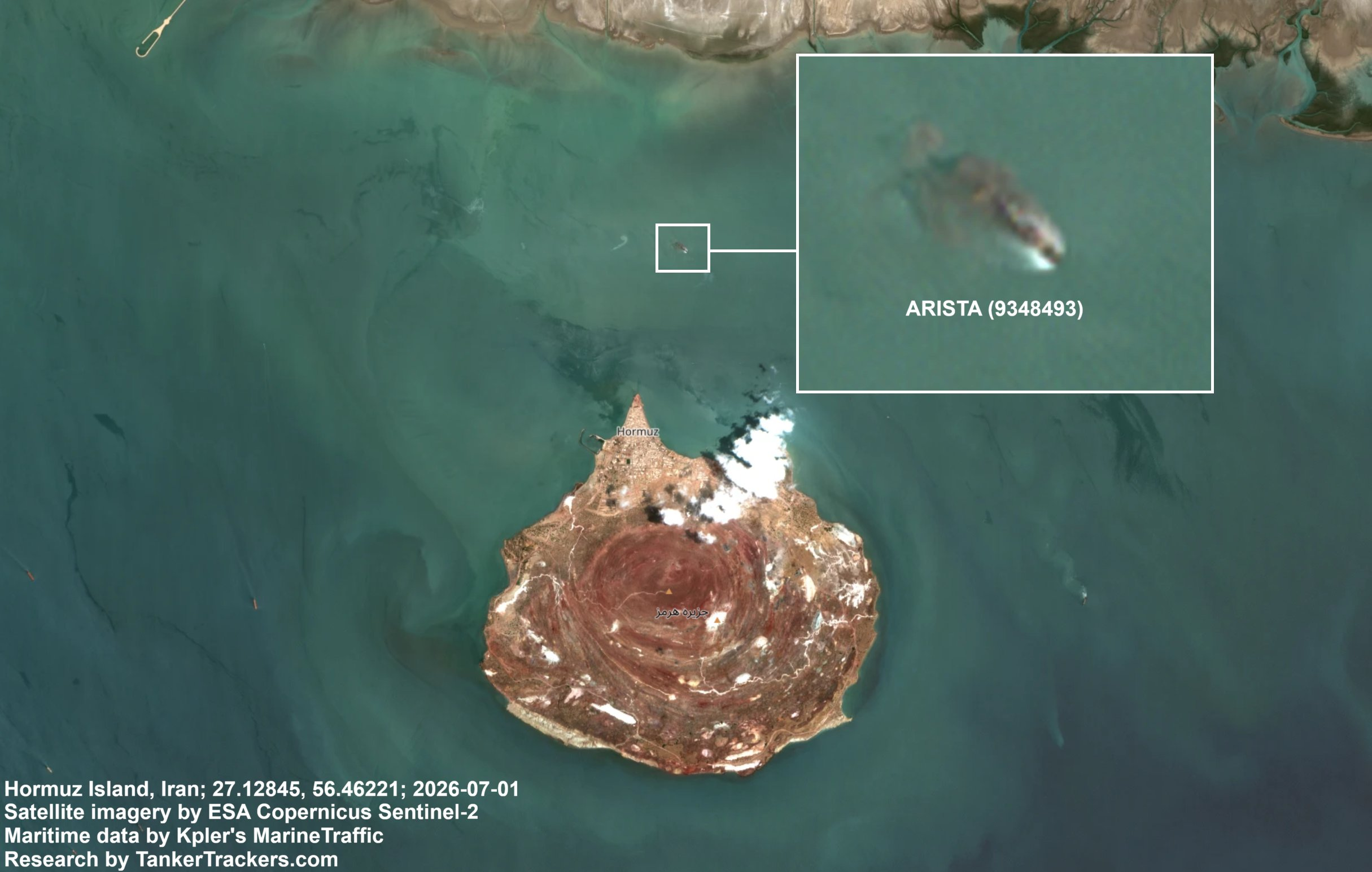
However, according to identification by maritime intelligence accounts such as TankerTrackers, the grounded vessel mentioned by Iranian media is likely to be the container ship ARISTA with IMO number 9348493.
Public AIS information shows that the vessel currently flies the Comoros flag. It was built in 2006 and has a deadweight of about 20,643 tonnes. Its current navigational status is shown as “Aground”. TankerTrackers gave the vessel’s coordinates as 27.12845, 56.46221, located north of Hormuz Island, near the area between the Iranian mainland coast and Hormuz Island. The account said the vessel had remained in the same position since mid-March 2026.
It should be noted that Iranian official media have not yet released the vessel’s name. The identification of ARISTA remains a third-party assessment.
Public AIS data also show that the vessel’s recently declared destination was related to Asaluyeh in Iran. However, there is still insufficient public information to fully confirm whether the vessel has been operating between Iranian ports for an extended period.
Separately, according to information from the U.S. Office of Foreign Assets Control, IMO 9348493 was listed in July 2025 under the name GAUJA as part of Iran-related sanctions, with the associated party identified as Reel Shipping LLC.
Iran says the vessel deviated from the “designated route”
Citing Iranian state broadcaster IRIB, Iran has designated the route for vessels entering and leaving the Strait of Hormuz as the route south of Larak Island. Iran said that if vessels coordinate with the Islamic Revolutionary Guard Corps Navy and obtain passage scheduling, Iran will provide security protection from their entry into the Persian Gulf until their exit.
Iran also warned that vessels choosing routes other than the designated passage when entering or leaving the Persian Gulf may “lead to irreversible incidents”.
International media including the Associated Press and Bloomberg later followed the story. They also reported that the vessel was described by Iranian state television as a “foreign container ship”, but those reports likewise could not confirm the vessel’s name or exact position.
The Associated Press reported that Iranian state television said the vessel “ran aground with cargo due to shallow waters on its chosen route and was unable to continue sailing”. It also said vessels should follow the instructions of the IRGC Navy when transiting the Strait of Hormuz.
Premature conclusions should still be avoided
Based on the information currently available, several key gaps remain in this incident.
First, the identity of the vessel involved has not yet been confirmed. Without the vessel’s name, it is not possible to verify its sailing route, draft, cargo condition, and actual grounding position through AIS tracks, class records, owner statements, or port records.
Second, the claim that the vessel “failed to follow Iran’s designated route” currently mainly comes from Iranian state media. Whether that claim directly explains the grounding still needs to be assessed together with charted depths, the vessel’s draft, tides, voyage plan, bridge operations, and any VTS or military-control instructions.
Third, external independent agencies have not publicly confirmed the details of the incident. Any future statements from UKMTO, IMO, the flag state, the owner, the ship manager, insurers, or salvage parties will be important for assessing the nature of the event.
However, according to third-party identification by maritime intelligence organisations including TankerTrackers, the grounded vessel mentioned by Iranian media is likely to be the container ship ARISTA, IMO 9348493.
Public AIS platforms show that ARISTA currently flies the Comoros flag and has MMSI 620800110. It is a container ship/cargo vessel built in 2006, with an overall length of about 168 metres, a beam of about 25 metres, and a deadweight of about 20,643 tonnes. Its current navigational status is shown as “Aground”.
The coordinates given by TankerTrackers are 27.12845, 56.46221, placing the vessel north of Hormuz Island, near the area between the Iranian mainland coast and Hormuz Island. Geographically, this position appears close to the shallow-water area between the Iranian mainland and Hormuz Island.
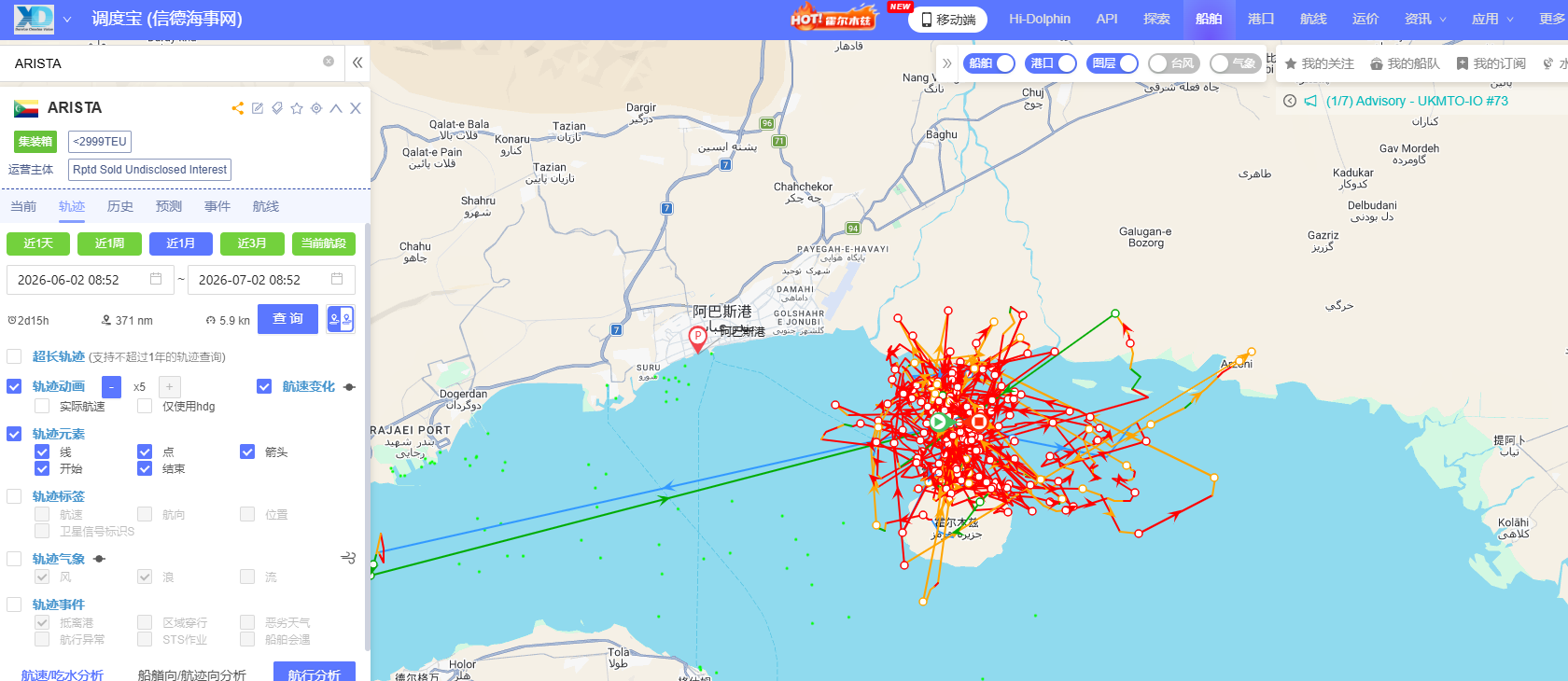
According to the same identification, the vessel has remained in the same position since mid-March 2026. This means that the “foreign container ship grounding” reported by Iranian state media on July 1 may not be a fresh incident involving a vessel that had just been transiting the Strait of Hormuz. It may instead point to a vessel that has already been stationary in the local shallow-water area for several months.
As Iranian authorities have not yet released the vessel’s name, the identification of ARISTA remains a third-party assessment. It still needs to be confirmed by the owner, flag state, salvage party, maritime security agencies, or further public information from Iran.
The report comes amid rising disputes over Hormuz navigation rules
The timing of this grounding incident, or at least the timing of its public reporting, is sensitive.
The Strait of Hormuz connects the Persian Gulf with the Gulf of Oman and is one of the world’s most important maritime chokepoints for energy transportation. For a long time, the international shipping community has generally treated it as an international navigation passage. Commercial vessels from various countries arrange their voyages based on international navigation rules, charted depths, traffic separation schemes, insurance requirements, and security advisories.
Recently, differences between Iran, the United States, and some Gulf states over navigation arrangements in the Strait of Hormuz have continued to widen. Reuters has reported that the United States and Iran recently held indirect contacts over strait passage, route control, possible future fees, and regional security issues.
Iran wants to strengthen its control over vessel passage routes and has proposed the possibility of charging passage-related fees in the future. The United States and several Gulf states oppose unilateral Iranian control or charging.
At the same time, Oman and relevant United Nations bodies had previously promoted the evacuation or passage of vessels through routes closer to the Omani side. Iran has opposed routes that are not coordinated with it.
There have recently been multiple reports of vessel attacks, disrupted passage, or temporary route changes. These developments have kept shipowners, charterers, insurers, and ship managers highly focused on the safety of transiting the Strait of Hormuz.
If ARISTA is indeed the vessel referred to by Iranian media, and if public AIS and third-party maritime intelligence showing that it has been stationary in the shallow-water area since mid-March are accurate, then the news nature of this incident needs to be reassessed.
It would look more like an existing maritime incident being brought back into the spotlight by Iranian media amid rising disputes over navigation rules in the Strait of Hormuz.
From a communications perspective, Iran’s decision to report the grounding at this point, while highlighting phrases such as “failure to follow the designated route”, “shallow waters”, and “may lead to irreversible incidents”, is clearly not merely a routine update on an ordinary grounding accident.
A more reasonable interpretation is that Iran is using this case to reinforce its position on “designated routes” and passage coordination mechanisms in the Strait of Hormuz. It is sending a warning signal to transiting vessels, shipowners, insurers, and relevant countries: passage arrangements not recognised by Iran may be regarded by Tehran as higher-risk, or even unacceptable, navigation choices.
This moves the incident beyond a simple ship grounding and places it within the broader contest over navigation rules in the Strait of Hormuz.
For the international shipping industry, the real focus is no longer only why ARISTA grounded or when it may be refloated. It also includes whether Iran is trying to use an individual case narrative to push external parties toward accepting stronger Iranian control over the routes, passage timing, and security arrangements for vessels entering and leaving the Persian Gulf.
Impact on shipping: transit risk is expanding from security to rules
For shipping companies, the direct impact of this incident may remain limited for now. In particular, as the vessel’s identity, grounding position, channel obstruction status, and grounding time are all still unclear, it is not yet possible to judge whether the case has caused any substantive congestion in the Strait of Hormuz as a whole.
However, the signal it sends deserves close attention.
Transit risk in the Strait of Hormuz is moving beyond traditional issues such as military security, vessel attacks, insurance premiums, and route diversions. It is extending into the rules-based question of who gets to designate routes, who coordinates passage, and who provides security guarantees.
Once different states, military forces, or international institutions diverge over available transit routes, masters, shipowners, charterers, and insurers will face a more complex decision-making environment.
Choosing a route recognised by Iran may reduce the risk of friction with the Iranian side. Choosing another passage may involve multiple considerations, including charted depths, military security, insurance coverage, and interpretations of international law.
For energy carriers, container shipping companies, and dry bulk operators, Hormuz risk assessment can no longer focus only on whether vessels “can pass”. Companies will also need to assess whether the chosen passage is recognised by relevant parties, whether effective security protection is available, and whether the route complies with insurance terms and flag-state advisories.
Before more authoritative information is released, this container ship grounding should still be treated as a maritime security incident pending verification.
But against the current geopolitical backdrop, it has already become another important signal for observing changes in the navigation order of the Strait of Hormuz.


READ MORE
 Safety
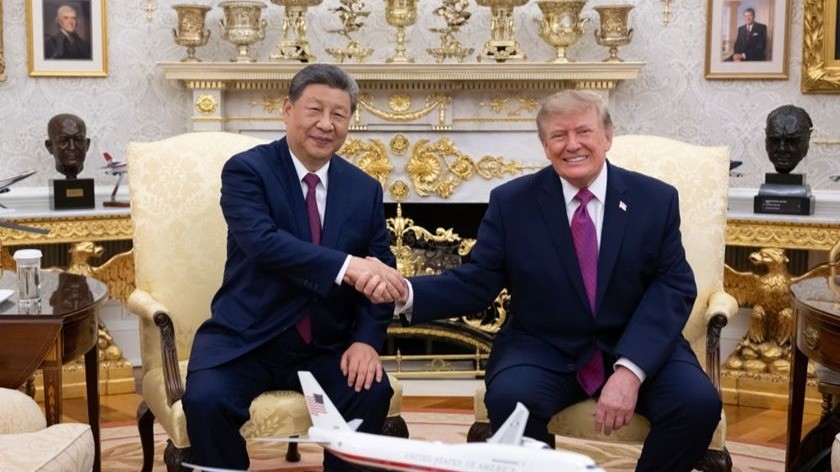
China-U.S. Consensus Highlights Free Navigation: No Country or Entity Should Impose Transit Fees on International Waterways
 Safety
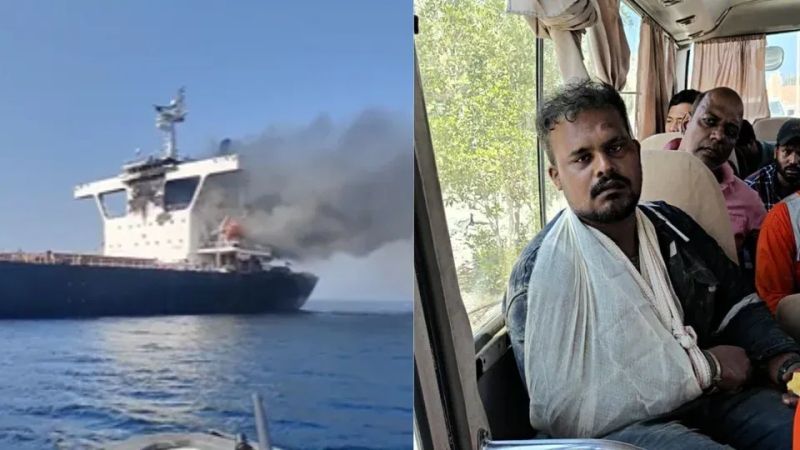
1 seafarer killed, Fatal attack in the Strait of Hormuz: Capesize bulker CAPE DAO hit by unknown projectile
 Safety
25 Crew Abandon MSC Container Ship in the South China Sea — All Rescued, Vessel Still Adrift
 Safety
Five Seafarers Reported Dead as Puntland Retakes Hijacked Tanker Honour 25
 Safety
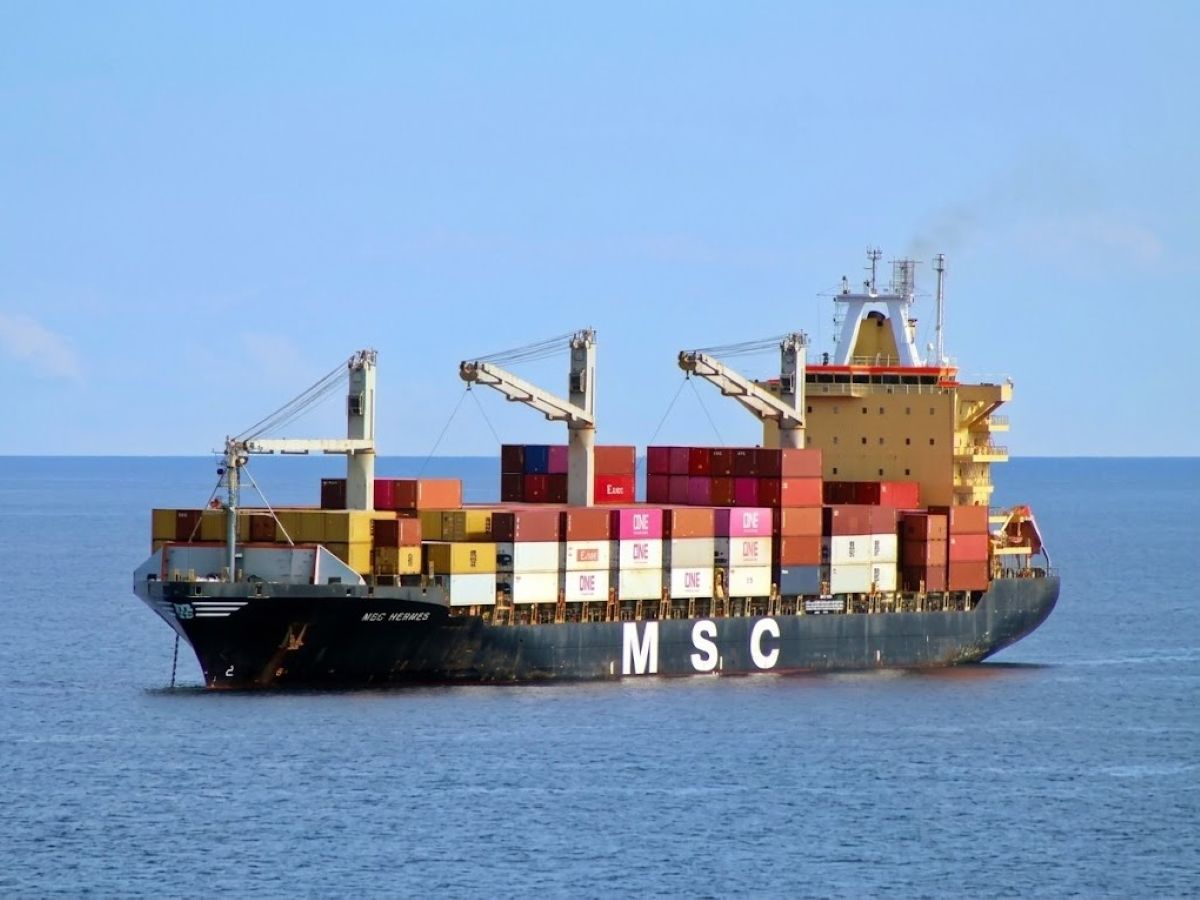
MSC Hermes III Adrift Unmanned in South China Sea After 25 Crew Abandon Ship
 Safety
Dangerous Goods Container Fire Reported at NPCT1 Terminal in Jakarta
 Safety
Suspected Cyber Incident Diverts LNG Carrier After Cargo-Control Failure
 Safety
Xinde Marine Forum London 2026: Shipping Moves from Lean Logistics to Resilience by Design
 Safety
Almost the Entire Black Sea Is Now a War-Risk Listed Area
 Safety