


CULines opens Turkey office as Eastern Mediterranean regional headquarters
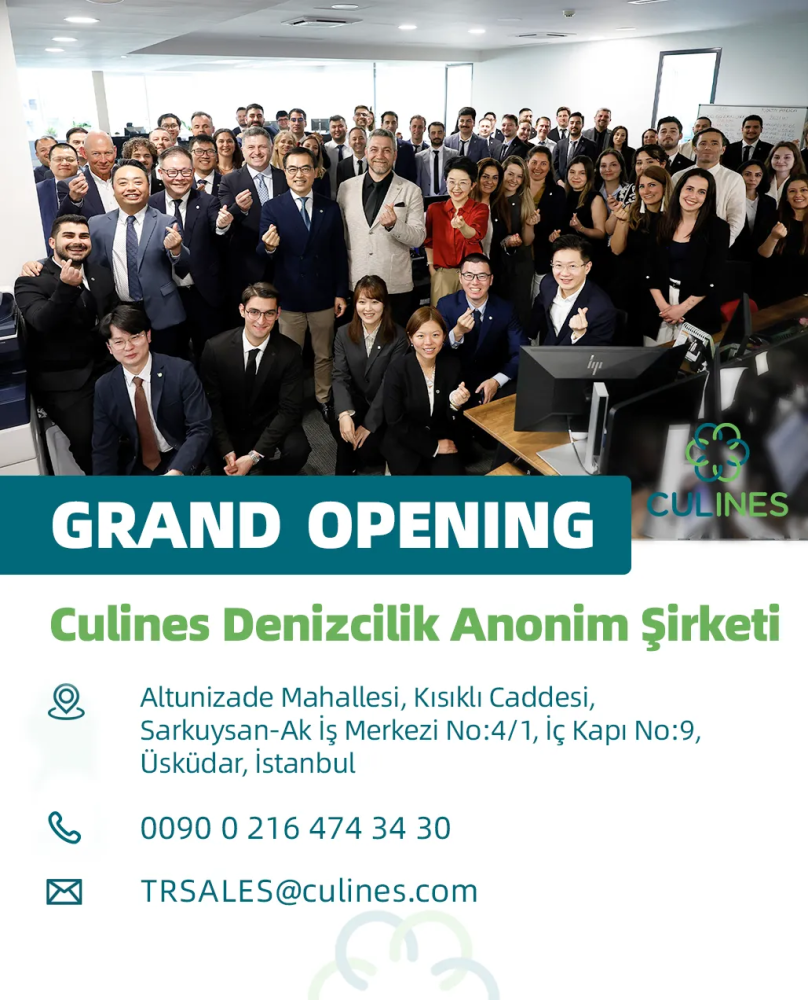
China United Lines (CULines) has officially opened its Turkey office, marking another step in the carrier’s overseas network expansion and its regional push across the Eastern Mediterranean, North Africa and the Black Sea.
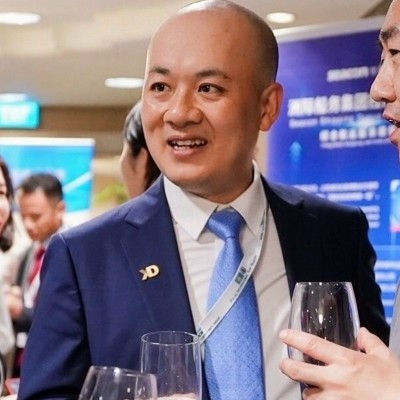
The opening ceremony was held on 1 June 2026. CULines chairman Chen Honghui, president Ding Wei, vice presidents Zhu Jun, Chen Yang and Wang Chaojun, senior advisor Mr. Lars Solbø Christiansen, and the local management team of the Turkey office attended the ceremony.
The newly opened company is named Culines Denizcilik Anonim Şirketi. According to CULines, the Turkey office will serve as the carrier’s Eastern Mediterranean regional headquarters. It will be responsible for long-haul mainline operations north of the Suez Canal, as well as regional feeder services.
The move follows CULines’ recent overseas expansion, including the establishment of its India, West Asia and Japan operations. The Turkey office adds another important piece to the carrier’s service network across Europe, Asia and Africa.
Turkey becomes a key regional base
Turkey has a strategic position at the crossroads of Europe, Asia and Africa. Its port network links the Black Sea, the Eastern Mediterranean, North Africa and European markets.
For container shipping, Turkish ports play an important role in regional cargo collection, transshipment and feeder connections. Istanbul, Derince, Gebze and Nemrut Bay are all important nodes for services linking Turkey with North Africa, the Red Sea and other nearby markets.
By positioning the Turkey office as its Eastern Mediterranean regional headquarters, CULines is giving the local entity a role beyond sales representation or agency support. The office is expected to support regional service planning, customer service, port coordination, market development and local operational execution.
This also matches CULines’ recent service adjustments in the Turkey–North Africa market.
Alphaliner recently reported that CULines had launched two new intra-Mediterranean feeder loops. One is the Mediterranean Express Service, or MES. The other is based on a slot agreement with Turkish carrier Medkon Lines on its Turkey–Benghazi Service, or TBS.
The MES was previously operated by SeaLead Shipping. CULines now operates the service with the 1,145 teu MEDKON LIA. The loop calls at Istanbul (Ambarli), Derince, Nemrut Bay and Misurata before returning to Istanbul (Ambarli). It offers fortnightly sailings.
The TBS is operated by Medkon Lines, with CULines participating through a slot arrangement. The service connects Turkey with Benghazi and is operated by the 707 teu MEDKON SAMSUN.
These services show that CULines’ Turkey presence is already linked to concrete regional products and cargo flows.
A mainline-plus-feeder network
CULines said it has initially built a “mainline plus feeder” network in Turkey. The carrier currently operates three core regional services: the AEM China–Eastern Mediterranean mainline, the MES Mediterranean feeder service and the NAF North Africa feeder service.
The AEM service connects China with the Eastern Mediterranean. The MES supports cargo movement between the Eastern Mediterranean and North Africa. The NAF service focuses on North Africa.
According to previous market information, the NAF service is also closely connected with the Turkey–North Africa trade. Alphaliner reported that the service was previously operated by SeaLead Shipping. CULines has chartered the 634 teu ASR to continue operating the loop, which calls at Istanbul (Ambarli), Derince, Nemrut Bay and Algiers before returning to Istanbul (Ambarli).
Together, AEM, MES and NAF give CULines an initial regional network covering the Eastern Mediterranean, North Africa and nearby markets.
CULines said the Turkey office will also work with its wider mainline and feeder network to connect Turkey with Egypt, Jordan, Saudi Arabia, Sudan, Yemen, Djibouti, the UAE, India, Pakistan, Thailand, Vietnam, the Philippines, Malaysia, Mainland China, Taiwan, Japan and South Korea.
For shippers and freight forwarders, this structure means CULines is trying to extend beyond the China–Eastern Mediterranean mainline and provide more regional connectivity through Turkey.
From trial operation to full local execution
CULines said its Turkey operation entered trial operation in July 2025. Since then, the company has been building its local operating system and moving toward independent local execution.
With the formal opening of the Turkey office, the operation has now entered a more complete local service stage.
The company said the Turkey team will provide services in Chinese, English and Turkish. CULines said this will help customers connect with the carrier more directly and complete port-related services through a one-stop local channel.
The carrier also plans to launch a Turkish-language local website and introduce its SherryLee intelligent customer service system in the market. This is part of its plan to combine local service capability with digital tools.
Local execution is becoming increasingly important for Chinese container carriers expanding overseas. In markets such as the Eastern Mediterranean and North Africa, shipping services depend heavily on port coordination, customs procedures, documentation, trucking, depots, agents and customer communication.
A local team can improve response time and service reliability. For CULines, the Turkey office gives the carrier a more direct interface with local customers and partners.
Regional expansion becomes more important
CULines has attracted attention in recent years for its entry into long-haul container trades. As the container market enters a new cycle, regional networks, feeder services and local overseas capabilities are becoming more important for liner operators.
Compared with long-haul mainline services, regional feeder services can help carriers increase port coverage, strengthen customer relationships and build more flexible network products.
The opening of the Turkey office can therefore be seen as part of CULines’ effort to increase network control in a strategically important region.
Turkey can connect CULines’ existing China–Eastern Mediterranean mainline with North Africa, the Black Sea, the Red Sea and West Asia. Through AEM, MES and NAF, CULines is building a more complete service structure around the Eastern Mediterranean.
The Mediterranean and North Africa feeder markets are served by regional carriers, Turkish operators, feeder arms of major European liner companies and selected Asian carriers. CULines is entering this market through a combination of a local company, chartered feeder tonnage and cooperation with local carriers.
This approach gives the carrier flexibility while limiting the scale of initial capacity commitment.
Stability and cargo base remain key
The formal opening of CULines’ Turkey office provides the carrier with a clearer local platform for its Eastern Mediterranean, North Africa and Black Sea business. The longer-term performance of the network will still depend on several factors.
The first is cargo stability. Trade between Turkey and North Africa provides a base for feeder services, but sustainable operation requires steady cargo volume.
The second is schedule reliability. Some North African ports can face operational uncertainty, including congestion, documentation delays and local coordination challenges. This makes local execution capability important.
The third is cost control. The charter market for smaller container vessels remains tight, and feeder vessel costs are still high. Service profitability will depend on load factors, freight levels and efficient vessel deployment.
CULines has now moved from trial operation to formal local presence in Turkey. With AEM, MES and NAF as its initial “mainline plus feeder” framework, the carrier is strengthening its service capability across the Eastern Mediterranean, North Africa and the Black Sea.
The next test will be whether CULines can turn the Turkey office into a stable regional operating platform through local customer development, port coordination, vessel deployment and feeder partnerships.

READ MORE
 Careers & Jobs
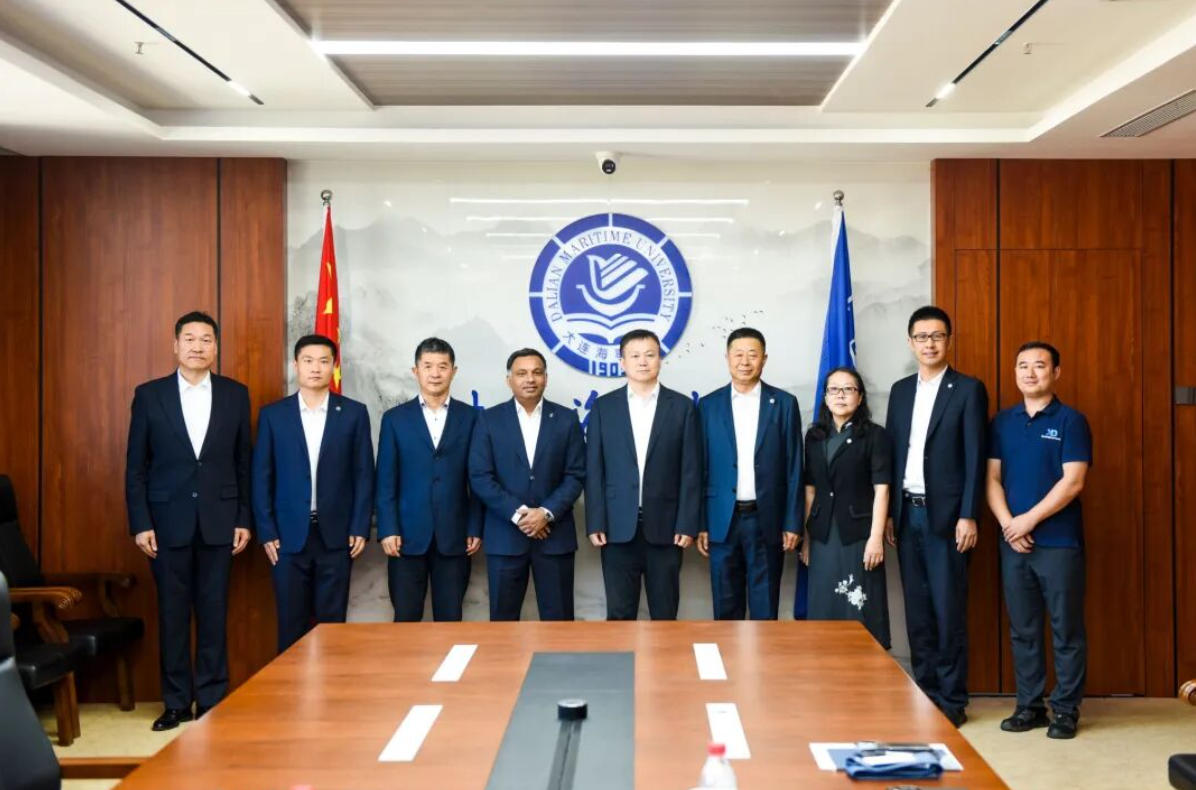
Fleet Management and Dalian Maritime University Sign Training agreement to Strengthen Seafarer Training in China
 Careers & Jobs
Invitation to Participate in the Survey on Global Seafarers’ Physical and Mental Health and Rights Protection
 Careers & Jobs
Crew Remuneration Rises 8–10% as Chinese Shipping Group Steps Up Investment in Seafarers
 Careers & Jobs
What Kind of Talent Will Shipping Need in the Future?
 Careers & Jobs
HKSR Logo & Tagline Design Competition Rules (“Competition Rules”)
 Careers & Jobs
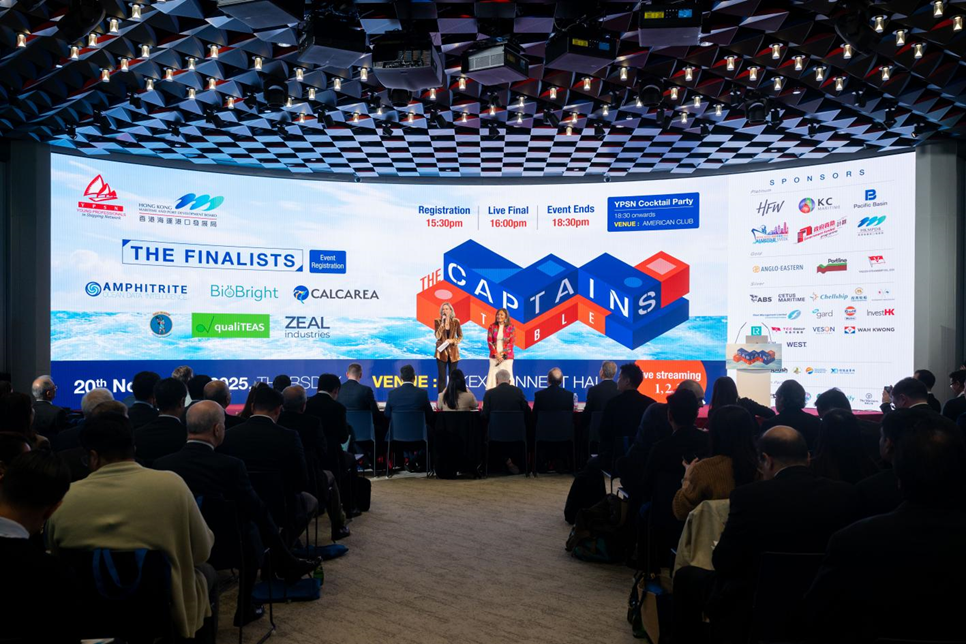
The Captain's Table Returns Bigger Than Ever: 2026 LIVE Finals to Set Sail in Hong Kong
 Careers & Jobs
Why Did 200-Year-Old Ben Line Choose Dalian?
 Careers & Jobs
Global Shipping Faces a Shortage of 39,100 Officers, BIMCO/ICS Report Warns
 Careers & Jobs
Seafarers no longer carrying paper certificates!
 Careers & Jobs