

Autonomous Ships and Driverless Trucks Are Here. What Talent Will Ports and Shipping Need?

By Chen Yang, Xinde Marine News
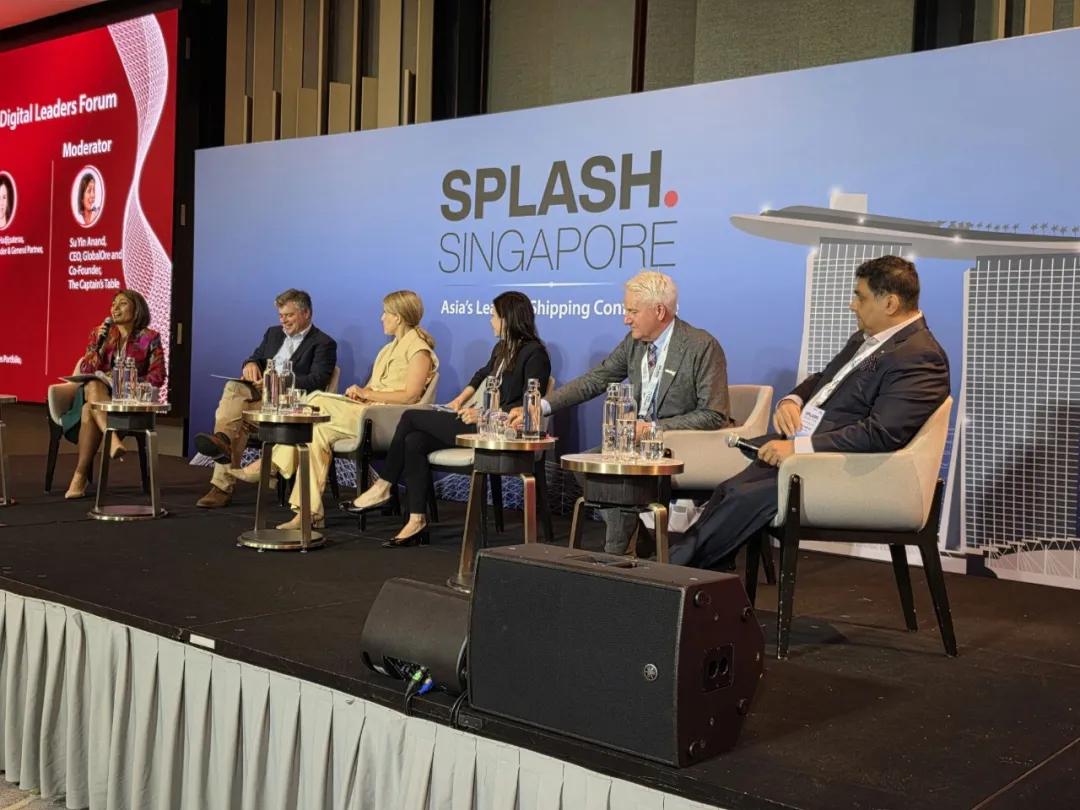
Autonomous trucks are working in fleets inside container terminals, vessel autonomy is moving into practical use in specific operating environments, and maritime AI developers are trying to capture the judgment accumulated by experienced technical and marine superintendents. At a roundtable I moderated in Shanghai on 24 November 2026, five specialists described how these technologies are changing operations, development teams and the work people perform. Their experiences raised a question for maritime education and employers alike. As machines take on more routine tasks, how will the next generation acquire the knowledge, curiosity and judgment needed to handle the difficult ones?

The discussion took place at the end of Parallel Forum II of the 2026 DSH International Shipping Innovation Conference in Shanghai’s Lingang area. The participants included Zhang Weidong, Chair Professor at Shanghai Jiao Tong University, and Zhang Chuanjie, Deputy General Manager of NIZE Intelligent Technology. Joining them were UTOPILOT Chief Scientist Heng Ling, Westwell digital intelligence research institute head Shen Size and Shanghai Linli Technology General Manager Yu Hang. Their work spans autonomous vessels, terminal operating systems, autonomous driving, logistics technology and specialised maritime AI applications.
I opened with a question that had come up a week earlier in Hong Kong. At a conference reception dinner, Swire Shipping CEO Jeremy Sutton had asked me what rapid advances in AI could actually deliver for shipping. China offered a wide range of operating environments in which to explore the answer. In Lingang, the conversation moved from ships, trucks and terminals to company structures and professional development. Several of the changes the speakers described were already affecting their own employees. Other problems had become visible as technology entered everyday operations.
Different technologies are meeting in the same terminal
Zhang Weidong’s team works on autonomous navigation on water, covering individual craft and cooperation between multiple vessels. Water-quality monitoring, floating-waste collection and tourism boats are among its practical applications. He also mentioned a project with Guoxia involving an intelligent, fully electric vessel in Shanghai. Small autonomous craft and larger vessels share some fundamental research challenges, he explained. Perception, decision-making and control capabilities can be developed and applied across different vessel types.
His research also extends to cooperation between aerial and maritime systems, vessel formations, and ship and port technologies. How several vessels maintain a formation and complete a task together is a further challenge beyond making one vessel navigate autonomously. That work connects with his longer-term expectation that intelligent vessels will increasingly operate in coordination with surrounding equipment and systems.
Zhang Chuanjie approached the subject through terminal production. NIZE Technology, known in Chinese as Nezha, is a technology company within Shanghai International Port (Group), or SIPG. Its team developed, and continues to support and maintain, the terminal operating system behind Yangshan Phase IV. NIZE’s Chinese name draws on the mythological figure Nezha and his adventures at sea. Zhang joked about the company’s ambition to make an impact of its own in the industry. It is also taking experience developed in ports into the wider logistics sector, including airport and railway freight facilities.

Heng Liang traced UTOPILOT’s origins to an autonomous heavy-truck project launched by SAIC Motor and SIPG at Yangshan in 2019. As the project developed, the team explored a separate company structure and commercialisation. Discussing its Chinese name, Youdao, he emphasised the importance of treating customers as long-term partners and working with them to make autonomous driving succeed. His understanding of that relationship had been shaped by the financing and business cycles experienced across the autonomous-driving sector.
UTOPILOT works both on public-road transport serving ports and on movements within terminals. Heng described progress in autonomous-truck operations and associated approvals on the Donghai Bridge, which connects the Yangshan port area with the mainland. Within ports, its AIV autonomous transfer vehicles handle horizontal container transport. He cited deployments at Shanghai’s Luojing and Waigaoqiao Phase IV terminals, as well as Rizhao, Quanzhou, Ningde, Shenzhen’s Mawan and Peru’s Chancay. At the time of the discussion, he said, close to 300 AIVs were operating across different ports. The company was also extending into mines and industrial parks, seeking to adapt a common technological foundation to different vehicles and working environments.
Shen Size explained that Westwell’s name came from Xijing Street in Zhujiajiao, Shanghai, a street associated with its founder’s school years. The name has sometimes led people to assume it is an overseas company. In roughly eleven years of development, according to Shen’s account, Westwell had moved from image recognition in terminals into autonomous driving, choosing relatively enclosed port environments as a setting for commercial applications. He said its products and projects had served more than 200 customers in over 30 countries and regions. Its work had expanded from individual machines to fleet operations, coordination between vehicles and quay cranes, anticipation of conditions on site, and connections with external trucks and longer-distance transport.
Yu Hang introduced Linli’s focus on enterprise AI agents for shipping, maritime services and shipbuilding. The company also works on data platforms, training for embodied AI and robotics applications, including cooperation with Fangju Xingchen. It aims to extend from maritime and shipbuilding applications into upstream steel and mining, and downstream power and energy businesses.
Some of these businesses were already working together. Heng referred directly to cooperation between NIZE’s terminal dispatch systems and UTOPILOT’s vehicle autonomy systems. Shen also described project links with companies represented on the panel. Moving a container from a quay crane to the yard requires the terminal system to allocate a task, a vehicle to execute it, and changing conditions to feed back into dispatch. The technologies discussed on stage have to connect within that same movement.
Autonomous driving is changing how the technology itself is developed
I asked the panellists to look back over five years and identify the changes that had most affected their understanding of their fields. Heng, who has spent more than fifteen years in autonomous driving and robotics research, described three developments.
The first concerned the technical architecture of autonomous driving. From around 2004 through to roughly 2022–2023, he said, modular approaches occupied a central position. Sensors collected information, while separate modules handled perception, localisation, prediction, decision-making, planning and control. Around 2023, advances in end-to-end models opened further possibilities for processing larger amounts of data and training models that could cover more of the driving task within a connected architecture.
Further advances in large models have brought additional directions for research. Heng mentioned vision-language-action models, or VLAs, which connect visual perception and language understanding with action. The accelerating pace requires development teams to keep examining new architectures and methods, and to decide how they might work in actual applications.

The second development concerned the research process. Autonomous vehicles generate large volumes of operational data. Engineers must identify problems, select useful examples, clean and label data, and prepare it for training. Heng described how these activities had required substantial teams, with much of the effort devoted to repetitive data processing. AI coding tools and agents are allowing more of this work to be automated.
He outlined a cycle in which vehicles generate feedback during operations, AI helps analyse problems and select valuable samples, and the resulting data supports the next round of training. Updated models then return to vehicle applications and generate further operational feedback. People increasingly supervise the process, its condition and its results. In Heng’s view, the sequence of operation, problem identification, data selection, training and renewed operation is beginning to display characteristics of a process that can improve itself.
The third development emerges when many intelligent machines share the same working area. A terminal with dozens of autonomous vehicles, potentially operating alongside human-driven trucks, can encounter congestion and deadlocks. Each vehicle may be able to perceive its surroundings and make decisions, while the fleet as a whole becomes stuck because vehicles are waiting for one another.
UTOPILOT is therefore giving more attention to collective intelligence, information exchange between machines and coordination across the fleet. The objective extends to the performance of the whole terminal. Heng recalled working on multi-robot cooperation around 2013, when researchers were already considering how large numbers of robots might share an environment. There were relatively few operating settings in which enough intelligent machines worked together to make those questions an immediate practical concern. As autonomous equipment enters service in larger numbers, the issues explored in that research are becoming daily production problems.
Shipping lines need certainty before and after berthing
Zhang Chuanjie’s experience includes the construction, commissioning, operation and maintenance of Yangshan Phase IV. He described technological development through the stages of terminal production, beginning with image recognition. Around 2015–2016, terminals were already applying the technology to container numbers, types and damage detection. Tasks involving human observation and recording were progressively incorporated into digital systems.
Transport equipment was developing alongside those systems. Earlier automated vehicles used magnetic guidance, while advances in vision and laser-based sensing enabled different autonomous capabilities. Automation and control systems connected these functions with the wider terminal operation.

Planning, dispatch and control also have an established technical foundation. Operations research and rule-based algorithms have long supported these activities. Zhang saw an opportunity for large models and AI agents to recognise changing conditions and exceptions earlier, then call on existing planning and dispatch models to adjust production through the terminal operating system. His team is exploring cooperation between large models, smaller specialised models and agents, so that established capabilities can respond to a more variable operating environment.
Typhoon disruption provided a concrete example. When several vessel arrivals are displaced, the terminal has to revise berth allocations, equipment assignments and the sequence of work. Planning must anticipate the consequences, while coordination continues during execution so that ships can berth and complete cargo operations. For a carrier, the completion time also affects the next stages of the voyage.
Zhang described two forms of certainty that shipping lines seek. Once a vessel is alongside, they need to know how long cargo operations will take and when the ship can leave. Before it berths, they need to know how long it will wait.
He referred to Yangshan’s performance in the Container Port Performance Index, jointly produced by the World Bank and S&P Global Market Intelligence. Public information records Yangshan at the top of the index for three consecutive years, covering 2022–2024. The index assesses performance through vessel time in port.
Berth availability nevertheless remains a constraint. Zhang cited cases during typhoon disruption in July and August when some vessels could face waits of seven or eight days. Alongside continued improvements inside the terminal, he wanted further attention to the time ships spend waiting to berth.
He described efforts to exchange and share data with carriers and shipping agents through a digital platform linking shipping and trade. Better coordination could bring shipping schedules and berth plans into closer alignment. Improving berth utilisation and reducing waiting time were specific problems he hoped new technology could help address.
Better tools require changes to workflows and responsibilities
Shen divided his observations into the technologies and working methods changing rapidly, and the basic requirements of the business that remain relatively stable. AI, agents and other tools give companies more ways to address operating problems. Westwell’s expansion from recognition systems and autonomous driving into operational dispatch has followed the practical questions raised by customers. Coordinating vehicles with quay cranes, anticipating site conditions, and connecting ports and depots with external transport all require an understanding of the underlying business.

Container movements, shipping services and trade still have to be organised. Shen expected those basic activities to remain recognisable over the following five years. Companies would continue to apply new technologies to improve how the work was carried out.
In actual projects, however, the capabilities of a tool and the readiness of the customer can develop at different speeds. Some AI applications and agents are already powerful, he said, while the necessary data and connections with upstream and downstream activities remain incomplete. The project then requires a joint examination of the workflow and responsibility for each step.
That work takes a technology supplier into the customer’s organisation. Where data is generated, who owns the next action, and whether the following process can use the output all become part of implementation. Westwell wants to help customers solve persistent operating problems and prepare the conditions needed to use the available technology effectively.
Maritime AI needs to understand how experienced people make decisions
Yu described shipping through three characteristics. Compliance requirements are stringent, responsibility carries significant weight, and professional experience matters heavily. These characteristics shape her approach to developing specialised AI systems for the industry.

In her assessment, a limited amount of industry fine-tuning on top of a general-purpose large model often falls short of what maritime companies need. She also criticised products marketed as AI whose practical capabilities are inadequate, making it harder for customers to assess whether a tool understands their business.
Linli has chosen to begin with an industry knowledge platform. Yu argued that the most valuable material includes the business logic, experience and decision rules accumulated by senior practitioners over decades. When technical and marine superintendents confront a problem, they draw on particular evidence, consider several conditions together and recognise changes that could invalidate an earlier conclusion. Capturing that reasoning is a substantial task in its own right.
She discussed structuring and standardising industry knowledge, including the development of a knowledge ontology, a formal representation of the relevant concepts and their relationships. Once business objects, rules and the basis for decisions are expressed clearly, data and model capabilities can be added to help the system use that knowledge in a specific job. She places that work early in development, while continuing to follow advances in model technology.
The approach requires sustained contact with practitioners. Some knowledge is documented in regulations, procedures and records. Other knowledge is expressed through the decisions people make in particular circumstances. Yu wants to make the conditions and reasoning behind those decisions available to enterprise AI agents. Her work on data, training and embodied AI also explores how industry knowledge might connect with equipment able to act in the physical world.
AI is already changing employment inside technology companies
Yu then turned to changes within her own business. She believes AI’s impact on technology companies can arrive more directly than its effects on many of the industries they serve. Describing Linli’s experience, she spoke about cuts to testing and front-end development roles, along with a reduction of roughly half in back-end developers. Her account concerned particular parts of the development workforce. It showed how AI was already influencing actual staffing decisions.
Employees’ expectations were changing too. With some humour, Yu described technical staff as becoming harder to manage. They asked why programmers in Silicon Valley could go swimming in the afternoon while developers in China continued working late. They wanted more time for thought and creative work, with AI taking on repetitive activities.
The same tools were entering everyday management. Staff were using AI to write daily and weekly reports, and Yu said she had to adapt to that reality. Understanding what people had actually contributed, and making room for creative tasks, were becoming practical management questions.
She was also demanding more of her own learning. In a field moving so quickly, she said, a week without keeping up could leave her discovering that discussions with peers had moved on. She uses AI to help read research papers and other literature. The tools are changing how managers acquire knowledge and assess technological developments, as well as how employees complete their work.
Heng’s account of automated data preparation and model development complemented Yu’s experience. Data processing, sample selection, coding and routine reporting are among the activities receiving more AI support. The suppliers introducing tools to customers are themselves reconsidering staffing and the allocation of working time.
How will younger professionals acquire experience when AI does the basic work?
These accounts brought me back to professional development. Young people typically build expertise by doing large amounts of basic work themselves. If AI takes on more of those tasks, and intelligent ships eventually operate with different staffing requirements, how should maritime colleges prepare future deck and engineering officers? Which capabilities should students develop, and where should educators concentrate their effort?
Zhang Weidong believed AI was raising the requirements. As machines assume more repetitive tasks and work with relatively low technical demands, the tasks left to people can become more complex. Students still need a strong grounding in their own profession. They also need systematic knowledge across disciplines to understand intelligent systems, use them and intervene when necessary.
He identified two limitations that matter for operators. AI can make mistakes, and some of its outputs can be difficult to explain. A user may receive a conclusion without being able to see clearly why it was produced or whether its basis is sufficient. Seafarers and other operators therefore need enough knowledge to decide when to accept a recommendation, when to investigate further and when to take control.
Shipowners’ adoption decisions impose a further practical requirement. The technical feasibility of a function is one consideration. Owners also need confidence that it improves efficiency and maintains safety. The application has to meet those expectations, and the people operating it require the competence to use it appropriately.
That has implications for teaching. Alongside professional and interdisciplinary knowledge, Zhang wanted students to undertake more practical training and encounter situations that AI handles poorly. Unexpected events, emergencies and abnormal operating conditions require people to assess what is happening and act to keep the system safe. Working with intelligent equipment makes those moments of human judgment and intervention especially significant.
At the session, I reflected back that students appeared to have more to learn, with a stronger need to understand how different disciplines connect. Yu was working to make experienced practitioners’ reasoning available to AI. Zhang was considering how to educate the people who would continue to develop that reasoning for themselves.
Jobs are being reorganised, and someone still has to make the decision
Zhang Chuanjie added the perspective of terminals and their technology suppliers. Testing, product and software development roles are already being affected by AI, with changes to the structure of technology businesses. He expected customers to undergo related changes as AI became more closely integrated with operations. Terminal automation had reduced some operating roles, while further advances could reach production planning and management.

Demand is also growing in other areas. He highlighted equipment maintenance and repair, systems operation and management, and the planning of new applications. Automatically operating equipment still requires people to maintain it, organise the systems around it and develop useful ways to deploy it.
His team is developing an AI-native intelligent management and control centre for container terminals, with the aim of reshaping production management and organisation. Throughout that work, he emphasised cooperation between people and machines. A system can recommend an action or propose a concrete response. The final decision and the associated responsibility need to rest with people.
Heng addressed the displacement of driving jobs directly. He recognised from the beginning that autonomous driving could substitute for some driving labour. He also wanted the discussion to consider the work itself, including its repetitive elements, risks and physical demands. Having machines undertake those tasks could create opportunities for people to move into safer and more creative work.
He remained optimistic about new employment and productivity. As tools undertake increasingly complex tasks, people can apply their abilities to further problems and produce more with the available technology. Taking a longer historical view, he observed that what one person can create has changed substantially through industrial development. He was willing to embrace further advances in AI, including more powerful future systems, and encouraged practitioners to seek the opportunities they could bring.
Curiosity and judgment matter alongside fluency with AI
Shen focused on two human qualities, curiosity and critical thinking. Much progress, he argued, comes from wanting to understand something new and from finding less laborious ways to accomplish a task. AI makes information and task completion more accessible. That ease can also reduce the impulse to ask further questions. Someone with little curiosity may remain within the answers a tool supplies and find it harder to continue learning or enter unfamiliar fields.
He had seen people use AI and other technologies to explore areas outside their original professions. Curiosity and personal motivation helped them keep going. Technology expanded what they could attempt, while their willingness to understand a new problem sustained the effort.
Judgment was a separate concern. Shen had encountered younger people who had used AI extensively at university and were highly fluent with the tools. Their facility in using AI had advanced more visibly than their ability to make important judgments. Completing a task still leaves the question of how to evaluate the result, which draws on knowledge and experience.
This reinforced his interest in a broad education. Judgment can develop through formal learning, working experience, life experience and engagement with different kinds of problems. A company asking people to take responsibility needs them to understand what they are accepting, what requires adjustment and why.
Shen acknowledged the difficulty of turning these qualities into a simple educational formula. Individual characteristics play a part, as do long periods of learning and experience. He nevertheless regarded curiosity and judgment as central to how people would adapt, deserving sustained attention from educators and parents.
A similar thought had emerged at an industry discussion I attended in Singapore in September. X-Press Feeders CEO Shmuel Yoskovitz said that, despite the uncertainties surrounding shipping, the industry still needed fundamentally the same kind of people. Drawing on 35 years of experience, he identified curiosity, good interpersonal skills and a willingness to work internationally among the qualities he consistently valued. Xinde Marine News

Across several months, people working in different parts of shipping had brought curiosity back into the conversation. As tools improve, developing talent also involves sustaining the desire to ask questions and understand the work itself.
The next five years could connect ships, ports, trucks and people more closely
To close, I asked the five speakers to look beyond immediate constraints and describe the developments they hoped to see over five years, or further into the future.
Zhang Weidong imagined the scope of optimisation continuing to expand. Work on an individual sensor or algorithm could develop into integrated perception, decision-making and control for a whole vessel. Further progress would connect intelligent ships more closely with shore systems, allowing voyage plans and estimated arrival times to be considered alongside berth availability and terminal operations.
His view extended to the wider transport network. Linking maritime transport with road and rail could allow more of the transport process to be planned together, creating opportunities to improve efficiency and reduce costs. He wanted that wider cooperation to advance alongside the technology of individual vessels.
Zhang Chuanjie observed that the port’s customers and the equipment arriving at its boundaries were themselves becoming more intelligent. Terminals have devoted considerable effort to their internal automation and digital systems. Over the next five to ten years, they will also need to serve intelligent ships and autonomous heavy trucks. That creates practical questions about the interface between ship and shore, and about how a terminal receives and schedules autonomous vehicles arriving from outside.
He returned to the Donghai Bridge truck applications as an example of the connections developing between terminal production and external transport. Platforms linking ships, cargo and ports across the supply chain were among his priorities for the next stage.
Heng was particularly interested in AI operating in the physical world. Multimodal models have demonstrated a productive technological direction in digital applications, he said, with further room to improve capability, cost and energy efficiency. Robots working in real environments face a broader range of movements and interactions. Autonomous driving addresses movement, one relatively well-defined part of that challenge.
In his assessment, the models and methods for physical AI still require substantial exploration, and the industry has yet to reach a broad consensus. Human capabilities have developed over a long evolutionary history. Technologies corresponding to senses such as touch and smell still leave considerable work for robotics researchers. Over five, ten or more years, he hoped for breakthroughs enabling robots to perform a wider range of tasks in real environments.
Shen wanted solutions organised with the participation of AI agents to move further into practical use. He also anticipated resistance as they affected workflows, departments, divisions of responsibility, existing business chains and interests. Implementation would reach into those arrangements. He hoped the technology would develop in ways that benefited people and helped customers resolve concrete industry problems.
His ambition extended to the possibility that new technologies could help address perhaps 80% of the industry’s problems over the next five years. Westwell wanted to continue exploring those possibilities through AI used in operational decision-making and through AI acting in physical environments.
Yu’s closing wish concerned the lives of seafarers. She hoped ships could eventually carry embodied robots operated remotely by maritime professionals, allowing seafarers to spend less time separated from home and more time with their families.

READ MORE
 Technology
AI Adoption Is Not AI Maturity: The New Competitive Test for Shipping Companies
 Technology
PSC – Safer Ships, Smarter Control
 Technology
Everllence Secures More Than 2,000 Small-Bore Engine Orders in 2026
 Technology
Energy storage manufacturer AYK Energy wins biggest marine battery contract in ferry history
 Technology
The Captain’s Table 2026 Finals Anchor Hong Kong Maritime Week: Global Maritime Tech Takes Center Stage as Platform Marks Seven Years of Transformative Innovation
 Technology