


Cargill Teams Up with Neptune Robotics for 18-Month Hull-Cleaning Trials in Singapore

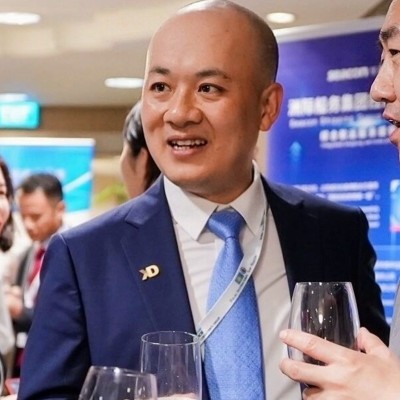
Cargill, one of the world’s largest dry bulk shipping operators, has entered into an 18-month partnership with Neptune Robotics to provide robotic hull cleaning, inspection and vessel-efficiency assessment for ships calling at Singapore. Announced on 2 November 2026, the collaboration forms part of the Maritime and Port Authority of Singapore’s (MPA) In-Water Hull Inspection & Cleaning Innovation Programme, bringing a major shipping operator into trials intended to support the wider deployment of underwater robotics.
The agreement builds on more than four years of cooperation between Cargill and Neptune. Under the new arrangement, Cargill will provide vessels, operational experience and feedback to support the development of Neptune’s next-generation robots, software and Vision-Language-Action (VLA) models. The work will combine AI-enabled remotely operated vehicles for cleaning with robotic hull inspections and analysis of vessel performance before and after cleaning, allowing the partners to assess both operational effectiveness and potential fuel savings.

Cargill Ocean Transportation’s Vice President for Asia Pacific, Ying Ying Lim, said the partnership reflected the company’s ambition to improve the efficiency of its current operations while supporting the longer-term decarbonisation of ocean supply chains. By contributing ships and operating experience, Cargill aims to help establish evidence that robotic cleaning can be delivered safely and consistently across a broader range of operating conditions.
Singapore’s programme provides a structured setting for that assessment. On 22 April 2026, MPA announced six selected partners: Alicia Bots, C-Leanship, Neptune Robotics, Oceanis Robotics, RINA and SEAHI Robotics. The selection followed a call for proposals that attracted 19 submissions from 36 companies across nine countries. Supported by the Maritime Innovation and Technology Fund, the projects bring together technology developers, service providers, classification societies and vessel owners to test solutions in actual port conditions.
MPA has identified several practical obstacles to wider adoption. Robots must work reliably in stronger currents, manoeuvre in confined spaces around vessels and address complex areas such as propellers, rudders and sea chests. Cleaning also needs to fit around port activities while meeting environmental requirements for the collection of removed material. The trials will examine safety, efficiency, cost-effectiveness and environmental performance, providing evidence for decisions on deployment at greater scale.
The commercial case begins with a familiar shipping problem: marine growth increases hull resistance, requiring more fuel to maintain vessel speed. The partnership announcement, citing research from the IMO’s GloFouling Partnerships project, states that biofouling can increase a ship’s greenhouse gas emissions by up to 30%, depending on vessel characteristics and operating conditions. The Singapore collaboration will assess the benefits of cleaning through vessel-performance comparisons, linking the physical removal of fouling with measurable changes in fuel consumption.
Environmental performance is equally central to the programme. Removing marine growth creates material that must be collected and treated, particularly where viable organisms could spread into another marine environment. MPA’s original call for proposals specified cleaning without damage to hull coatings, capture of biofouling waste and filtration of captured particles, including organisms, to below 10 microns in all dimensions. These requirements make waste handling and coating protection essential parts of the technology’s operational assessment.
Neptune says its robotic systems can clean a fully laden Capesize bulk carrier within 24 hours and operate day and night in clear or turbid water, including currents of up to four knots. Its technology uses cavitational waterjets designed to remove fouling while protecting hull coatings. The company also offers digital inspection records, including images and video taken before and after cleaning, to support fleet biofouling management. These capabilities will be relevant to evaluating whether cleaning services can fit reliably into vessel schedules.

The Cargill agreement follows Neptune’s investment in its Singapore operations. The company, which has a base in Shenzhen’s Qianhai district and lists a Singapore headquarters, announced a US$12 million manufacturing and research expansion in Singapore on 20 April 2026. At the time, it set a target of increasing local autonomous cleaning capacity fivefold by the end of the year. Neptune said it entered the Singapore market in 2024; its announced service network now covers 61 ports across Singapore and China.
Neptune Robotics’ Co-Founder and Chief Executive Officer, Elizabeth Chan, said Singapore’s busy port environment and Cargill’s scale would provide a range of operating conditions capable of generating useful results for the wider industry. She described the collaboration as a way to advance the company’s new robots and AI applications under MPA’s regulatory oversight, supporting its ambition to make autonomous, data-driven hull cleaning a routine shipping service.

For the wider shipping industry, the partnership offers an opportunity to connect hull maintenance with operational evidence: how effectively robots clean, how well coatings are protected, how removed material is handled and what fuel savings follow. Over the 18-month collaboration, those results will help the partners assess how robotic cleaning and inspection can become a dependable part of vessel operations in a major international port.


READ MORE
 Technology
Connecting maritime digitalisation to process
 Technology
Shiptec China 2026.10.28-10.30 | The Enterprises of International Pavilion
 Technology
Shipowners are finding a new business beyond ships
 Technology
Global technology CEOs join ADIPEC 2026 as AI reshapes energy demand and operations
 Technology
Maritime is using AI every day. Now comes the harder part: trusting it to act.
 Technology
Shiptec China 2026.10.28-10.30 | Russian Delegation to Make a Grand Appearance at the 17th International Shipbuilding,Marine Equipment and Offshore Engineering Exhibition For China
 Technology
AI Is Moving Into Shipping’s Core Business. What Will Set Companies Apart?
 Technology
Shiptec China 2026.10.28-10.30 | German Pavilion | High-Precision Threading Tools & Clamping Systems: NORIS Debuts at Dalian Maritime Exhibition
 Technology
Shiptec China 2026.10.28-10.30 | German Pavilion | Mayr Safety Brakes: Robust, Powerful and Seawater-Corrosion Resistant – Safe and Durable Product Solutions for Harsh Environments
 Technology