


Cash-Rich but Cautious: Global Shipowners at a Crossroads

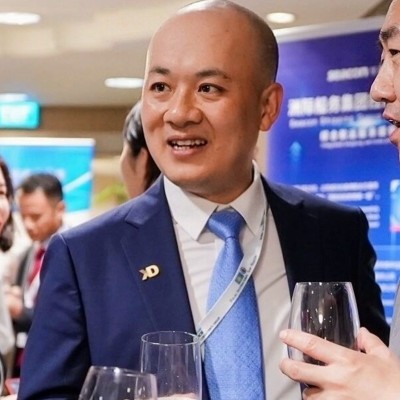
Strong freight markets have left many shipowners with substantial cash, but committing that capital has become an increasingly difficult decision. At two panel discussions during the 2026 World Maritime Merchants Forum in Hong Kong on 16 November, speakers examined how the disruptions supporting earnings are also complicating investment, financing and operations. Across the discussions, a common question emerged: how can shipping turn today’s profits into lasting operating strength, while agreeing who should identify, manage and bear the risks?
Held under the theme “Linking the World, Anchoring the Future”, the forum brought together participants from across the maritime value chain. China Merchants Group Chairman Miao Jianmin called for ecosystem building to replace the race for scale. Christine Cabau Woehrel, Executive Vice President for Assets and Operations at CMA CGM Group, emphasised the role of assets, data and partnerships in building networks capable of absorbing disruption. The panels explored the practical arrangements behind those ambitions: how capital reaches shipping, how insurance supports trade, how contracts respond to changing routes, and how fuel investment and seafarer protection can advance together.

Waqas Samad, Chief Executive Officer of Lloyd’s List Intelligence, moderated the first panel on capital, cycles and compliance. Jeffrey Guo, Senior Vice President of Bureau Veritas Group and President of Bureau Veritas Marine & Offshore for Asia Pacific, chaired the second, focusing on energy security, geopolitics and the fuel transition. Together, the discussions examined the costs and responsibilities involved in keeping shipping resilient.
Cash in the bank does not settle the investment decision
John Denholm, Chairman of the International Chamber of Shipping (ICS) International Chamber of Shipping , described the industry as being at a crossroads. Although conditions differ between sectors, disruption-driven markets have allowed many owners to accumulate cash. Deciding how to deploy it is more difficult. Newbuildings are expensive by historical standards, delivery requires a substantial lead time, and the choice of propulsion and fuel involves long-term judgements about technology and regulation. Those questions are particularly challenging for parts of the bulk trades, where vessels lack fixed routes and the decarbonisation pathway remains uncertain.
Denholm also highlighted a risk that strong earnings can obscure: what happens when the disruption ends? A recovery in effective vessel supply could leave owners operating in a less favourable market. Liquidity therefore has a direct commercial purpose. He recalled a longstanding principle of tramp shipping: an owner should avoid being forced to sell a ship while retaining the ability to buy when an opportunity arises.
The timing mismatch matters. Spot earnings reflect the relationship between cargo demand and available capacity today. A newbuilding will enter service years later and may operate for more than two decades. Diversions, waiting and other inefficiencies absorb vessel time and can support freight rates; an easing of those constraints changes effective supply. In Xinde Marine News’s assessment, an investment needs to be evaluated through its purchase price, delivery timing, long-term earnings and financing structure. Strong cash generation creates room both to invest and to preserve flexibility.
Banks focus on durable cash flow; markets need trusted benchmarks
Yvonne Lee, Head of Commercial Banking Sales for Global Trade Solutions at The Hongkong and Shanghai Banking Corporation Limited, brought the financing discussion back to fundamentals. Lenders need to understand whether durable demand exists and whether the resulting cash flow can support repayment. Changes in freight, interest and operating costs affect that assessment, alongside sanctions and other compliance requirements. Opportunities remain, but financing depends on how a business can turn them into sustainable income.
That perspective complements owners’ emphasis on liquidity. Higher vessel prices can increase an asset’s market value, while debt service requires actual cash. The strength of cargo and customer relationships, the ability to absorb rising costs, and payment capacity in a weaker market all influence the financing decision. Owners deciding how much equity to commit and banks assessing how much debt to provide need a shared understanding of the durability of the underlying business.

Mark Jackson, Chief Executive Officer of the Baltic Exchange, emphasised trusted information and consistent benchmarks. Markets need to respond quickly without overreacting. If the reference points used to measure a market change constantly, participants can find it harder to understand the volatility around them. He also noted that reconstruction and the replenishment of reserves can sustain transport demand after an initial shock. Distinguishing enduring demand from temporary capacity absorption is therefore important for both cash-flow forecasts and asset valuations.
Insurance is tested by the ability to respond and pay
Nick Shaw, Chief Executive of the International Group of Protection and Indemnity (P&I) Clubs, explained the strengths of a system ultimately owned and controlled by shipowner members. High levels of cover, claims-handling expertise, established correspondent networks and relationships with maritime authorities help vessels trade internationally. Recognised insurance certificates, access to incident-response resources and reinsurance support form part of that operating framework. Major casualties also test the strength of the relationships and communication supporting it.
Sean Dalton, President of the International Union of Marine Insurance (IUMI) iumi.com and Executive Vice President and Head of Marine Underwriting, North America, at Munich Re, examined risk accumulation and recovery after a casualty. Geopolitical conflict has required underwriters, reinsurers and brokers to revisit marine war-risk assessment. Where information about a vessel’s insurance and accountability is inadequate, recovery following a collision or pollution incident may be limited. Coastal states could then face substantial financial and environmental consequences.
Tim Wilkins, Managing Director of the International Association of Independent Tanker Owners (INTERTANKO), similarly called for greater information sharing between governments and industry, supported by verified evidence about vessel safety and the risks associated with carrying hazardous cargoes.
These contributions highlight a basic requirement for safe maritime trade: identifiable parties capable of meeting their responsibilities. Completing a shipment leaves important questions about compensation, clean-up, salvage and support for affected parties. The quality of insurance and accountability arrangements has consequences for other vessels, coastal communities and the waters through which trade moves.
Contracts must address whether a voyage remains viable
Discussing relations between owners and charterers, Wilkins identified a practical shift in negotiations. Conflict, sanctions and rapidly developing rules have brought the viability of the voyage itself into sharper focus. Safety, insurability and the ability to perform the voyage all require assessment. Conditions assumed when a charterparty was agreed may change significantly during its execution.
According to Wilkins, owners and charterers are reviewing war-risk, sanctions and safe-port provisions clause by clause, considering who bears a risk, who should mitigate it and how the costs should be allocated. He linked those discussions with the contractual adjustments prompted by the EU Emissions Trading System and FuelEU Maritime. BIMCO’s FuelEU Maritime Clause for Time Charter Parties provides one example of the industry’s response, addressing monitoring, fuel supply, compliance information and the handling of related costs.

Such arrangements demand close commercial coordination. Route and fuel choices, vessel capabilities, insurance and contractual responsibilities need to work together. When urgent risks arise, decision-making authority, cost allocation and the flow of information can affect the speed of the response. Wilkins also stressed that seafarers bear risk and should be included in the conversation. Negotiations over commercial exposure need to account for the safety of the people carrying out the voyage.
Seaspan builds flexibility through long-term partnerships
Bing Chen, Chairman, President and Chief Executive Officer of Seaspan Corporation, approached uncertainty through the long-term operation of maritime assets. Working with customers to develop flexible, adaptable solutions is an important source of investment confidence, he explained. Geopolitics, emissions requirements, technology and operating conditions can all change. Owners need capabilities spanning the vessel’s lifecycle and an organisation prepared to respond.
Chen highlighted retrofits as another route to alternative-fuel operation alongside newbuildings. That approach is already being implemented commercially. Hapag-Lloyd and Seaspan have reported the completion of the methanol dual-fuel conversion of Seaspan Yangtze , the first vessel delivered under their programme to retrofit five 10,100 TEU chartered containerships. The project connects an owner, a long-term charterer and propulsion technology partners, adding fuel flexibility to an existing asset.
In Chen’s account, long-term relationships should organise capabilities around customer needs, encompassing design, fuel selection, upgrades, operations, financing, insurance and eventual recycling. Owners and charterers can assess an investment’s value over the charter period and the vessel’s subsequent employment, then coordinate its timing and commercial arrangements. Retrofit feasibility still requires vessel-specific assessment of age, condition, engineering requirements and returns. Stable partnerships provide a stronger basis for doing that work in advance.
The fuel transition turns on who invests and who commits first
Alexander Prokopakis, Executive Director of the International Bunker Industry Association (IBIA), challenged the pressure placed on shipowners to underpin fuel projects through long-term purchasing commitments. For much of shipping, routes and cargoes change. Owners cannot necessarily determine years ahead where they will need a particular fuel or in what volume. Fuel producers and suppliers therefore also need to advance investment, rather than placing the burden of developing the market entirely on owners.
He illustrated the challenge through project timelines. In his comparison, the physical construction of a vessel could take around 18–24 months, while an alternative-fuel project could require roughly five years from investment decisions and permitting to delivery. That mismatch matters for owners that have already committed to alternative-fuel vessels: the availability of energy supplies affects how those investments can be used.
Wilkins added another perspective. The orderbook and the long operating lives of conventional-fuel vessels also provide a demand signal. Producers can examine the future needs of those ships when assessing opportunities for drop-in low-carbon fuels, sustainable biofuels and associated supply. The exchange demonstrated why a multi-fuel transition needs to accommodate different vessel types and operating models.
Denholm had raised a related concern in the first panel: the need for a clearer decarbonisation pathway. He expressed the hope that the IMO could establish a credible net-zero framework incorporating economic measures to drive the transition. That concern connects directly with the investment debate. Technical availability needs to be accompanied by rules that help participants assess long-term costs and returns.
In Xinde Marine News’s assessment, the disagreement over purchasing commitments exposes a central financing challenge. Producers seek long-term sales agreements to support project investment. Owners need flexibility over deployment and future fuel procurement. Progress requires workable arrangements for demand, delivery, pricing and risk allocation. Charterers, cargo owners, fuel traders, ports and financial institutions may all have a role. Green corridors and fuel platforms will create commercial value through the specific arrangements they help establish.
Data creates wider value when it connects trade and finance
Information quality featured throughout both panels. Wilkins emphasised the importance of timely, clear and verified information in helping owners, seafarers and charterers assess conflict-related risks. Jackson focused on trusted market information and benchmarks. Lee extended the discussion to the connections between trade data, payment and financing, and to interoperability between platforms.
Electronic trade documents need to move between participants and markets if they are to support more timely financing and related services, Lee argued. A public example illustrates that direction. In January 2026, GSBN, IQAX and ICE Digital Trade announced a live cross-platform electronic bill of lading transaction linking shipping, cargo interests and banks. Participants included HSBC Thailand, China Zheshang Bank, Lenzing Thailand and Jiangsu Dasheng Group. The issue, transfer and surrender of the electronic bill connected shipping documentation with banking processes.
The value of data therefore extends into commercial decisions. Verifiable vessel and cargo information, reliable document transfers and financing that follows transaction progress all affect how a transport chain functions. AI can help process information and support judgement. Trusted sources, clear responsibilities and standards accepted across institutions determine how broadly those judgements can be used.
“Resilience doesn’t mean acceptance”
Near the end of the second panel, Wilkins delivered one of the forum’s clearest statements: “Resilience doesn’t mean acceptance.” The industry can recognise its ability to adapt while refusing to accept innocent vessels and seafarers being targeted. The continuation of trade does not make those dangers acceptable.
Dalton focused on seafarer welfare, fatigue and loss prevention. On alternative fuels, he also called for closer engagement between insurers, classification societies, owners and operators. Early insight into equipment performance, maintenance issues and operating experience can improve understanding of emerging risks. Waiting for major losses to generate experience would leave risk management trailing technological deployment.
Asked by Guo to identify a priority for the coming years, Chen chose people supported by systems. Prokopakis chose training. In the first panel, Jackson had also called for clearer routes into maritime careers and greater interaction between seagoing and shoreside roles. These answers brought the capital, fuel and technology discussions back to execution: equipment needs skilled operators, information needs informed judgement, and contractual arrangements need shipboard and shoreside teams capable of implementing them.

Hong Kong provided a practical setting for those connections between finance, insurance and maritime services. Outcomes announced on the same day included a partner-port relationship with Yangpu, a green energy corridor with Zhanjiang, a green shipping corridor and partner-port relationship with Piraeus, and the first P&I policy issued by the Hong Kong Shipowners Mutual Assurance Association. Each addresses a different part of the network supporting international trade.
The quality of such cooperation will be tested through everyday investment and operating decisions: whether new vessels have durable employment, whether owners retain sufficient liquidity in weaker markets, whether fuel supplies can accommodate changing deployment, whether contracts and insurance support voyage adjustments, and whether seafarers have the safety and training needed to do their work. Those are practical measures of whether the ecosystem building advocated at the forum can turn strong earnings into lasting maritime capability.

READ MORE
 Finance
Cetus Maritime Places $200 Million Offering, Eyes Oslo Main-Market Move Within a Year
 Finance
Nearly $1 Billion in Quarterly Profit: Why Hapag-Lloyd Keeps Investing in Terminals and Pursuing ZIM
 Finance
Another Major Acquisition: Alfa Laval Strikes $700 Million NAVTOR Deal
 Finance
After “Multi-Generational Wealth”: Where Should Shipping’s Capital Go Next?
 Finance
Cetus Maritime Targets Up to $200 Million in Oslo as Shipping Heavyweights Signal Interest
 Finance
Ships Built for 25 Years, Rules Still Evolving: How Should Owners Invest?
 Finance
Has the Mega-Ship Era Peaked? Investment Choices Behind Shipping’s Boom
 Finance
Xingtong Posts 59% Profit Jump as Its Chemical Tanker Business Goes Global
 Finance
Maersk Posts USD 3 Billion Quarterly Profit but Still Misses Expectations
 Finance