


After “Multi-Generational Wealth”: Where Should Shipping’s Capital Go Next?

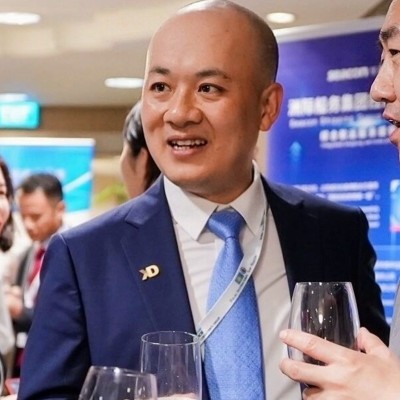
Shipowners have accumulated cash, and financiers are looking for business. Yet the next round of vessel investment is drawing sharply different judgments. At the 7th Annual Capital Link Hong Kong Maritime Forum on November 17, 2026, SFL pointed to opportunities in fleet renewal and long-term charters, while Borealis Maritime Limited urged caution over fresh capital deployment. ICBC Financial Leasing and Berenberg brought the discussion back to mean reversion, asset knowledge and financing discipline. Capital availability, attractive borrowing terms and investment value each require their own assessment.
Moderated by Janice Lee, a partner at Hill Dickinson, the panel, “Shipping & Capital: Financing the Next Fleet Cycle,” started from an encouraging premise: years of earnings and deleveraging have left many owners with healthier balance sheets and greater capacity to invest. With capital available, however, the choices between buying, holding and selling—and the debt and charter arrangements supporting those decisions—demand considerable judgment.

How Stronger Balance Sheets Change the Cycle
Christoph Toepfer , Founder and Chief Executive Officer of Borealis Maritime Group, described the wealth generated during the current market as “multi-generational wealth.” In his assessment, strong conditions across successive shipping segments have allowed owners to accumulate substantial cash while reducing leverage. That creates an important distinction from the 2003–2008 upswing against which he compared the present cycle.
Ole B. Hjertaker , Chief Executive Officer of SFL Corporation Ltd. , also recognised the difference stronger balance sheets could make. He recalled how, during previous upswings, some banks increased both their absolute lending volumes and relative leverage as markets rose, exposing themselves to losses when conditions reversed. Many owners have used earnings in this cycle to repay debt and build cash buffers. Consequently, the pressure that eventually forces asset sales or restructurings could take longer to emerge, even if earnings weaken.
That distinction could alter the way the next downturn unfolds. Greater financial resilience may change the timing of distressed sales and asset disposals. Capital waiting for acquisition opportunities must assess both when earnings might fall and how long existing owners can withstand weaker conditions. Cash on the balance sheet provides protection, but it can also flow back into newbuildings and secondhand vessels, contributing to another expansion of supply.
What Is Sustaining Today’s Returns?
Hjertaker’s optimism rests on identifiable factors. Newbuilding orders, he argued, need to be measured against the size of the existing fleet, while vessel prices should be assessed with inflation and changes in costs in mind. Years of restrained investment, uncertainty over fuel technology and an ageing fleet have also sustained the need for replacement. Looking three years ahead, he suggested investors might find themselves asking: “Why didn’t I invest more?”
Toepfer was more guarded about the foundations of current earnings. In his comparison, the 2003–2008 upswing was largely driven by demand growth as China became more deeply integrated into the global economy. Vessel supply gradually caught up and ultimately overshot demand. Much of the strength in the current market, he argued, reflects geopolitical disruption, changes in cargo flows and longer transportation distances. The Ukraine crisis, the Strait of Hormuz and the Red Sea all featured in his assessment.
That makes him reluctant to accept an assumption that strong conditions will simply continue for another year or two. If disruptions ease, some tonne-mile demand could fall away, potentially changing the market faster than investment models anticipate. At the same time, abundant cash gives owners the capacity to place orders quickly. In his view, some projects already rely on excessively optimistic assumptions about future earnings and residual values.
The disagreement centres on future cash flows: how far replacement demand can sustain returns, how much of today’s strength depends on disruptions that may unwind, and how much optimism is already reflected in asset prices. Together, those judgments determine whether a vessel bought at today’s price can still deliver an acceptable return over its investment life.
The Contracts Behind SFL’s Investment Case
Understanding Hjertaker’s position requires looking at SFL’s investment approach. He explained that newbuilding investments are generally combined with long-term charters, with financing arranged ahead of delivery wherever possible. SFL has also increased its focus on investment-grade charter counterparties, seeking greater visibility over contracted cash flows through both charter terms and counterparty credit quality.
Recent announcements provide concrete examples. On October 28, SFL announced agreements to acquire two 8,800 TEU containership newbuildings and one 93,000 cbm dual-fuel Very Large Ammonia Carrier for approximately US$365 million in aggregate. The containerships each have time charters for a minimum of eight years, while the VLAC has a minimum five-year time charter, all commencing on delivery.
SFL has also agreed to realise value through asset sales. On October 7, it announced agreements to sell four LR2 product tankers and three Suezmax tankers to Trafigura. After profit sharing and repayment of associated debt, SFL estimated aggregate net cash proceeds of approximately US$275 million . Delivery to the buyer was scheduled for the fourth quarter of 2026 and the first quarter of 2027.
These transactions illustrate a strategy of recycling equity from existing assets into projects that add future contracted revenue. Hjertaker’s investment case needs to be understood through the vessel segment, acquisition terms, charterer and financing structure. Long-term contracts provide revenue visibility, while counterparty performance and the alignment of financing maturities remain part of the investment assessment.
Why Institutional Capital Can Slow Down
The panel also featured a direct exchange over listed platforms and institutional capital. Hjertaker highlighted the fees, liquidity and ease of exit associated with public-market investment. Toepfer responded that the institutional capital he manages can slow deployment when suitable investments are difficult to find. His priority is protecting an established investment record and avoiding purchases that investors might regret several years later.
Discussing his experience of exiting investments, Toepfer again referred to a vessel portfolio reduced from 80 ships to 25. That example has a longer history: at Capital Link’s 2023 London forum, he described selling more than 60 vessels and reducing the portfolio from more than 80 to around 25. He emphasised then that, even where assets might have been sold too early, a willingness to realise profits and remain aligned with investors was important.
In Hong Kong, he applied the same discipline to explain his caution. Institutional capital must demonstrate performance through exits and realised returns, giving managers a reason to wait when valuations are difficult to justify. Borealis also operates across vessel investment, credit investment and ship management, allowing capital to pursue opportunities with different risk profiles.
Investment horizons, distribution objectives, management fees and exit arrangements all influence the pace of capital deployment. A listed platform and an institutional investment portfolio can reach different decisions even when looking at the same vessel prices and freight markets. Assessing those choices requires examining the assets acquired, the risks assumed and the way returns ultimately reach capital providers.
Attractive Borrowing Terms Still Need an Asset Case
Alongside his caution on investment, Toepfer offered a striking assessment of financing: “This is the best time to borrow.” Cash-rich owners are repaying loans early, while banks need to maintain their shipping portfolios. Competition from Asian financiers has added to the pressure, helping borrowers secure more attractive margins and terms.
Hjertaker described the changing funding landscape through SFL’s experience. Japanese, South Korean and Taiwanese financing markets have been active in recent years, and European banks are returning with more flexible structures. For a business built around long-term charters, funding maturity is particularly important. A loan maturing after three or four years leaves refinancing risk within a ten-year charter period, so SFL seeks to match funding duration to its contracted cash flows wherever possible.
This brings the discussion beyond the initial loan quotation. The financing costs entering a project’s cash-flow model also include benchmark interest rates, fees and maturity terms. Principal repayment schedules and the amount that can be refinanced at maturity affect resilience too. Asset prices, expected hire and debt arrangements must work together to support the investment return. More attractive borrowing terms still leave a transaction exposed to lower earnings and changes in residual value.
Longer charters can improve revenue visibility, provided they are supported by credible counterparties and enforceable contracts. Debt financing can improve project economics when it is appropriately matched to the asset’s earnings capacity. The two owners’ discussion made the relationship between financing terms and investment value considerably more explicit.
ICBC Financial Leasing: Asset Knowledge and Financing Structure
Simon Sai (赛嘉男), Vice President of the Asia Pacific Department at ICBC Financial Leasing Co., Ltd., opened with two concepts: mean reversion and market normalisation. Different vessel segments have different supply-and-demand dynamics, he argued, and financiers need to remain cautious at elevated points in the cycle. Banks, leasing institutions and capital markets address different requirements, leaving room for cooperation as well as competition.
Banks can be highly competitive for owners with strong balance sheets and relatively straightforward financing needs. Leasing can offer different combinations of tenor, repayment profile, leverage and execution, while a leasing transaction may itself incorporate bank debt. Sai said ICBC Financial Leasing’s competitive advantage should come from understanding vessel assets and structuring financing effectively. Competing simply through higher loan-to-value ratios or greater exposure to residual-value risk was, in his assessment, unsustainable.
That argument has practical significance for Chinese lessors serving international shipping clients. When funding is plentiful, financiers need to demonstrate where their expertise adds value: understanding how an asset may perform under different market conditions, coordinating delivery, charter employment and repayment schedules, and providing asset-management support when a partner needs it.
Marcus Weber , Head of New Markets in berenberg ’s International Shipping Department, also stressed discipline. Berenberg provides payments and cash-management services alongside vessel financing conducted with institutional capital. Competitive lending still has to fit investors’ risk-and-return mandates. His emphasis was on assessing the asset, its cash flows and capital providers’ requirements together, rather than simply following tighter margins and looser financing structures.
Beyond Shipyard Slots: Preserving Capacity to Invest Again
Asked by Lee whether the industry risked repeating the mistakes of the previous cycle, Sai pointed to greater emphasis on long-term employment, cash flows, prudent loan-to-value ratios, residual-value testing and financing covenants. He also identified shipyard capacity and distant delivery slots as important constraints on new ordering. In his assessment, slots extending into 2030 and beyond limit how quickly an ordering wave can translate into vessel deliveries.
Shipyard constraints can delay supply growth, but they still need to be assessed alongside future demand and delivery schedules. Toepfer warned that having abundant cash was insufficient justification for ordering ships. He recalled owners explaining orders by saying they had so much money that they did not know what else to do. He was concerned about renewed supply pressure in some markets and suggested earnings in certain feeder containership segments could eventually fall back towards operating-cost levels.
As the discussion drew to a close, Toepfer answered the question of what would separate winners from losers in the next cycle with one word: “Leverage.” Owners increasing debt again would need corresponding security of cash flow. Sai, meanwhile, argued that those retaining sufficient equity, flexibility and discipline to continue investing as markets normalise would be better placed to capture opportunities.
Strong earnings have widened shipowners’ choices and improved their capacity to absorb volatility. Preparing for the next cycle is already taking shape in the terms of today’s transactions: the price paid for a vessel, the party responsible for its hire, the maturity of its debt, and the amount of capital that will remain available when market conditions normalise.


READ MORE
 Finance
Cetus Maritime Places $200 Million Offering, Eyes Oslo Main-Market Move Within a Year
 Finance
Nearly $1 Billion in Quarterly Profit: Why Hapag-Lloyd Keeps Investing in Terminals and Pursuing ZIM
 Finance
Another Major Acquisition: Alfa Laval Strikes $700 Million NAVTOR Deal
 Finance
Cash-Rich but Cautious: Global Shipowners at a Crossroads
 Finance
Cetus Maritime Targets Up to $200 Million in Oslo as Shipping Heavyweights Signal Interest
 Finance
Ships Built for 25 Years, Rules Still Evolving: How Should Owners Invest?
 Finance
Has the Mega-Ship Era Peaked? Investment Choices Behind Shipping’s Boom
 Finance
Xingtong Posts 59% Profit Jump as Its Chemical Tanker Business Goes Global
 Finance
Maersk Posts USD 3 Billion Quarterly Profit but Still Misses Expectations
 Finance