

Hormuz Crisis Begins to Redraw the Gulf’s Energy Export Map
ADNOC Gas is studying an LNG export facility outside the Strait, as the UAE, Saudi Arabia and other Gulf producers accelerate investment in alternative energy corridors


The prolonged disruption in the Strait of Hormuz is beginning to reshape how Gulf energy producers plan their future export infrastructure.
ADNOC Gas is studying the potential development of a new LNG export facility on the UAE’s east coast, which would allow some future gas exports to be loaded outside the Strait of Hormuz.
The proposal remains at an early stage. No final investment decision has been made, and ADNOC Gas has not disclosed a specific location, capacity, capital cost or development timetable.
Nevertheless, the move carries wider significance. The UAE is accelerating construction of a second crude pipeline to Fujairah, Saudi Arabia is studying an expansion of its East-West pipeline system, and Iraq is reviving plans for export corridors to the Mediterranean and Red Sea.
The impact of the Hormuz crisis is therefore moving beyond short-term freight rates, war-risk insurance and vessel diversions. It is beginning to influence infrastructure planning and long-term capital allocation across the Gulf.
ADNOC Gas studies LNG export capacity outside Hormuz
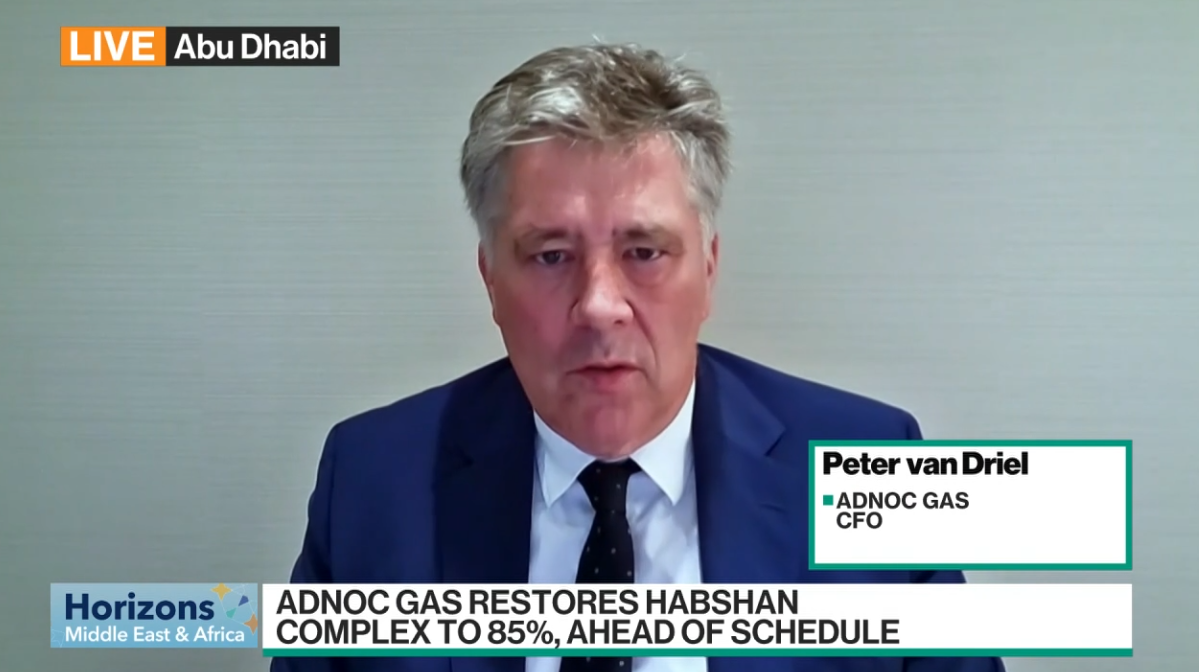
According to TradeWinds, ADNOC Gas Chief Financial Officer Peter van Driel said the company is examining potential locations on the UAE’s east coast as part of efforts to strengthen the resilience of its LNG export system.
ADNOC Gas currently operates 6 million tonnes per annum of LNG production capacity on Das Island. It is also developing the 9.6-mtpa Ruwais LNG project. Both facilities are located inside the Gulf, meaning LNG carriers must still pass through the Strait of Hormuz to reach the Gulf of Oman and the Indian Ocean.
During a Bloomberg Television interview, van Driel said the company was exploring additional options, including possible locations on the UAE’s east coast, but stressed that no decision had been made.
ADNOC Gas subsequently moved to temper expectations about the maturity of the proposal.
During the company’s second-quarter earnings call, van Driel described the east coast development as one of several ideas being explored by the wider ADNOC Group. He stressed that it had not reached a final investment decision and did not represent a commitment to build either a new export facility or a new pipeline.
ADNOC Gas Chief Executive Fatema Al Nuaimi similarly said that the company did not yet have a firm plan to disclose, but was evaluating different options to reduce its long-term exposure to the Strait and related logistics constraints. ADNOC Gas Q2 earnings call transcript
It would therefore be premature to describe the proposal as a confirmed LNG terminal in Fujairah. Management has referred only to possible east coast locations, without identifying a site or disclosing capacity and investment figures.
The fact that ADNOC Gas is publicly considering LNG production and export capacity outside Hormuz is, however, an important strategic signal.
A 52% profit decline brings Hormuz risk onto the balance sheet
The review is not simply a long-term strategic exercise.
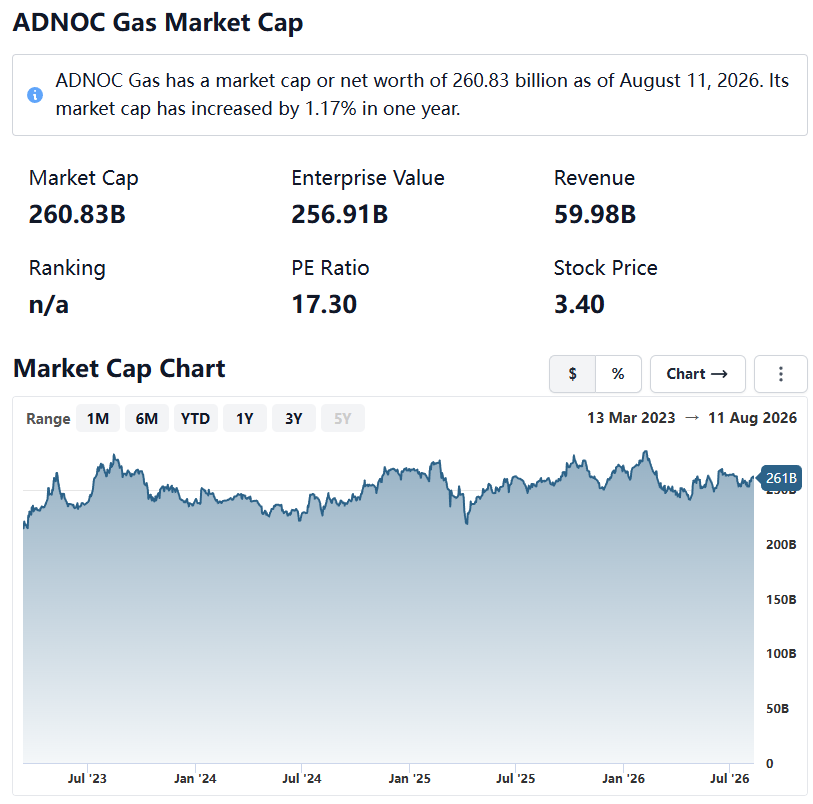
ADNOC Gas reported second-quarter net income of $665 million, down 52% from $1.39 billion a year earlier. Although the result exceeded its guidance range of $400 million to $600 million, the closure of the Strait and attacks on the Habshan gas-processing complex directly affected export sales and product liftings. Reuters
Around 70% of ADNOC Gas’s sales volumes—mainly domestic gas and condensate—have no direct exposure to Hormuz shipping. The remaining 30%, including LNG and certain exported products, remains exposed to maritime disruption.
The domestic business provided an important earnings buffer, but the company’s international export operations were still significantly affected.
ADNOC Gas expects third-quarter net income of between $600 million and $800 million and full-year earnings of $3.5 billion to $4 billion, well below its record $5.2 billion profit in 2025. Management said the wide guidance range largely reflects uncertainty over how many vessels will be able to transit the Strait safely.
Hormuz access has therefore become a direct variable in sales volumes, inventory management, project costs and earnings forecasts.
Despite the disruption, ADNOC Gas plans to invest approximately $28 billion between 2026 and 2030 in gas processing, liquefaction and export expansion. It has also taken final investment decisions on phases two and three of its Rich Gas Development programme and awarded engineering, procurement and construction contracts worth $8.2 billion. ADNOC Gas official release
As new production capacity is added, the question of where and how those volumes can reach international markets is becoming increasingly important.
Ruwais LNG remains on schedule—but does not remove Hormuz exposure
ADNOC’s most advanced LNG expansion project remains Ruwais LNG.
Located in Al Ruwais Industrial City in Abu Dhabi, the project comprises two liquefaction trains of 4.8 mtpa each, giving it total capacity of 9.6 mtpa. Once fully operational, it will increase ADNOC Gas’s operated LNG capacity from 6 mtpa at Das Island to approximately 15.6 mtpa.
Van Driel said the first Ruwais LNG cargoes are scheduled for late 2028, with the second train expected to begin operations in 2029. Regional supply-chain disruption has so far had little effect on the construction schedule.
ADNOC previously said that more than 8 mtpa of the project’s capacity had already been contracted under long-term agreements with customers in Asia and Europe. Commercial operations are scheduled to begin by the fourth quarter of 2028. ADNOC project update
Ruwais LNG will substantially expand the UAE’s role in the global LNG market, but it will not eliminate geographical exposure to Hormuz. LNG carriers departing Ruwais will still need to transit east through the Strait before reaching open waters.
A future east coast facility would therefore provide strategic redundancy rather than simply duplicate Ruwais LNG.
Such a project would require gas transmission pipelines, liquefaction trains, storage tanks, marine loading infrastructure and a suitable export terminal. Its capital cost could run into several billion dollars, with a long development timetable.
That explains management’s emphasis on feasibility studies, front-end engineering design and capital discipline before any investment decision is made.
Oil has alternative routes; LNG remains heavily exposed
LNG remains the most obvious gap in the Gulf’s alternative export system.
According to the International Energy Agency, nearly 20 million barrels per day of oil passed through the Strait of Hormuz in 2025, representing approximately one-quarter of global seaborne oil trade.
More than 112 billion cubic metres of LNG also transited the Strait, equivalent to almost 20% of global LNG trade. Around 93% of Qatar’s LNG exports and 96% of the UAE’s LNG exports depend on the route, with Asia receiving nearly 90% of the volumes. International Energy Agency
For crude oil, two large-scale alternatives already exist: Saudi Arabia’s East-West Pipeline and the UAE’s Habshan–Fujairah pipeline. The IEA estimates that the two systems provide between 3.5 million and 5.5 million bpd of available rerouting capacity.
LNG cannot simply be redirected through those crude pipelines. Natural gas must first be transported to a liquefaction facility outside the Strait, processed, cooled, stored and loaded onto specialised carriers.
This gives ADNOC Gas’s east coast study particular significance. The Gulf’s Hormuz-bypass strategy could be expanding from crude oil and petroleum products into LNG.
UAE: Fujairah is becoming a comprehensive export hub
The UAE has one of the Gulf’s most developed systems for bypassing Hormuz.
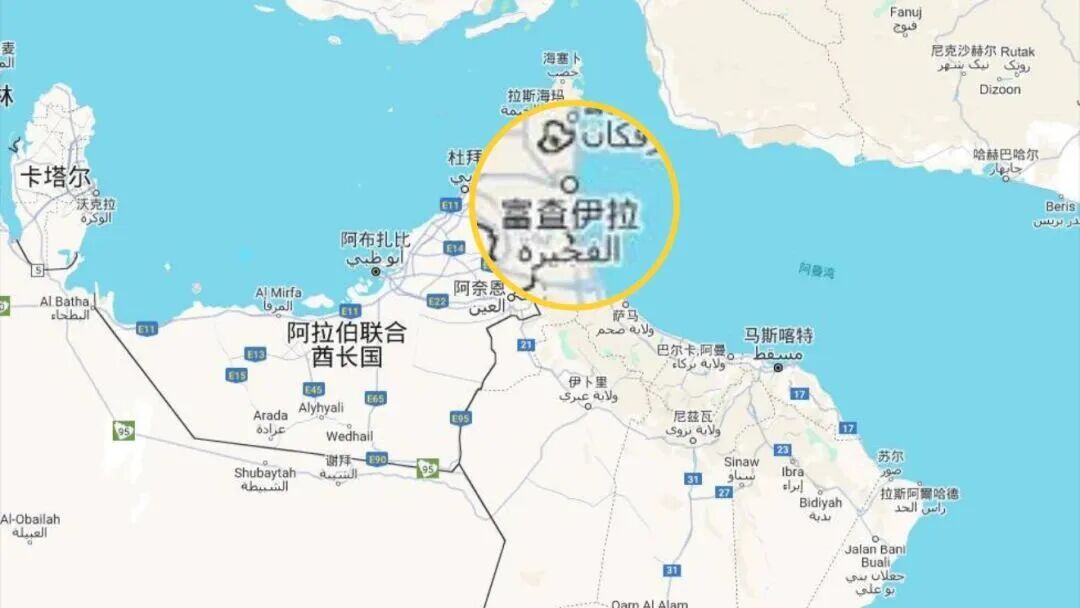
The existing Abu Dhabi Crude Oil Pipeline, also known as the Habshan–Fujairah pipeline, runs approximately 360–400 kilometres from Abu Dhabi’s onshore oil facilities to Fujairah on the Gulf of Oman. Its capacity is estimated at between 1.5 million and 1.8 million bpd.
Because Fujairah lies outside the Strait, crude can be loaded directly into tankers with access to the Indian Ocean. The UAE normally exports around 1.1 million bpd through this route, leaving up to approximately 700,000 bpd of additional capacity under pre-war operating conditions.
In May 2026, Abu Dhabi Crown Prince Sheikh Khaled bin Mohamed bin Zayed directed ADNOC to accelerate construction of a second West-East Pipeline. Expected to enter service in 2027, the project could double the UAE’s crude export capacity through Fujairah to approximately 3.6 million bpd. Reuters
Kpler estimates that the new pipeline will cost around $3 billion and extend for approximately 300 kilometres. Construction is reportedly about 50% complete, although associated storage, port and loading infrastructure may mean that significant additional export volumes do not materialise until around mid-2027. Kpler
Fujairah is also expanding beyond oil.
DP World recently reached an agreement in principle with the Fujairah Ports Authority to develop a container and multipurpose terminal and a general cargo terminal under a 50-year concession. Construction is expected to take 24–30 months.
Although these are not LNG terminals, their development—alongside crude pipelines, storage facilities, bunkering operations and potential future gas infrastructure—points to a broader strategy: strengthening the UAE’s east coast as an alternative maritime and energy gateway.
Saudi Arabia: Yanbu’s port capacity becomes the next constraint
Saudi Arabia’s East-West Pipeline extends approximately 1,200 kilometres from Abqaiq in the Eastern Province to Yanbu on the Red Sea.
The system can transport up to 7 million bpd of crude. Around 2 million bpd supplies western refineries, while approximately 5 million bpd is theoretically available for export. Effective and sustainable export capacity is estimated at about 4.5 million to 5 million bpd because of storage, berth and tanker-loading constraints at Yanbu.
Saudi Arabia is studying a further capacity increase of 1 million to 2 million bpd and has held preliminary discussions with neighbouring producers. Kuwait Petroleum Corporation has confirmed talks with Saudi Arabia and the UAE about potentially accommodating Kuwaiti barrels through their pipeline systems. Reuters
The main limitation is no longer necessarily the pipeline itself.
Kpler estimates that Yanbu’s sustainable export capacity is close to its current ceiling. Further expansion would require additional tanks, pumping facilities, jetties and tanker-loading infrastructure. The plan may also include a parallel products pipeline, with substantial new capacity unlikely before 2028.
Exporting through Yanbu would also reshape tanker routes.
Cargoes bound for Europe could move through the Red Sea and Suez Canal, potentially shortening voyages. Shipments to Asia would have to sail south through Bab el-Mandeb and could be forced around the Cape of Good Hope if Red Sea security deteriorates.
The route reduces exposure to Hormuz while increasing dependence on the Red Sea, Bab el-Mandeb and the security environment around Yemen.
Iraq revives Mediterranean export corridors
Iraq has traditionally depended heavily on southern terminals near Basra, leaving it particularly exposed to disruption in Hormuz.
Its existing Kirkuk–Ceyhan pipeline runs through Turkey to the Mediterranean port of Ceyhan. After a prolonged shutdown caused by disputes between the federal government and the Kurdistan Regional Government, the route has returned to operation and is expected to handle larger volumes under a new one-year agreement between Iraq and Turkey.
Iraq is also studying two more ambitious northbound corridors.
One would connect Basra to Haditha and Kirkuk before joining the route to Ceyhan. The other would run from Basra through Haditha to the Syrian Mediterranean port of Baniyas.
A Chevron-led consortium is conducting technical and financial feasibility work on the two options. Even if the projects move forward, construction could take another three to five years.
Iraq has also repeatedly considered a 1-million-bpd pipeline from Basra to Jordan’s Red Sea port of Aqaba, as well as an overland or subsea line to Duqm in Oman. Both proposals continue to face financing, security, political and engineering obstacles. Reuters overview of alternative routes
Unlike the UAE and Saudi Arabia, which are expanding established corridors, most of Iraq’s alternatives would require complex cross-border coordination.
Could 60% of Gulf oil exports bypass Hormuz by 2028?
Goldman Sachs has reportedly tracked at least seven pipeline and export infrastructure projects that are under construction, planned or being considered across the Gulf region.
Its base-case scenario suggests that effective bypass capacity could increase by approximately 3.8 million bpd by the end of 2027 and by a cumulative 7.3 million bpd by the end of 2028.
If the projects are delivered, the Gulf’s total effective bypass capacity could exceed 14 million bpd—equivalent to more than 60% of the region’s pre-war oil exports of approximately 23 million bpd.
These projections should be treated cautiously.
The figures include projects already under construction, expansions of existing systems and cross-border corridors still undergoing feasibility studies. Completion dates and effective operating capacity remain uncertain.
Pipeline nameplate capacity also does not equal export capacity. Storage tanks, pumping stations, marine terminals, available berths, vessel scheduling and downstream shipping routes can all become constraints.
The direction of investment is nevertheless clear.
The UAE is concentrating on Fujairah and its east coast. Saudi Arabia is strengthening Yanbu and its Red Sea export system. Iraq is seeking overland access to the Mediterranean and Red Sea, while Kuwait is exploring ways to connect with its neighbours’ networks.
Export risk is being redistributed, not eliminated
New pipelines and terminals cannot remove geopolitical risk from Gulf energy exports.
Fujairah lies outside Hormuz, but its energy infrastructure and nearby vessels have also faced drone threats. Saudi pipelines and pumping stations remain potential targets. Exports from Yanbu depend on security in the Red Sea and Bab el-Mandeb, while cross-border pipelines require sustained political cooperation and protection along their entire routes.
The value of alternative infrastructure lies in creating options and preventing disruption at a single chokepoint from paralysing an entire export system.
That is the wider context behind ADNOC Gas’s east coast LNG study.
The proposal remains far from a final investment decision and should not be interpreted as a confirmed relocation of UAE LNG capacity. Yet it has entered public management discussions at the same time that Ruwais LNG is advancing, crude pipeline capacity to Fujairah is being doubled and east coast port infrastructure is expanding.
Even if the current Hormuz crisis eventually eases, it is likely to leave a lasting infrastructure legacy.
For decades, Gulf energy exports were designed primarily around cost and efficiency. Redundant capacity, alternative ports, parallel pipelines and loading facilities outside the Strait are now receiving greater strategic weight.
The resulting changes to the Gulf’s energy export map may prove far more consequential than the current volatility in tanker rates and war-risk premiums.