


Worried Yet? Mandatory AI Monitoring Is Coming to China’s Domestic Fleet
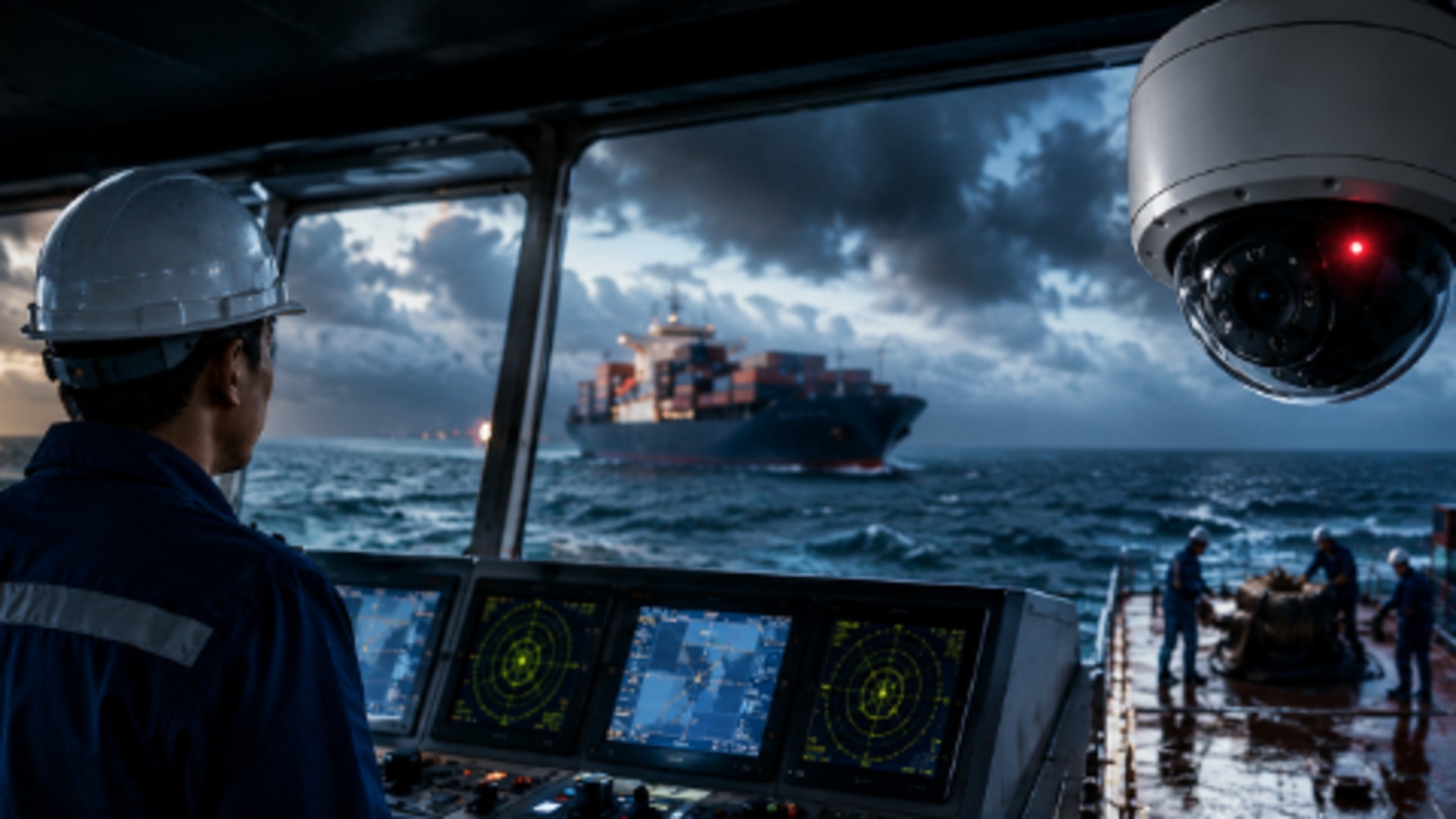

From 1 September 2026, China will begin introducing mandatory intelligent monitoring systems on domestic seagoing ships of 20 metres and above.
Cameras will cover key working areas including the bridge, engine control room, machinery spaces and deck operation zones. Supported by artificial intelligence, the systems will be able to identify potential safety violations such as watchkeeping absence, fatigue, mobile phone use, smoking, failure to wear personal protective equipment and other irregular conduct.
The announcement has triggered heated debate among Chinese domestic seafarers.
Some officers believe the technology could improve safety, create objective evidence and protect crews from unfair blame. Many ratings and junior officers, however, fear that the systems could evolve into permanent remote surveillance, increase administrative pressure and encourage highly formalised “camera-facing work”.
Both sides are drawing on real experience at sea, making the controversy difficult to dismiss as simple resistance to new technology.
It should also be clarified that the requirement does not mean every Chinese domestic vessel must install AI cameras immediately on 1 September 2026.
The new requirements apply to domestic seagoing ships of 20 metres and above, but implementation will be phased according to vessel type, operating area and risk profile. Newly built vessels will generally be required to comply from the effective date, while existing ships will be given different deadlines, with some categories allowed until the end of 2028.
What Can the System Actually Monitor?
The intelligent monitoring system goes well beyond conventional CCTV.
Using computer vision, onboard terminals will analyse video feeds, identify people and activities, track movements and generate warnings when potentially unsafe behaviour is detected. The system is expected to operate independently onboard even when stable communications with shore are unavailable.
On the bridge, it may identify prolonged eye closure, repeated yawning, absence from the watchkeeping position, lack of a qualified officer on duty, mobile phone use and smoking.
In engine-room and deck areas, it may detect failure to wear a safety helmet or lifejacket, smoking, visible fire or smoke, unattended cargo operations, opened hatch covers during navigation and failures to carry out required machinery-space patrols.
Tankers, gas carriers and chemical carriers are expected to have monitoring coverage over cargo deck areas, while machinery-space coverage may include the main engine, engine control room and control consoles.
Warnings can be escalated through several levels.
Initial alerts may be broadcast onboard. Repeated warnings can be sent to the master, and persistent or high-risk events may be transmitted directly to shore-based managers. Video and warning records will also be retained for later review, investigation and accountability.
For many seafarers, this means that activities previously documented only through logbooks, written statements and verbal accounts will increasingly become time-stamped and visually traceable.
Supporters See Safety, Evidence and Protection
Support for the systems is particularly common among experienced masters, chief engineers and senior officers serving on tankers, gas carriers, passenger ships and other higher-risk vessels.
For them, one of the strongest arguments is evidentiary protection.
When machinery is damaged, cargo is mishandled, an injury occurs or a port inspection identifies a deficiency, the facts are often reconstructed through statements from the crew, logbook entries and shore-side reports.
Without video evidence, responsibility may be difficult to establish. Junior personnel can also find themselves in a weak position when their account conflicts with that of a senior officer or shore-based manager.
A complete recording can show whether procedures were followed, who was present and what actions were taken. It may confirm misconduct, but it can also demonstrate that a seafarer performed their duties correctly.
In that sense, monitoring can provide a form of protection rather than simply surveillance.
AI warnings may also compensate for the natural limits of human concentration.
Long night watches, repeated port calls, narrow channels and demanding manoeuvring operations can reduce alertness. A watchkeeper may not immediately recognise that fatigue is affecting their performance. An automated voice warning could provide an additional layer of defence before a lapse develops into a collision, grounding or contact incident.
The systems may also strengthen emergency response.
During a machinery failure, fire, man-overboard incident or other serious casualty, shore-based technical and emergency teams could review live images instead of relying entirely on telephone descriptions. This could help them assess the situation more quickly and provide more relevant support to the vessel.
Supporters also argue that consistent monitoring could discourage a small number of crew members from neglecting patrols, ignoring protective equipment requirements or performing checks only superficially.
A common monitoring standard could reduce the burden placed on diligent crew members who are often required to compensate for colleagues who fail to carry out their responsibilities properly.
Opponents Fear “Camera-Facing Work”
Many ordinary seafarers are not opposed to monitoring in principle.
Their concern is how shipping companies may use the technology once it is installed.
One of the most frequently raised risks is the emergence of “camera-facing work”.
Engine-room patrols, deck inspections, tank soundings, fire-equipment checks and machinery maintenance require seafarers to move through areas that may not be visible to fixed cameras. An AI system may recognise that nobody is standing in front of a control console, but it may not understand that the watchkeeper is carrying out a legitimate inspection elsewhere.
If shore personnel interpret absence from the camera frame as absence from duty, crews may gradually adjust their behaviour to satisfy the system rather than perform the work that safety actually requires.
Seafarers may remain in monitored areas to avoid repeated alerts, leaving remote spaces and equipment less thoroughly inspected. The presence of a person on camera could then become a substitute for meaningful operational supervision.
That would undermine the original purpose of the technology.
False alarms are another major concern.
Ship movement, vibration, poor lighting, steam, equipment obstruction and unusual working postures can affect image recognition. A seafarer bending over an instrument, turning away from a camera or briefly closing their eyes may be incorrectly classified as fatigued or disengaged.
If each warning requires photographs, written explanations or video confirmation, watchkeepers may spend a growing share of their duty period responding to the system.
This creates a new safety problem: officers and engineers may be distracted from navigation, machinery operation and equipment inspection by the administrative burden of explaining false alerts.
Repeated low-quality warnings can also generate alarm fatigue. Once personnel become accustomed to frequent false alarms, they may react more slowly when the system identifies a genuine high-risk event.
Surveillance Boundaries Will Be Critical
Privacy is another central issue.
The regulatory and technical requirements focus on operational areas such as the bridge, machinery spaces, engine control rooms, cargo decks, vehicle spaces and passenger public areas.
They do not justify unrestricted monitoring of private living areas.
Crew cabins, toilets, changing areas and other clearly private spaces should remain outside the scope of surveillance. The installation of cameras in corridors, mess rooms or recreation areas should also be subject to strict necessity and proportionality tests.
Shipping companies will need to define who may access live images, who may download recordings, how long data will be stored and whether footage may be used for performance assessment or disciplinary action.
The systems could capture faces, voices, working patterns and vessel movements. Protecting this information will require more than cybersecurity measures against external attackers.
Internal misuse is equally important.
Unauthorised viewing, circulation of crew footage in company messaging groups, downloading of accident videos or using isolated clips without operational context could all damage trust onboard and infringe seafarers’ rights.
Monitoring should therefore be governed by transparent access controls, audit trails, retention periods and appeal mechanisms.
AI Warnings Should Not Become Automatic Punishment
AI-generated alerts should be treated as indications requiring human review, not as automatic proof of misconduct.
A warning that a crew member has left a position does not necessarily establish that the person abandoned their duty. The individual may have been responding to an alarm, checking machinery, assisting another crew member or carrying out a task that the camera could not see.
Operational context remains essential.
Shipping companies should integrate watch schedules, patrol plans, maintenance work and emergency assignments into their management procedures. Crew members should also have the right to review relevant footage, explain the circumstances and challenge an incorrect conclusion.
Recordings should be used to recognise proper conduct as well as identify violations.
If a crew successfully handles an emergency, maintains a proper lookout during severe weather or completes difficult work under hazardous conditions, the same footage should be capable of supporting commendation, professional recognition and protection from unjustified liability.
A system used only for punishment will quickly lose the confidence of the people it is intended to protect.
New Technology Must Not Increase Fatigue
The equipment itself will also create additional work.
Cameras will require cleaning and inspection. Terminals will need functional testing. Warning records may need to be reviewed, confirmed and documented. Data transmission and storage systems will also require routine attention.
On many domestic vessels, manning levels are already close to the statutory minimum.
If all monitoring-related maintenance and administrative duties are simply added to the existing workload, crew rest could be reduced further. A system introduced to identify fatigue could then indirectly contribute to it.
Shipowners and managers will need to allocate responsibility carefully, simplify reporting procedures and ensure that false-alert handling does not become another excessive paperwork exercise for watchkeepers.
AI can observe a seafarer’s movements, but it cannot always understand the weather, machinery condition, operational urgency or professional reasoning behind those movements.
The technology can provide warnings and records. It cannot replace competent officers, experienced engineers or sound shipboard judgement.
China’s domestic fleet is entering a new phase of digital safety supervision.
The intelligent monitoring system could become a valuable tool for accident prevention, emergency response and factual investigation. Used poorly, it could create constant pressure, procedural formalism and distrust between ship and shore.
Its success will depend on the accuracy of the algorithms, the competence of shore-based managers, clearly defined surveillance boundaries and continued respect for the professional judgement of seafarers.
Technology should make ships safer. It should also preserve the dignity, trust and reasonable working space of the people who operate them.


READ MORE
 Technology
Connecting maritime digitalisation to process
 Technology
Shiptec China 2026.10.28-10.30 | The Enterprises of International Pavilion
 Technology
Shipowners are finding a new business beyond ships
 Technology
Global technology CEOs join ADIPEC 2026 as AI reshapes energy demand and operations
 Technology
Maritime is using AI every day. Now comes the harder part: trusting it to act.
 Technology
Shiptec China 2026.10.28-10.30 | Russian Delegation to Make a Grand Appearance at the 17th International Shipbuilding,Marine Equipment and Offshore Engineering Exhibition For China
 Technology
AI Is Moving Into Shipping’s Core Business. What Will Set Companies Apart?
 Technology
Shiptec China 2026.10.28-10.30 | German Pavilion | High-Precision Threading Tools & Clamping Systems: NORIS Debuts at Dalian Maritime Exhibition
 Technology
Shiptec China 2026.10.28-10.30 | German Pavilion | Mayr Safety Brakes: Robust, Powerful and Seawater-Corrosion Resistant – Safe and Durable Product Solutions for Harsh Environments
 Technology