


This type of ship has been ranked the worst-performing category in port State control inspections for six consecutive years
Safety and regulatory issues concerning the global livestock carrier fleet are once again being thrust into the spotlight by a new report.
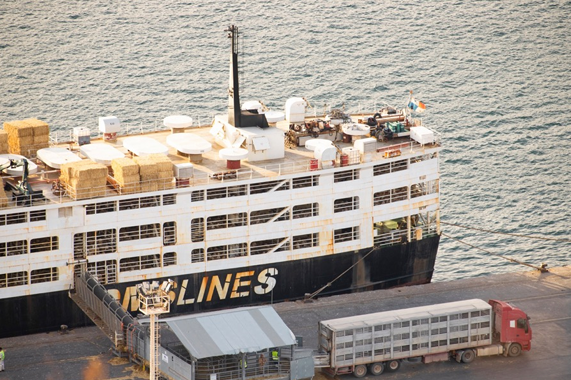

A 410‑page report jointly published by Robin des Bois, the Animal Welfare Foundation and Tierschutzbund Zürich states that the global livestock carrier fleet is operating in a state of chronic regulatory failure. A large number of old, converted, and poorly maintained vessels are still engaged in the maritime transport of live animals, and this ship category has ranked at the bottom of port State control inspections for at least six consecutive years.
The report, titled Global Livestock Fleet Report, is the third in a series. Unlike previous editions that focused primarily on EU‑approved livestock carriers, this report expands its scope to the entire global fleet. It documents 159 livestock carriers operating worldwide and points out that the sector’s current vessel condition, flag structure, classification society oversight, and casualty record should alarm maritime regulators far more than they currently do.
Of the 159 vessels, 84% are conversions from old cargo ships
The report shows that, of the 159 confirmed livestock carriers, 134 are converted vessels, accounting for 84%. Most of these ships were not originally designed for live animal transport but were converted from other commercial purposes, such as general cargo vessels.
This is key to understanding the risk profile of livestock carriers.
According to the report, the average age of these converted livestock carriers has reached 45 years. They were typically converted for livestock transport at around 28 years of age. In other words, a considerable proportion of these ships entered this highly demanding special trade—with stringent requirements for ventilation, water supply, waste disposal, stability, fire protection, and emergency management—only after their original commercial lifespan had entered its later stages.
Port State control records also raise serious concerns about the performance of converted vessels. The report notes that, over their operational lives, converted livestock carriers have accumulated an average of 242 recorded deficiencies and have been detained on average four times. For any commercial ship category, such levels of deficiencies and detentions can hardly be considered a normal operating condition.
Official Paris MoU data: detention rate reached 15.1% in 2024
The 2024 annual report of the Paris Memorandum of Understanding on Port State Control (Paris MoU) further confirms this risk.
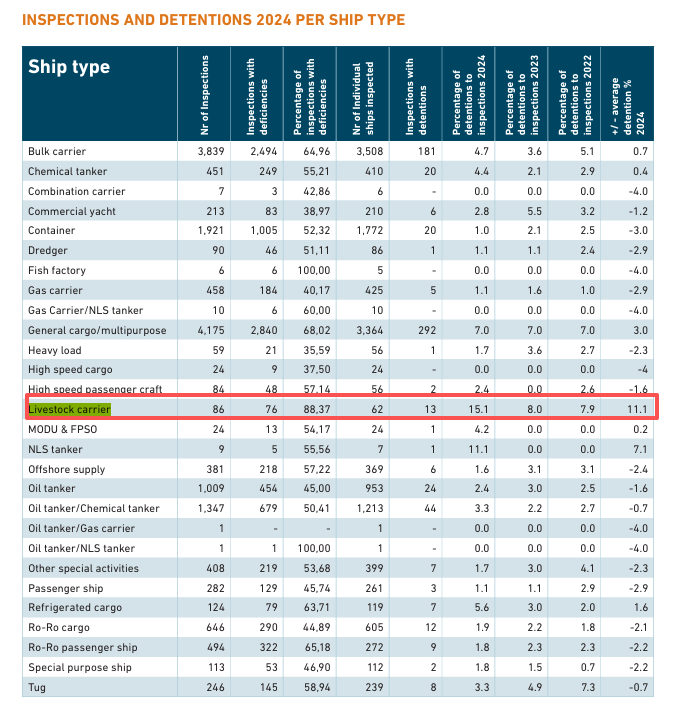
[Source: Paris MoU Annual Report 2024]
The official Paris MoU annual report shows that in 2024, livestock carriers underwent 86 port State control inspections in the Paris MoU region. Of these, 76 inspections resulted in deficiencies, giving a deficiency rate of 88.37%; and 13 inspections led to detention, yielding a detention rate of 15.1%.
By comparison, the overall detention rate for all inspected vessels under the Paris MoU in 2024 was 4.03%. This means that the 15.1% detention rate for livestock carriers is nearly four times the overall average.
More notably, this is not a one‑year anomaly. According to Paris MoU annual reports and related statistics, livestock carriers have ranked among the worst‑performing ship types by detention rate for at least six consecutive years. The online tables in the Paris MoU 2024 annual report list detention rates for livestock carriers in 2022, 2023 and 2024 as 7.9%, 8.0% and 15.1% respectively – all higher than those of most major commercial ship types.
This indicates that livestock carriers do not suffer from occasional problems; rather, they display persistent high‑risk characteristics under the port State control regime. For ship safety, crew lives, animal welfare and coastal state environmental risks, this outcome should not be underestimated.
High proportion of black‑listed flags and non‑IACS classification societies
The report also highlights that the fleet’s regulatory structure further amplifies the risks.
Among the 159 livestock carriers, more than half fly flags that are on the Paris MoU black list. Of the converted livestock carriers, 54.6% are on the black‑list flag category, compared to only 8% for purpose‑built livestock carriers.
A similar disparity exists in classification society oversight. The report states that only 22.3% of converted livestock carriers are supervised by a member of the International Association of Classification Societies (IACS), whereas the proportion for purpose‑built carriers is 72%.
This contrast is critical. The differences between purpose‑built and converted livestock carriers are not just about age, design and technical standards; there are also significant gaps in regulatory quality, classification oversight and compliance transparency. For vessels whose primary business is live animal transport, it is hardly surprising that long‑term operation under weaker flags and weaker class societies results in high deficiency and detention rates exposed by port State control.
The conversion trend is not slowing down, but accelerating
Under normal logic, when a ship category consistently ranks at the bottom of port State control performance, the market and regulators should drive its gradual phase‑out or upgrade. However, the report shows that the conversion of livestock carriers has not slowed; on the contrary, it appears to be accelerating.
Between January 2024 and March 2026, a total of ten older vessels were converted into livestock carriers. In comparison, only three vessels underwent similar conversions in 2022 and 2023 combined.
This means that, even though regulatory risks are fully exposed, older cargo ships are still being pushed into the livestock transport market. Behind this lies a relatively low‑profile but profit‑driven niche shipping sector: as long as demand for cross‑border live animal transport persists, as long as regulatory thresholds remain low in some regions, and as long as the cost of converting old ships is lower than building new purpose‑built carriers, some shipowners will continue to enter this market with ageing vessels.
For the maritime industry as a whole, however, this model is accumulating a safety bill.
At least 10 major shipwrecks, with 88 crew members and 193,000 head of livestock dead
The risks of livestock carriers are not confined to inspection deficiencies.
The report counts at least ten shipwrecks in the history of seaborne livestock transport since 1975, resulting in the deaths of 88 crew members and at least 193,000 animals.
Among them, the sinking of the Gulf Livestock 1 off the coast of Japan in 2020 is one of the most serious incidents in recent years. The vessel, carrying 43 crew members and 5,867 cattle, capsized and sank in the East China Sea under the influence of Typhoon Maysak. Only two crew members survived; 41 were killed or went missing.
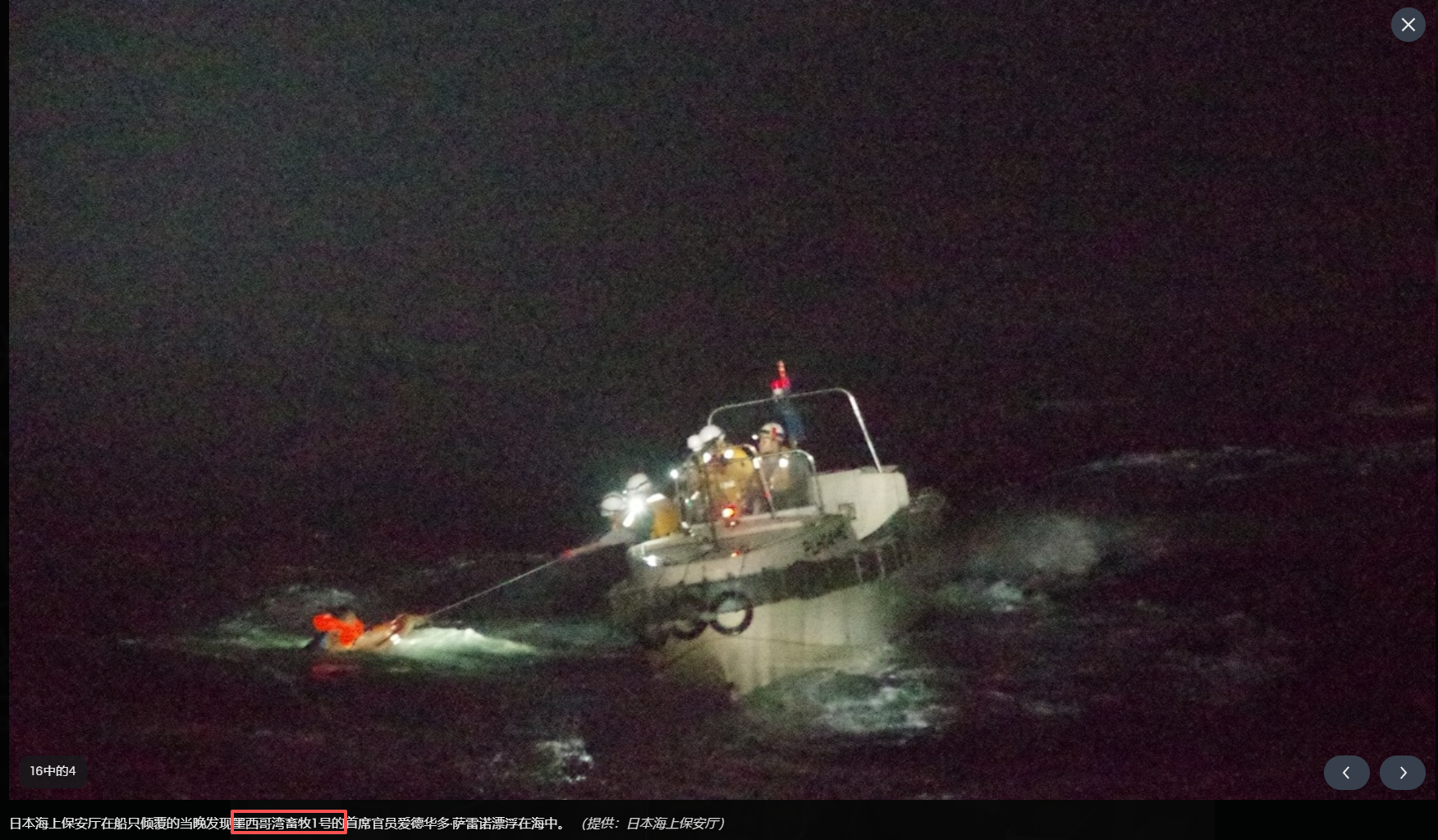
The consequences of such accidents are often multi‑faceted. Crew safety is the primary concern; the mass mortality of live animals raises serious animal welfare controversies; and the sinking itself, along with fuel oil spills, floating debris, and decomposing carcasses, can pose additional risks to the marine environment and coastal areas. Unlike ordinary cargo transport, once a livestock carrier suffers fire, flooding, mechanical failure or uncontrolled drifting, the presence of thousands or tens of thousands of live animals on board makes rescue, abandonment, pollution clean‑up and aftermath operations much more complex.
What this report reveals is not merely an animal welfare issue, but a typical maritime safety and regulatory governance problem.
Livestock carriers have long remained outside the mainstream shipping market’s field of vision. Compared with large commercial ship types such as container ships, tankers, LNG carriers and bulk carriers, livestock carriers are smaller in size, limited in number, narrower in market, and attract less industry attention. Yet it is precisely under this low‑profile radar that a combination of old‑ship conversions, low‑standard flags, non‑mainstream classification oversight, and high deficiency rates has formed a long‑standing but underestimated risk segment.
From the port State control data, this ship type is no longer merely "in need of attention" – it must be taken seriously. Having ranked at the bottom for many consecutive years means that the existing regulatory system has been clearly insufficient in restraining this market. In particular, for livestock carriers converted from old general cargo ships, relying solely on routine inspections and detention penalties may no longer be effective in fundamentally changing the industry structure.
Going forward, regulatory pressure on livestock carriers is likely to increase further. Stricter age limits, higher conversion review standards, greater transparency requirements for flags and classification societies, more frequent port State control inspections, and dedicated safety rules for live animal transport are all options that regulators may have to consider.
For the shipping industry, the signal from this report is clear: while green transition, smart shipping and high‑end ship types are becoming the industry’s main themes, some older, marginalised ship types may equally become the weakest link in the maritime safety system.
And livestock carriers are among the most worrisome of these.
By Liu Hongli


READ MORE
 Safety
25 Crew Abandon MSC Container Ship in the South China Sea — All Rescued, Vessel Still Adrift
 Safety
MSC Hermes III Adrift Unmanned in South China Sea After 25 Crew Abandon Ship
 Safety
Dangerous Goods Container Fire Reported at NPCT1 Terminal in Jakarta
 Safety
1 seafarer killed, Fatal attack in the Strait of Hormuz: Capesize bulker CAPE DAO hit by unknown projectile
 Safety
Suspected Cyber Incident Diverts LNG Carrier After Cargo-Control Failure
 Safety
Xinde Marine Forum London 2026: Shipping Moves from Lean Logistics to Resilience by Design
 Safety
Almost the Entire Black Sea Is Now a War-Risk Listed Area
 Safety
Saudi pipeline attack exposes limits of Hormuz bypass strategy
 Safety
Engine Room Fire Epidemic Prompts Global Safety Alert After Qingdao Shipyard Tragedy
 Safety