


8,500 TEU EVER LOVELY Hit Off Oman as IMO Pauses Hormuz Seafarer Evacuation Operation

Xinde Marine News — The IMO-supported evacuation operation for ships and seafarers stranded in the Persian Gulf has been temporarily paused after a merchant vessel was attacked in the Gulf of Oman.
The latest incident has added fresh uncertainty to the fragile reopening of the Strait of Hormuz, just as vessel traffic had begun to recover from weeks of disruption.
According to IMO, following an attack on a vessel in the Gulf of Oman, the Organization has decided to temporarily pause its evacuation operation pending further clarity. The move is intended to reconfirm whether the necessary safety guarantees remain in place for vessels on the evacuation list and for ships operating in the region.
UK Maritime Trade Operations also issued Advisory 075-26, confirming that the IMO-supported vessel movement process, previously communicated through UKMTO advisories, is currently paused until further notice. UKMTO said it will not conduct notifications to vessels regarding inclusion in IMO planning batches during this period.
This means the practical execution chain of the IMO-supported movement process has now been suspended.
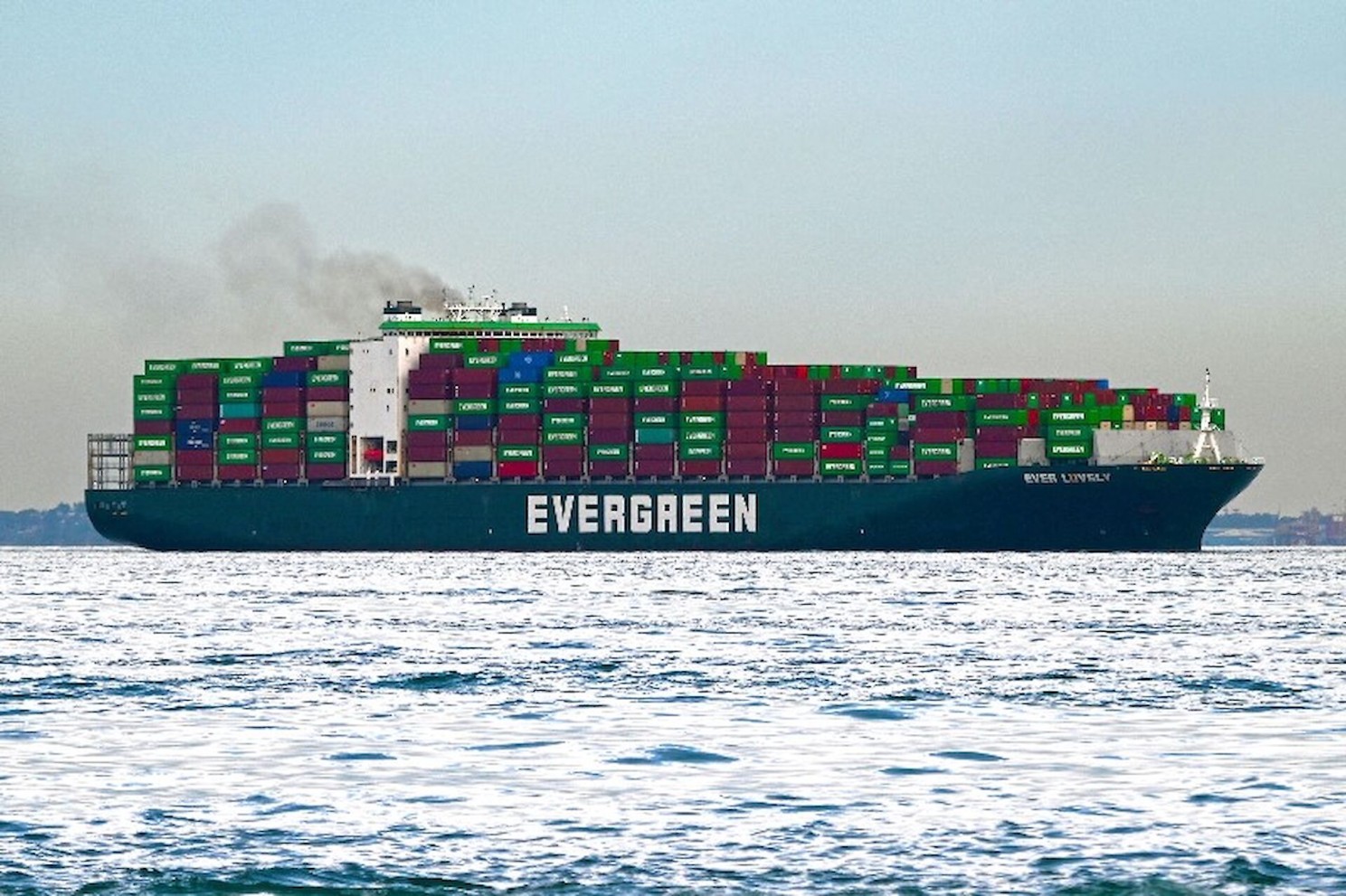
Singapore-flagged EVER LOVELY hit off Oman
According to security information provided to Xinde Marine News by Vanguard Tech , the Singapore-flagged containership EVER LOVELY was struck on the starboard side by an unknown projectile at around 14:10 UTC on 25 June.
The attack occurred approximately 7.5 nautical miles southeast of Dahit, Oman.
Vanguard Tech said the vessel’s Master reported that the impact caused damage to the bridge. No casualties and no environmental impact were reported.
Public vessel data shows that EVER LOVELY is a Singapore-flagged containership with IMO number 9629110 and a nominal capacity of 8,508 TEU. The vessel is one of Evergreen’s L-class containerships.
IMO has not officially identified the vessel involved in the attack. In its statement, IMO said only that it had been informed of an attack in the Gulf of Oman on a vessel which had passed through the Strait of Hormuz. IMO also clarified that the vessel did not transit under IMO’s evacuation framework.

The vessel was not part of the IMO evacuation batches. But it had transited the Strait of Hormuz and was later hit in the Gulf of Oman. This shows that the security risk is not limited to the Strait itself. It also extends to the surrounding waters used by vessels entering or leaving the Gulf.
IMO: safety of seafarers remains paramount
IMO Secretary-General Arsenio Dominguez said that several vessels had already been successfully evacuated under the IMO plan before the pause was announced.
However, following the latest attack, he decided to temporarily pause the implementation of the plan in order to reconfirm that the necessary safety guarantees continue to be in place.
Dominguez said the safety of seafarers remains paramount. He added that, to ensure a coordinated approach and navigational safety, the evacuation plan will be paused until further clarity is obtained.
The timing of the attack is particularly significant. It occurred on the Day of the Seafarer.
Dominguez noted that the day underlined the importance of ensuring that the continued evacuation of thousands of seafarers stranded in the Persian Gulf can proceed without the risk of them becoming collateral victims in the geopolitical conflict.
This statement makes clear that IMO has not cancelled the evacuation operation. Instead, it has chosen to stop and reassess the safety basis on which the operation depends.
For shipping, this is more than an operational delay. It is a renewed risk assessment of the entire framework for restoring safe movement through the Strait of Hormuz.
UKMTO stops IMO batch notifications
UKMTO’s Advisory 075-26 states that the IMO-supported vessel movement process is paused until further notice.

As a result, UKMTO will not be conducting notifications to vessels regarding inclusion in IMO planning batches during this period.
UKMTO advised vessel operators, Masters and shipping companies to continue monitoring official IMO communications, relevant coastal state guidance and applicable Notices to Mariners. It also urged companies to support ongoing voyage planning and risk assessment.
Operators were encouraged to continue reporting to UKMTO under Voluntary Reporting Area procedures, maintain awareness of relevant maritime security and safety advisories, conduct appropriate risk assessments before undertaking vessel movements, and refer to the latest JMIC guidance and other recognised industry sources.
In practical terms, the IMO-supported movement mechanism has stopped operating for now.
Before the pause, vessels could be moved through the process by planning batches and coordinated routes. That arrangement has now been interrupted. Shipowners and operators must reassess whether and how to continue transits.
BIMCO: a setback for evacuation and resumption of transits
BIMCO has also expressed concern over the incident.
In comments provided to the media, Jakob Larsen, BIMCO’s Chief Safety & Security Officer, said BIMCO is deeply concerned by the recent attack on a merchant ship transiting the Strait of Hormuz using the inshore traffic zone off Oman.
Larsen said the attack is a setback in the plans to evacuate ships and resume transits through the Strait of Hormuz, although some transits can still be expected to take place.
This is a measured assessment.
The Strait of Hormuz has not been closed again. Some vessels may still transit after carrying out their own risk assessments. But the attack has clearly weakened market confidence in the safety arrangements supporting the gradual resumption of traffic.
BIMCO also highlighted a deeper problem. Larsen said the situation underscores the importance of clear and unambiguous agreements between the US and Iran regarding the resumption of maritime traffic through the Strait. In BIMCO’s view, the wording of the US-Iran memorandum of understanding is currently not sufficiently clear.
This point goes to the heart of the matter.
Over the past few days, the market has focused on whether the Strait of Hormuz is “open” again. But for shipowners, seafarers, insurers, charterers and cargo interests, the real issue is not whether political statements describe the Strait as open. The real issue is whether safety guarantees are clear, executable and credible.
If the wording of the agreement is ambiguous, and if coastal states, military forces, ports, shipping companies and insurers do not share the same understanding of how the arrangement works, vessels may still face serious risks even when formal transit channels are available.
Safety guarantees are now the key issue
The latest incident exposes the central contradiction in the attempted reopening of the Strait of Hormuz.
On one hand, stranded vessels and seafarers need to leave the Gulf. Energy shipments, container services, dry bulk movements and general cargo flows also need to resume. The Gulf cannot remain in a prolonged state of low traffic, high risk and vessel congestion.
On the other hand, shipowners cannot treat “open” as meaning “safe” while the risk of attack remains.
For shipowners, transiting the Strait of Hormuz is not a normal voyage decision. It now involves security risk, insurance exposure, charterparty terms, crew consent, sanctions considerations, cargo commitments and emergency response capability.
For seafarers, the problem is even more direct.
If ships remain inside the Gulf, crew members face prolonged uncertainty, supply pressure, mental stress and possible crew-change complications. If ships attempt to leave, they may face direct navigational and security risks. The IMO evacuation plan was designed to reduce this dilemma. The latest attack has forced that process to stop.
On the Day of the Seafarer, this incident has turned the industry’s familiar message of protecting seafarers into a very practical and urgent question.
Shipowners urged to reassess Hormuz risk
BIMCO has encouraged shipowners to take the latest developments into consideration when assessing risks associated with transiting the Strait.
BIMCO also reminded the industry that BIMCO and other industry associations have developed generally applicable Best Management Practices for Maritime Security and scenario-specific guidelines. Shipowners are strongly encouraged to consider these guidelines.
This means operators cannot rely only on headline announcements that the Strait is open. They also cannot rely only on the fact that some ships have already transited.
Each company must make its own assessment based on ship type, cargo, routing, crew profile, insurance cover, charterparty obligations and security readiness.
This is especially important for tankers, LNG carriers, LPG carriers and large containerships.
The Strait of Hormuz is not only one of the world’s most important energy chokepoints. It is also a zone where war risk, maritime security, sanctions exposure, crew safety and charterparty disputes can quickly overlap.
If one vessel is hit, the impact may extend far beyond the vessel itself. It can move rapidly into the insurance market, the chartering market and the wider energy supply chain.
Shipping recovery enters a new period of caution
Over the past few days, vessel traffic through the Strait of Hormuz had shown signs of recovery.
Some stranded ships had begun leaving the Persian Gulf. Some commercial vessels were also testing the route again. The market had started to describe the situation as moving from severe disruption to controlled recovery.
The attack on EVER LOVELY and the IMO decision to pause the evacuation operation have added a new layer of uncertainty.
In the short term, the impact is likely to be felt in three areas.
First, the recovery in vessel movements may slow. Outbound vessels may still try to leave, but more owners will hesitate before sending ships into the Gulf.
Second, war risk premiums are unlikely to fall quickly. As long as the risk of attack remains, insurers will not treat the region as normal.
Third, energy transport chains will remain under pressure. The Strait of Hormuz is a key route for crude oil, LNG and LPG. If vessel movements cannot stabilise, cargo flows, ship scheduling, chartering activity and freight rates will remain exposed to volatility.
The bigger issue is that a sustainable reopening of the Strait requires more than individual safe passages. It requires a clear, widely accepted and durable security arrangement.
Hormuz is not back to normal
IMO’s pause does not mean the evacuation plan has failed. But it does show how fragile the security environment remains around the Strait of Hormuz and the Gulf of Oman.
A vessel outside the IMO evacuation framework has been hit. That alone was enough to pause the IMO-supported movement process.
The question is no longer simply whether the Strait of Hormuz has been declared open.
The real question is whether shipowners, seafarers, insurers and cargo interests believe it is safe enough to use.
If the US-Iran arrangement remains ambiguous, if enforcement mechanisms are unclear, and if vessels can still be attacked after passing through the Strait, Hormuz remains only partially and conditionally open.
Vessel traffic may recover for a few days.
Confidence will take longer to rebuild.
For the thousands of seafarers still caught in the region, what matters most is not a political statement or a market forecast. They need a clear, safe and executable way out.
Ships can wait. Cargo can be delayed. Seafarers must not become the cost of this geopolitical conflict.

READ MORE
 Safety
25 Crew Abandon MSC Container Ship in the South China Sea — All Rescued, Vessel Still Adrift
 Safety
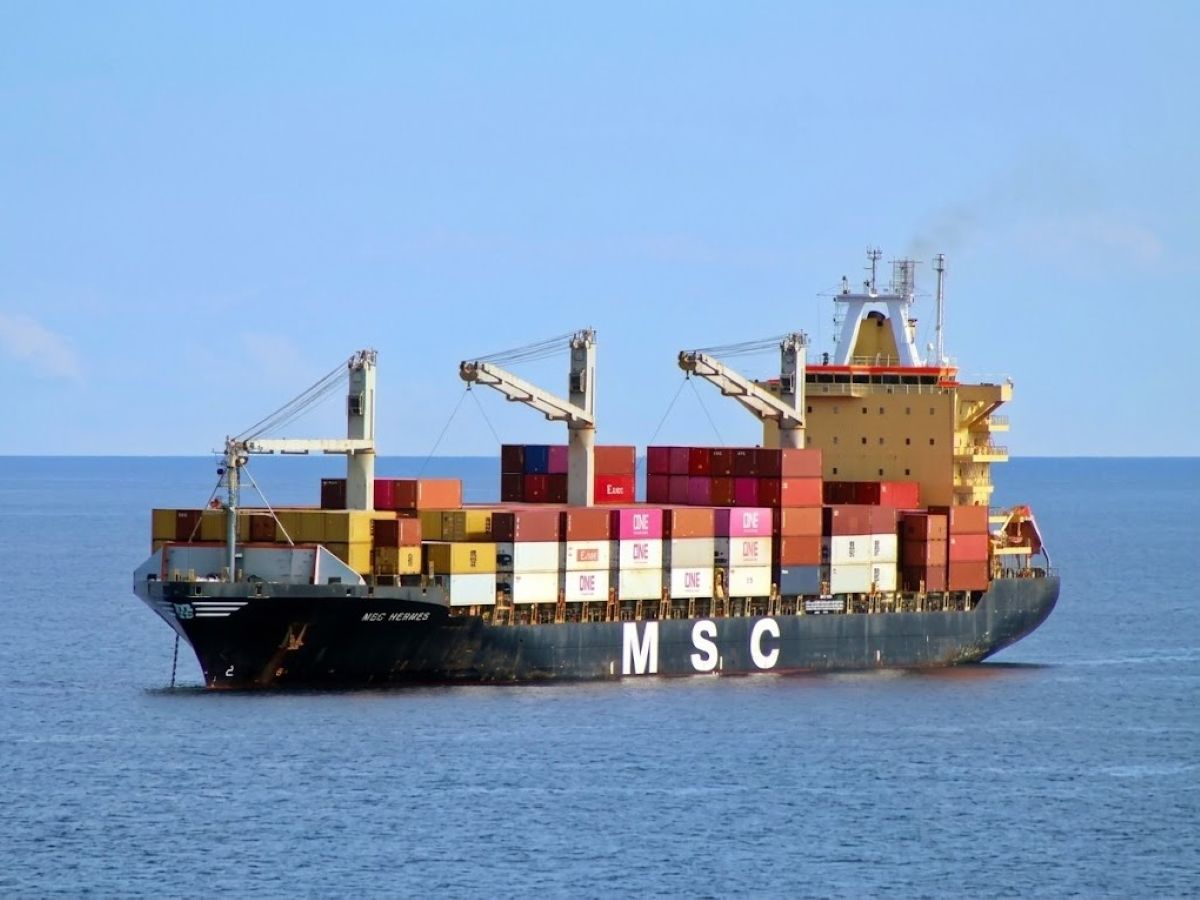
MSC Hermes III Adrift Unmanned in South China Sea After 25 Crew Abandon Ship
 Safety
Dangerous Goods Container Fire Reported at NPCT1 Terminal in Jakarta
 Safety
1 seafarer killed, Fatal attack in the Strait of Hormuz: Capesize bulker CAPE DAO hit by unknown projectile
 Safety
Suspected Cyber Incident Diverts LNG Carrier After Cargo-Control Failure
 Safety
Xinde Marine Forum London 2026: Shipping Moves from Lean Logistics to Resilience by Design
 Safety
Almost the Entire Black Sea Is Now a War-Risk Listed Area
 Safety
Saudi pipeline attack exposes limits of Hormuz bypass strategy
 Safety
Engine Room Fire Epidemic Prompts Global Safety Alert After Qingdao Shipyard Tragedy
 Safety