


Tinbor Marine Wins Work on Six Vessels Less Than a Year After Launch

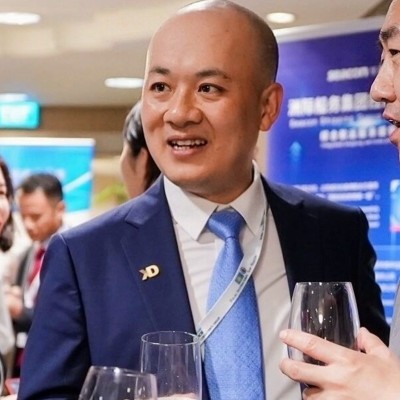
Tinbor Marine, the Shanghai-based ship design business under Hong Kong-listed LC Group Holding, has secured orders covering six vessels since its establishment in February 2026. With a 65.3-metre offshore support vessel under construction at Jianglong Shipbuilding and advisory work for LC Energy's Tianjin shipyard project, the company is building a business around the engineering links between international owners and Chinese yards.

LC Holding disclosed on November 26 that individual orders range from RMB1 million to RMB80 million, approximately US$149,000 to US$11.9 million. Design deliverables are progressively being handed over. The six-vessel backlog gives an early indication of how Tinbor is converting its team's offshore experience and industry relationships into engineering contracts.
Its development also extends LC Holding's involvement in the maritime supply chain. The group's activities have expanded from cross-border logistics into vessel investment and green retrofitting. Through Tinbor, it is adding design expertise that can support both newbuilding projects and the technical demands of upgrading existing ships.
A 65.3-metre vessel brings the engineering into the shipyard
According to LC Holding, the offshore support vessel designed by Tinbor is being built at Jianglong Shipbuilding's Zhongshan facility in southern China. It has a beam of 16.8 metres and a design draught of 4.3 metres, with ABS classification. During the early project stages, Tinbor held several rounds of discussions with the Singaporean owner, incorporating operational requirements into the design and developing the drawings needed for production engineering.
Singapore-based SSG Marine provides further detail on Tinbor's role. In updates on its A65 anchor-handling tug supply vessel project, SSG describes a vessel with 65 tonnes of bollard pull and 410 square metres of deck area. It identifies Tinbor as a design partner working alongside Jianglong's production team and SSG's site management team on three-dimensional model reviews. Those reviews address layout, clashes and interfaces before physical construction proceeds, bringing future operation and maintenance requirements into the production engineering process.

Wilhelmsen Ship Management has also announced its appointment to supervise the construction of two anchor-handling tug vessels for SSG Marine at Jianglong. The assignment is its first newbuilding supervision project at the yard. The project therefore involves an international client, a design company, the shipbuilder's production organisation and a separate supervision provider, each contributing to the vessel's delivery.

Jianglong's listed-company disclosure records another part of the commercial arrangements. On May 28, 2026, its wholly owned international subsidiary signed contracts with Singapore's PHOENIX ONE and PHOENIX TWO for one anchor-handling tug supply vessel each. The two shipbuilding contracts were worth US$27.14 million in total. Jianglong calls the design SSG65 and gives principal dimensions of 65.3 metres in length and 16.8 metres in beam, matching those in LC Holding's description of Tinbor's project.
For Tinbor, the model review illustrates the work behind a design contract. An owner's requirements have to be translated into arrangements that the yard can build and the crew can operate and maintain. Decisions made at this stage affect equipment interfaces, installation work and the scope for changes during construction.
Offshore experience behind a newly established company
Co-founder and chief executive Kirk Du brings experience across shipowning, design and commercial development. He studied naval architecture and ocean engineering at Shanghai Jiao Tong University, worked at Seaspan and Ulstein Design & Solutions, and pursued further study at the Norwegian University of Science and Technology. The programme for Marintec China 2025 lists his previous roles at Ulstein China as design department manager, marketing and sales director, and deputy managing director responsible for project sales in China.

His involvement in Shanghai Electric's service operation vessel programme offers a specific example. In January 2022, ZPMC and Ulstein signed design contracts for two vessel types for Shanghai Electric Windpower Group. Ulstein's account identifies Du in the signing photograph. The vessels, Zhi Cheng 60 and Zhi Zhen 100, were named and delivered in Qidong in August 2024, using the SX197 and SX195 designs respectively. These projects formed part of his Ulstein career and involved cooperation between an international designer, a Chinese shipyard and an offshore wind customer.

Fellow co-founder Gary Weng brings experience in offshore oil and gas support vessels. Du has publicly described Weng joining Tinbor with an engineering team. A June 2025 project announcement by MacGregor identified Weng as general manager and chief technology officer of SINOPACIFIC Engineering & Contracting, or SPEC. At the time, SPEC was developing its SPA90 series of 90-tonne bollard-pull anchor-handling tug supply vessels, featuring diesel-electric propulsion with an optional battery-hybrid configuration. MacGregor was supplying the anchor-handling and towing winch package.

LC Holding says Tinbor's team has 15–20 years of experience in offshore support vessel design and project management. Its stated capabilities extend from concept to production design, covering platform supply vessels, anchor-handling tug supply vessels, commissioning service operation vessels, floating production and LNG facilities, and gas carriers. That experience gives the young company a basis for taking on work involving specialist equipment, operational requirements and multiple technical partners.
LC Holding extends its interests into design and retrofits
Tinbor's position becomes clearer when viewed alongside LC Holding's vessel investments and engineering ambitions. In March 2024, Xinde Marine News reported the start of construction at Jiangnan Shipyard on the first vessel in a 14,000-TEU containership series for BAL, the group's shipping business. Such investments bring a logistics group directly into decisions about ship specifications, construction schedules, delivery and asset operation.

The next stage was covered by Xinde Marine News in June 2026, when LC Energy signed a strategic cooperation agreement with Tianjin Port Free Trade Zone and Tianjin Port Group. The plans included a green and intelligent ship retrofit headquarters project and a proposed RMB2 billion investment, approximately US$298 million, in an industrial base for green propulsion research, retrofit services and equipment integration. Tianjin's municipal government also described plans for a company combining commercial operations, design, research and procurement.
LC Energy's announced cooperation with MSC gives that engineering strategy a customer context. In December 2025, LC Holding said LC Energy had signed an agreement covering dual-fuel conversions of large containerships. The proposed services encompassed design, procurement, construction and commissioning, including main-engine conversion, cryogenic fuel tank manufacture and installation, fuel gas supply system integration, and generator and boiler upgrades. Under the timetable disclosed then, the first ten ships were expected to enter yards progressively from mid-2027.
Tinbor has established a business connection with LC Energy's Tianjin plans. Du has disclosed an executive consultancy agreement under which Tinbor provides technical support, operational guidance and project advice for the shipyard development. This adds a different engineering assignment to its offshore vessel design work and gives the team a role in the group's wider retrofit activities.
The retrofit opportunity depends on vessel economics
The market Tinbor is entering includes a substantial fleet requiring decisions about continued operation, upgrading and replacement. Allianz Commercial's Safety and Shipping Review 2026 reports that the average age of the global shipping fleet reached 23 years in 2025. Vessels aged 20 years or more accounted for almost a quarter of the global containership fleet. Owners assessing those vessels have to weigh remaining service life, trading patterns, fuel availability and conversion expenditure.
The inclusion of shipping in the EU Emissions Trading System, alongside FuelEU Maritime's greenhouse-gas intensity requirements applying from 2025, has also brought emissions performance further into operating costs and investment decisions. For vessels with a viable conversion case, owners need to understand the expected fuel and emissions savings, time out of service, installation requirements and returns over the remaining operating life.
The scope described in LC Energy's containership programme shows why that assessment requires engineering work. Fuel tanks and supply systems have to be integrated with propulsion and auxiliary machinery within an existing ship. Equipment choices affect space, weight and installation sequences. Resolving those constraints early can reduce changes and rework once the vessel enters the yard, with consequences for both construction efficiency and the owner's off-hire costs.
New offshore vessels require similar coordination. Tinbor's participation in the Jianglong model reviews brings the owner's operating and maintenance expectations into the same process as production planning. Owners will ultimately judge that work through the yard's ability to execute the design and the vessel's performance in its intended service.
Turning the first backlog into a delivery record
Tinbor's six-vessel backlog is progressively reaching the design handover stage. LC Holding has disclosed the range of individual order values, while the detailed scope of each contract remains to be published. As projects advance through drawing delivery, construction, equipment integration and operation, they will establish a performance record that prospective customers can assess.
The company is also developing its recruitment connections. Tinbor management visited Shanghai Maritime University in October to discuss ship design, green vessel technology and demand for specialist graduates. A university delegation visited the company on November 6, meeting its general manager and technical director to discuss internships, employment, lectures by industry professionals and joint supervision of final-year projects. For a company managing several vessel assignments, the depth and continuity of its engineering team will influence how much work it can deliver.
The immediate tests lie in the projects already under way. Drawings must arrive in time for production, equipment interfaces must work through installation, and completed vessels must meet the owner's operational requirements. The response of those first customers, and whether they return with further assignments, will show how successfully Tinbor converts its initial backlog into a continuing business.

READ MORE
 Shipbuilding
Fujian Guohang Takes Delivery of First Methanol Dual-Fuel Bulker in 10-Ship Wuhu Programme
 Shipbuilding
COSCO to Build Another Major Shipyard in Tianjin for US$1.22 Billion
 Shipbuilding
Really!!??Shipping's Upcycle Could Last Another Decade
 Shipbuilding
Beyond the 2008 Peak: Is the Global Shipbuilding Boom Built to Last?
 Shipbuilding
A Frenchman's View of Chinese Shipbuilding: GTT's Adnan Ezzarhouni on a Decade in China
 Shipbuilding
40 VLCCs! COSCO SHIPPING Energy Unveils Mega Newbuilding Programme
 Shipbuilding
Global Shipping Briefing: COSCO Orders 16 VLCCs, Hapag-Lloyd Raises Earnings Outlook
 Shipbuilding
Chemnav Linked to Another Suezmax Pair at Jinglu
 Shipbuilding
Inside Waigaoqiao Shipbuilding: How China Is Building Its Cruise Ship Capabilities
 Shipbuilding