


More Than 500 Ships: Trafigura's Olivi Says Middle East Oil Companies Are Building "Strategic Freight Reserves"

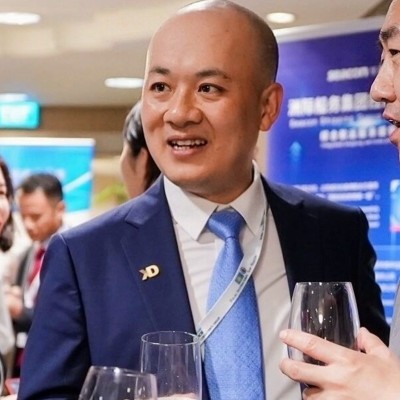
Some Middle Eastern national oil companies are building what Andrea Olivi, Trafigura's Global Head of Shipping and Chairman of Volare Shipping, describes as "strategic freight reserves". Speaking with Xinde Marine News during the Global Maritime Forum Annual Summit in Shanghai in October 2026, Olivi said the growing strategic importance of transport capacity, alongside a shortage of available tankers, supported his positive outlook for freight rates in the short and medium term. Trafigura controlled more than 500 vessels at the time of the interview, while its newly listed tanker company, Volare, was considering opportunities beyond VLCCs. He nevertheless warned against excessive ordering as 2030 and 2031 approached.
The conversation followed Xinde Marine News' exclusive interview with Olivi in July. Between the two interviews, Trafigura placed a core portfolio of VLCC assets into Volare Shipping and brought outside shareholders into the business through the Oslo capital market. In November, Volare subsequently agreed to acquire another Hengli-built VLCC for US$210 million. Together, those developments show how the commodity trader is responding to tanker scarcity while building an organisation capable of investing through changing market conditions.
A 500-plus-vessel operation supported by external customers
"We strongly believe in shipping," Olivi said when asked about Trafigura's future fleet investment. The group remained constructive on freight rates in the short and medium term and would continue pursuing opportunities to expand its fleet. At the Shanghai interview, he put Trafigura's controlled fleet at more than 500 vessels, including just under 300 tankers. The company was comfortable with that scale and wanted to maintain the capacity to serve customers around the world.
The number describes a shipping operation assembled through chartered vessels, owned assets and other arrangements. Its reach extends well beyond the ships directly owned by the group. In his July interview, Olivi recalled that Trafigura controlled fewer than 100 vessels when he joined in 2015. Time charters, forward freight agreements and vessel transactions subsequently helped the shipping business develop from an internal transport function into an operation serving the wider market.
External customers provide a substantial part of that business. Olivi said in July that more than 60% of Trafigura's shipping activity came from third parties, including Asian refiners, other trading houses and national oil companies in the Middle East and North Africa. Its investment decisions therefore reflect both the transport requirements of the group's own cargo book and the opportunity to earn revenue by moving cargo for others. A fleet that can be deployed flexibly supports both sources of demand.
National oil companies seek strategic control of transport
One of the clearest new expressions in the Shanghai interview was "strategic freight reserves". Olivi used it to describe his observation that some Middle Eastern national oil companies were taking greater control of shipping capacity.
"We often talk about strategic petroleum reserves in countries like China and India," he said. A parallel development was emerging in transport: some national oil companies were building reserves of freight capacity because access to ships had become strategically important. He expected that trend to continue over the following months and help keep freight rates elevated for longer.
The argument develops his July discussion with Xinde Marine News about the strategic value of ships and ports. An oil exporter needs production, sales commitments and marine transport to work together. Even when crude is available for export, a loading programme can be disrupted if no suitable vessel is available or willing to perform the voyage. Buying ships, securing long-term charters or using other contractual arrangements to control capacity can improve the certainty of delivery.
Such arrangements can also change the supply available to other charterers. A tanker committed to a particular export system continues to perform transport work, but its deployment must first meet the requirements of that cargo programme and its contracts. Other customers may consequently face a smaller pool of vessels for a particular loading window. Fleet size, vessel location, existing employment and willingness to enter a trading area all influence the supply that a charterer can actually secure.
Olivi described tanker demand as unprecedented, citing congestion, disruption and national oil companies' appetite for freight control. Shipbuilding lead times limit how quickly supply can respond. "Unfortunately, vessels cannot be built in one day," he said. That delay was one reason Trafigura expected the shortage of available capacity to persist.
Why easing Middle East tensions could still support tankers
Asked which costs might fall quickly if tensions in the Middle East eased, Olivi focused his answer on cargo volumes. A reduction in tensions could allow more oil to leave the region, he said, while storage facilities around the world would also need replenishment. Those movements could generate additional tonne-miles and tonne-days of employment, underpinning his confidence in the durability of the market.
Two developments could occur simultaneously. Better navigation conditions could remove transport obstacles and improve vessel productivity, while recovering exports and inventory rebuilding could create more cargoes to move. Olivi emphasised the demand side of that equation. For tankers, the quantity of oil required for replenishment, its origin and destination, and the time needed to deliver it all affect capacity requirements.
His assessment also connects with the changing geography of oil supply, a theme running through both interviews. In Shanghai, he again referred to Argentina, Venezuela and Guyana as sources of additional oil located farther from major consuming markets. Longer voyages occupy ships for more time. His earlier comments reported by Xinde Marine News also highlighted the economies of scale offered by VLCCs where cargo volumes, terminals and loading facilities permit large-parcel shipments.
The eventual balance would depend on the relative pace of cargo growth and capacity release. Less waiting, fewer transfers and greater participation by shipowners could enable the existing fleet to complete more transport work. Export growth and replenishment could absorb some of that additional productivity. The demand case Olivi outlined therefore depends on recovering cargo movements continuing to require a substantial amount of vessel time.
Safety remains fundamental to whether that transport work can take place. In July, Olivi emphasised the risks borne by seafarers. In Shanghai, he also referred to vessel losses caused by attacks around the Strait of Hormuz. The availability of ships remains inseparable from the safety of their crews, the condition of the vessels and the security of the voyage.
Volare brings public equity into fleet expansion
In July, Olivi explained that Trafigura did not set out to become a conventional shipowner, while remaining willing to own assets when suitable opportunities arose. Holding a portion of the vessels within a much larger controlled fleet could improve the flexibility of its freight portfolio. By the Shanghai interview, that approach had acquired a new corporate structure.
Trafigura announced Volare Shipping on 21 September. The company began trading on Euronext Growth Oslo on 5 October under the ticker "VLCC", following a significantly oversubscribed private placement that raised approximately US$500 million at NOK154 per share. Its initial fleet comprised six operating VLCCs and eight newbuildings, with Trafigura retaining majority ownership and commercial management.
Olivi said in Shanghai that Trafigura had identified an opportunity in the public equity market and decided to establish a new company. He highlighted Volare's relationship with an oil trading platform as a distinctive feature. Investors participate in vessel ownership, while the fleet connects to Trafigura's existing cargo access, chartering network and commercial organisation. For a tanker company starting with spot-market exposure, the ability to compare cargoes, routes and follow-on employment can influence utilisation and voyage earnings.
Volare also has ambitions beyond its initial vessel type. At the Shanghai interview, Olivi described it as a "pure spot-only VLCC play", while identifying possible opportunities in product tankers, Suezmaxes and Panamaxes. Those comments leave room for a broader tanker portfolio, subject to suitable transactions. He described the listing as Trafigura's first attempt to enter public equity markets and said the Volare name expressed an ambition to fly high.
The structure gives Trafigura another way to organise long-term vessel investment. Volare raises equity and invests in ships, Trafigura provides commercial management, and the fleet's financial performance becomes subject to public reporting. The trading group's resources are an important part of the proposition for outside shareholders. Management fees, related-party transactions and the allocation of commercial opportunities will also influence their returns.
A US$210 million acquisition follows the listing
Volare announced another investment shortly after the Shanghai interview. On 11 November, it disclosed an agreement to acquire the scrubber-fitted eco VLCC VENI VIDI VICI from an affiliate of Trafigura Maritime Logistics, its indirect majority shareholder, for US$210 million. The vessel was undergoing sea trials at Hengli shipyard in China and was scheduled for delivery on 20 November. Volare intended to finance the purchase with existing cash and long-term lease financing, with completion expected in November subject to financing and customary closing conditions.
On delivery, the acquisition would increase Volare's operating fleet to seven VLCCs, alongside eight newbuildings scheduled for 2027 and 2028, taking its operating and contracted fleet to 15 vessels. Chief Executive Alexandre Duff emphasised the earnings contribution that prompt delivery could provide. The agreement follows the growth ambitions Olivi outlined in Shanghai and illustrates how Trafigura can support the listed company through transfers of assets from affiliated interests.
Volare's operating disclosures provide context for the value of prompt capacity. On 29 October, the company estimated fourth-quarter TCE earnings of US$717,300 per day for its spot-operated VLCCs, fixed over approximately 43% of the quarter's operating days. It also reported estimated third-quarter pro forma TCE earnings of US$208,300 per day for the six vessels while they were operated by Trafigura before their transfer to Volare.
The third-quarter figures were unaudited pro forma estimates; TCE earnings began accruing to Volare from 5 October. The fourth-quarter assessment reflected the employment secured by 29 October. TCE deducts commissions and voyage expenses, including bunkers and port costs, while operating expenditure, financing costs and depreciation still have to be covered. Prompt delivery creates an opportunity to capture earnings before later newbuildings arrive. The return ultimately depends on the employment and earnings secured after handover.
Chinese partnerships connect construction, finance and fuel supply
Volare's asset base is closely connected to Trafigura's VLCC investments in China. Xinde Marine News previously reported that Hantong delivered the 319,000-dwt VIVE UT VIVAS to Trafigura on 26 June, approximately 40 days ahead of schedule. In July, Olivi confirmed that Trafigura had ordered more than ten VLCCs at Chinese shipyards and spoke positively about their construction capabilities.
Volare's listing information document subsequently disclosed that all eight newbuildings were being built at Hantong, each of 319,000 dwt, for delivery between May 2027 and October 2028. The vessels incorporate ammonia-ready arrangements and specialised cargo-tank coatings that permit the carriage of crude and certain clean petroleum products. Broader cargo compatibility gives a trader handling different oil products more employment choices, consistent with Olivi's earlier discussion of VLCCs carrying large parcels of clean products.
Chinese institutions also participate in the financing. The information document stated that the initial six operating vessels had sale-and-leaseback arrangements with Bank of Communications Financial Leasing, with lease terms of 16 to 21 years. Volare retains operational and commercial control during the charter periods. Shipyards build the assets, leasing institutions provide financing, the listed company raises equity, and Trafigura manages commercial employment. Together, those relationships show how investment and contractual arrangements can support long-term control of capacity.
Trafigura has also strengthened its marine fuel platform. In a 27 May announcement, it said CMB.TECH would increase its interest in TFG Marine from 10% to 15% and channel the bunker requirements of itself and its affiliates through the venture. The revised ownership structure comprised Trafigura at 70%, with Frontline and CMB.TECH each holding 15%. The arrangement connects the commodity trader's fuel supply capabilities with shipowners' recurring procurement needs.
In July, Olivi compared the capabilities required of a future multi-fuel bunker supplier to those of a supermarket and identified opportunities in Chinese green ammonia and green methanol supply. Cargo compatibility, bunker availability, customer requirements and regulation all influence commercial deployment. China's role in Trafigura's shipping network consequently extends across construction, finance, energy consumption and potential future fuel supply.
At the end of the Shanghai conversation, Olivi also spoke about travelling in China with his family. They had visited Beijing and Hangzhou, sampled Dragon Well green tea and experienced the country's culture. The remarks offered a personal perspective alongside the discussion of markets and investment.
Positive on freight, cautious about the next ordering cycle
Continued tanker investment has not removed Olivi's concern about future supply. In Shanghai, Xinde Marine News returned to the risk he had discussed in July: if oversupply could emerge around 2030 and 2031, what justified further investment today? Could the industry mistake freight rates inflated by geopolitical disruption for evidence of a lasting shortage of ships?
"We have to be very careful that we don't overbuild this market," Olivi said. Trafigura continued to believe that the current orderbook was manageable, supported by the need to replace ageing vessels and by additional oil moving from more distant sources. Further shipyard expansion and continued ordering could, however, create oversupply pressures around 2030 and 2031, particularly in VLCCs.
Both sides of the balance require attention. Fleet renewal, longer voyages and changes in transport networks can generate demand for new vessels. Additional shipbuilding capacity, concentrated ordering and the subsequent delivery cycle increase supply. The market at delivery may differ substantially from the one in which an investment was approved. For buyers paying a premium for prompt tonnage, earnings in the first few quarters are particularly important. For vessels arriving in 2027 and 2028, cargo flows, competing capacity and financing costs at delivery will carry greater weight.
Volare's expansion therefore has concrete commercial tests ahead: the voyage earnings achieved by additional ships, the employment efficiency delivered by Trafigura's commercial network, and the availability of suitable assets and financing for investment in other tanker segments. Olivi's argument for strategic freight reserves sits alongside his warning against excessive construction. Both the value of transport control and the constraints of the shipping cycle will be reflected in the fleet's operating results.


READ MORE
 Tankers
A $130 Million Charter Exit Bill: ADNOC L&S Targets Soaring Tanker Rates
 Tankers
18 Tankers, Nearly $100 Million in Average Monthly Profit
 Tankers
VLCC Spot Earnings Fall 31% in a Week as October Rally Unwinds
 Tankers
US$660 Million in Nine Months: Why TORM Remains Bullish on Product Tankers
 Tankers
Monjasa Buys Five Sister Tankers as West Africa Expansion Continues
 Tankers
Volare Agrees $210 Million VLCC Deal as Existing Ships Outprice Newbuild Orders
 Tankers
141 Tankers on Shuttle Duty: Why Short Voyages Are Tightening Supply
 Tankers
Up to 40 VLCCs: COSCO SHIPPING Energy Steps Up Its Newbuilding Plans
 Tankers
Odfjell Adds Two More 40,000 dwt Chemical Tankers to Its Fleet for 2029
 Tankers