For shipowners, service is judged by one single standard: can it be planned and done fast, without disrupting the vessel’s schedule?
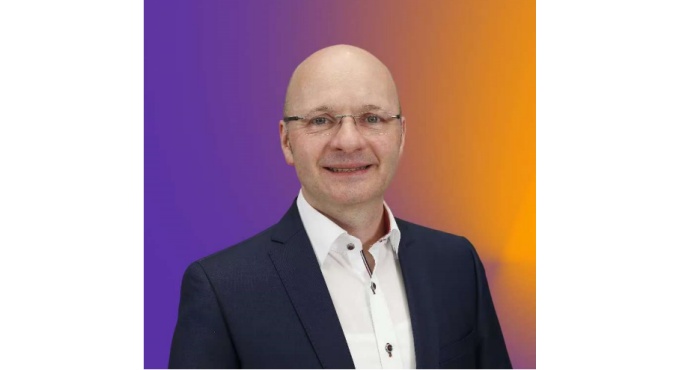
At Marintec China 2025 in Shanghai, Xinde Marine News sat down with Roland Schwarz, Division President Service at Accelleron, to discuss how the company tries to make turbocharger service more predictable in real operations.
Schwarz leads Accelleron’s global service business, covering service sales, operations, and the development of new service offerings.
How Do You Build Service That Owners Can Rely On?
Xinde Marine News:
To start, could you introduce Accelleron’s global service network and how your service setup is structured in China?
Roland Schwarz:
Service is a very important business within Accelleron. We operate one of the most extensive international service networks in our industry - with more than 100 service stations in more than 50 countries, we support around 180,000 turbochargers in operation.
Customer proximity is key. In service, two things must come together: spare parts availability and service engineers who can execute the job.
For spare parts, we operate a central warehouse in Baden, Switzerland, close to our factory. From there we ship globally. We aim to deliver parts to any international airport within about 48 hours, running 24/7, 365 days, and we consistently achieve around 98% on-time delivery for global shipments. We also have dedicated service teams of around 500 service engineers and 200 service sales experts, because you need both the parts and the people.
In China, we have built a strong footprint. Today we operate a network of 14 service stations or service points, mainly along the coast from Dalian and Qingdao to Shanghai, Guangzhou, and Hong Kong. China matters because many vessels, including those from international owners, dock and undergo service work here. A job may be arranged by teams elsewhere, but execution often happens in China. That requires strong local capability and close internal coordination.
We also have manufacturing capability in Chongqing. It supports local demand and helps develop the supply chain needed for turbocharger production.
Keep Moving, But Don’t Change the Standard
Xinde Marine News:
You operate across more than 50 countries. What are the biggest challenges in managing such a dynamic global service network and how do you ensure a consistent standard worldwide?
Roland Schwarz:
We continuously review our setup and assess market development. We need to stay close to customers, so we adjust where we operate.
That applies in China as well. For example, we have upgraded service capability in Zhoushan. We are also strengthening our service presence in Qingdao to reduce transportation time and be closer to customers.
At the same time, customers expect the same service standard in Europe, the Americas, Asia, and China, so we focus on training, standard processes, and standard tools.
Training is essential. We run around 40 courses per year in Switzerland. Service engineers typically complete about 80 hours of training per year. We also train in China, and sometimes bring training specialists to support local teams.
Service is technical, and products keep evolving, so training must be continuous.
We also use shared systems, including common customer and service databases. That makes service history and specifications visible to teams across countries. It helps delivery teams work with the same information and follow the same standards.
Xinde Marine News:
If you had to choose one, people, tools, or cultural adaptation, which matters most?
Roland Schwarz:
For me, people is the most important. Service is about people. They are closest to customers and they make the difference. The key is to find qualified people, train them, retain them, and develop them further. Of course we must adapt to different cultures. But if I must choose one, it is people.
A Revolutionary Service Shift
Xinde Marine News:
Digital solutions and data-driven service are widely discussed. Can you share concrete examples of how Accelleron’s data-driven services create value?
Roland Schwarz:
Service used to be mainly spare parts and labor. We have added more planning with customers: planning jobs earlier, ordering parts earlier, and executing work in a more structured way. That is preventive. The next frontier is predictive service.
For that, operating data is essential. With data, we can see how the turbocharger is actually used. We can assess its condition, detect abnormal behavior, and provide a health report.
This helps owners in two ways. We can bring service forward to avoid a breakdown, or strategically postponing it to align with an engine overhaul. We also provide a customer platform where customers can see real-time health status of the turbochargers and get reports.
Xinde Marine News:
Looking ahead, what is your service strategy, especially how do you plan to strengthen the global service network and offerings?
Roland Schwarz:
We want to develop offerings tailored to customer needs. One key example is ACCX300-L, our new two-stroke turbocharger. It’s not just the next step, it’s really revolutionary.
ACCX300-L features greater flexibility when it comes to servicing. It has a cartridge concept. Traditionally, service on large two-stroke turbochargers is done in dry dock. With this concept, we aim to do certain work during port stays.
To enable that, we will implement a pool concept. We will keep extra cartridges available and swap them during port stays. This is something completely new.
To make it work, we need the strengths we discussed: a global network, trained people, and operating data. Data helps us monitor condition and manage the pool. We plan to launch it in Q1 2026.
Closing
Throughout the discussion, Schwarz’s message is practical: reliability comes from interconnected systems: a broad global network, fast parts logistics support quick responsiveness. Training and shared tools protect global consistency. Operating data enables better maintenance decisions.With innovations like ACCX300-L and its supporting cartridge pooling and exchange solutions, Accelleron’s strategy is clear: to turn service into a controlled, planned activity that aligns with a vessel’s operational rhythm, giving owners greater certainty and control over their schedules.
The opinions expressed herein are the author's and not necessarily those of The Xinde Marine News.
Please Contact Us at:
media@xindemarine.com