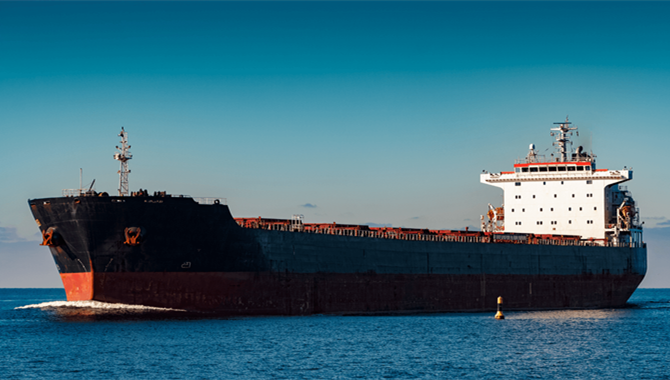
After hitting a new high at the start of the month, the freight rate of Capesize bulk carriers fell sharply, falling by more than 40% in a total of 11 working days, dragging BDI to its lowest level in the past month.
On October 22, the BDI index plunged another 243 points to 4410, its worst performance in nearly a month, dropping 5.2% in a single day and 9.1% in a week.
The BCI index hit 10,475 on October 6 and 10,485 on October 7, hitting a 13-year high, with the average daily chartering price reaching $86,935. However, after that, the BCI index fell all the way, down 40.76% in the past 11 working days.
On the other hand, rates for Panamax, Handymax and Handy carriers are rising. From October 7 to now, the average daily chartering price of Panamax bulk carriers has risen from $34,953 to $38,945, the Handymax carriers from $37,445 to $39,421, and the Handy carriers from $36,166 to $37,033, about 3.5-4.6 times the cost price.
Industry analysts said the freight rate of Capesize vessels has risen sharply before. In addition, China has restricted the production capacity of northern steel mills in order to meet the Winter Olympics in February next year and consider pollution problems, resulting in a reduction in the import volume of iron ore. Prices have recently been revised significantly. However, the current daily chartering price of Capesize vessels is still more than three times of the cost price of US $15000.
Drewry expects the dry bulk market to remain strong for the long term. Assuming the global economic recovery continues until 2022 and trade frictions between China and Australia remain, the compound annual demand growth rate of the global dry bulk shipping market from 2020 to 2026 is estimated to be 3.8%, while the fleet growth rate is 2.6%, said Rahul Sharan, Drewry's chief bulk transport analyst.
From the supply side, the new regulations of IMO will forcibly reduce the speed of ships and prevent the use of non environmental protection engines from 2023. By the end of September this year, 61% of the global bulk carrier fleet did not meet the environmental protection requirements, and about 10% of the bulk carriers were over 25 years old. Under this situation, the current freight rate level is likely to remain.
Source: Sarah Yu, XINDE MARINE NEWS
On October 22, the BDI index plunged another 243 points to 4410, its worst performance in nearly a month, dropping 5.2% in a single day and 9.1% in a week.
The BCI index hit 10,475 on October 6 and 10,485 on October 7, hitting a 13-year high, with the average daily chartering price reaching $86,935. However, after that, the BCI index fell all the way, down 40.76% in the past 11 working days.
On the other hand, rates for Panamax, Handymax and Handy carriers are rising. From October 7 to now, the average daily chartering price of Panamax bulk carriers has risen from $34,953 to $38,945, the Handymax carriers from $37,445 to $39,421, and the Handy carriers from $36,166 to $37,033, about 3.5-4.6 times the cost price.
Industry analysts said the freight rate of Capesize vessels has risen sharply before. In addition, China has restricted the production capacity of northern steel mills in order to meet the Winter Olympics in February next year and consider pollution problems, resulting in a reduction in the import volume of iron ore. Prices have recently been revised significantly. However, the current daily chartering price of Capesize vessels is still more than three times of the cost price of US $15000.
Drewry expects the dry bulk market to remain strong for the long term. Assuming the global economic recovery continues until 2022 and trade frictions between China and Australia remain, the compound annual demand growth rate of the global dry bulk shipping market from 2020 to 2026 is estimated to be 3.8%, while the fleet growth rate is 2.6%, said Rahul Sharan, Drewry's chief bulk transport analyst.
From the supply side, the new regulations of IMO will forcibly reduce the speed of ships and prevent the use of non environmental protection engines from 2023. By the end of September this year, 61% of the global bulk carrier fleet did not meet the environmental protection requirements, and about 10% of the bulk carriers were over 25 years old. Under this situation, the current freight rate level is likely to remain.
Source: Sarah Yu, XINDE MARINE NEWS
The opinions expressed herein are the author's and not necessarily those of The Xinde Marine News.
Please Contact Us at:
media@xindemarine.com