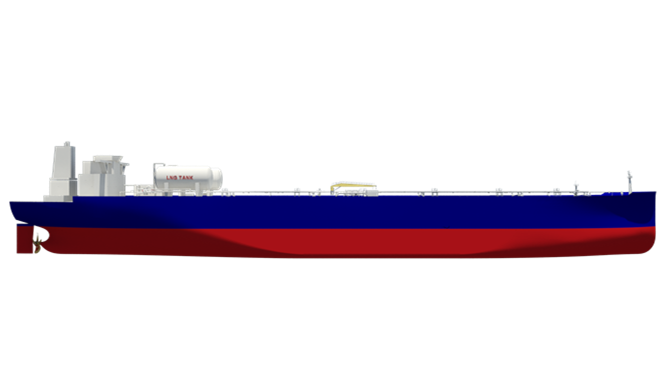
Shell signed agreements to charter ten new crude tankers powered by dual-fuel liquefied natural gas (LNG) engines. Four of the very large crude carriers (VLCCs) have been chartered from Advantage Tankers, three from AET and three from International Seaways. All 10 ships will be built in South Korea by DSME, the first operational from 2022 and be on charter to Shell for seven years.
The main engines and vessel design chosen for the ships will mean these tankers have the lowest possible methane slip and highest fuel efficiency including on average 20% less fuel consumption compared to eco VLCC vessels on the water. Shell continues to significantly invest in LNG for its long-term charter fleet with 14 in service by the end of 2021.
This order is expected to bring the total global dual fuel LNG fleet to 475, marking yet another important step on the predicted doubling of LNG-fuelled vessels on the water by 2023[1], as ship owners respond to customer calls to choose the cleanest technologies available today.
“It is imperative that the shipping sector immediately employs the cleanest fuels available. Today and for the foreseeable future, LNG is the choice for new builds to ensure we are not adding heavier emitters into the global fleet while we work hard at developing zero-emissions fuels,” said Grahaeme Henderson, Global Head of Shell Shipping & Maritime. “This significant commitment will see Shell hit a new milestone for our fleet decarbonisation with an average of 50% of our crude tankers on time charter powered by dual-fuel LNG engines once in service. There is real urgency to tackle emissions from this sector and adopting LNG while developing zero-emissions fuels options, will make a significant difference to cumulative emissions.”
Shell is rapidly making LNG available on global trading routes at major ports in Europe, Asia and North America to meet customer demand with tankers and the bulk and liner segments continuing to grow uptake. By 2023, marine LNG demand is expected to reach around 3.6 million tonnes with 45 bunker vessels expected to be in service[2].
Sung Geun Lee, President and CEO of DSME, said: “The vessels have been designed with state-of-the-art technologies and not only achieve a huge reduction in greenhouse gas emissions but are also economically viable. They have a low fuel consumption with their dual-fuel LNG engines and will bring significant benefits to both the charterer and the ship owners over the long-term.”
The opinions expressed herein are the author's and not necessarily those of The Xinde Marine News.
Please Contact Us at:
media@xindemarine.com